

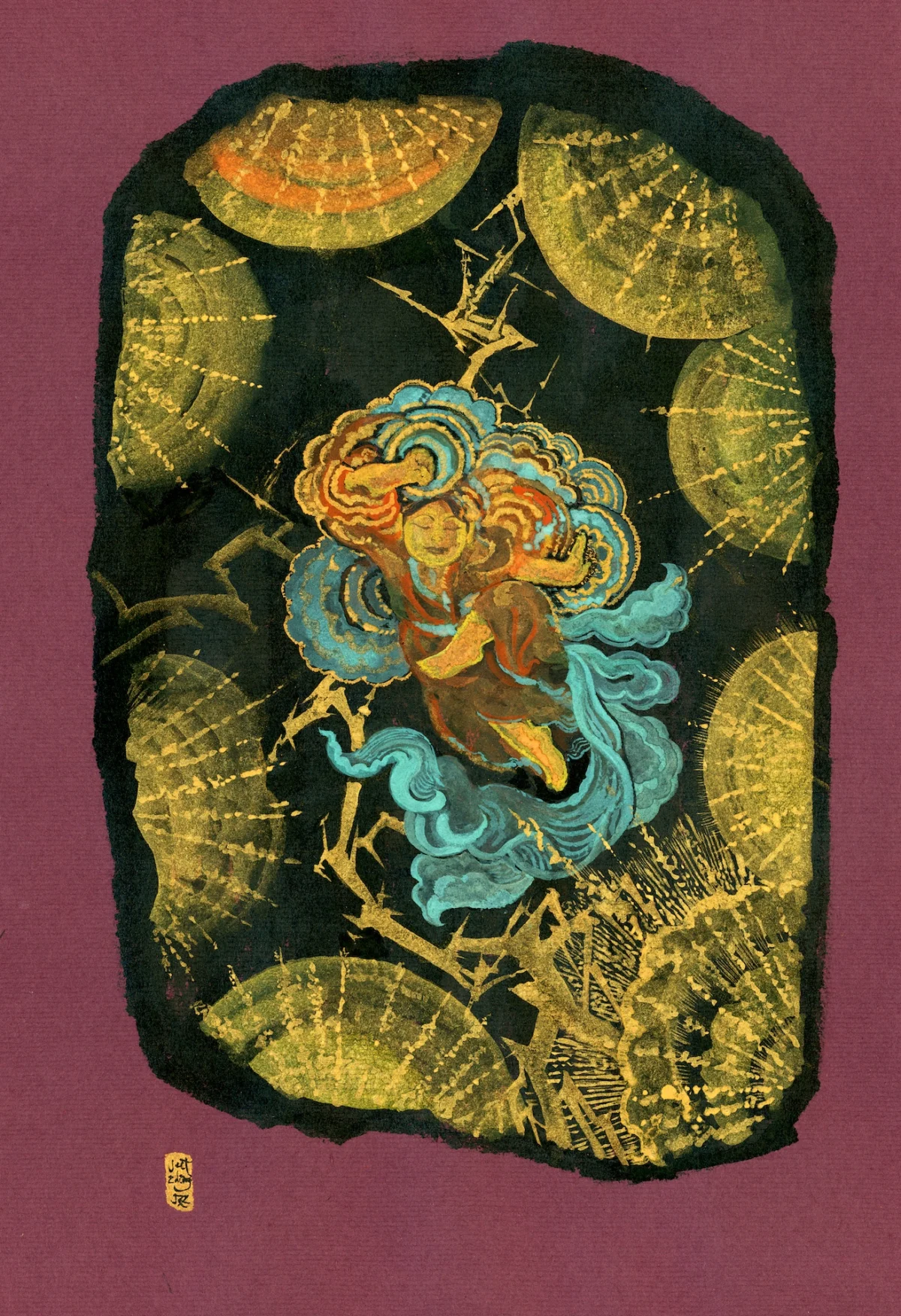
In the celestial tapestry of ancient lore, a tale unfolds of Lieu Hanh, a daughter of the Jade Emperor, whose earthly sojourn became a crucible of defiance, enchantment, and ultimately, a legacy woven into the very fabric of Vietnamese folklore. This narrative, chronicling her banishment, her earthly trials, and her eventual apotheosis, offers a profound glimpse into cultural beliefs surrounding divine justice, human frailty, and the enduring power of the feminine spirit. The events detailed, while rooted in myth, reflect societal anxieties and aspirations, providing a unique lens through which to examine historical and cultural narratives.
Divine Discontent and Earthly Exile
The saga begins in the hallowed halls of Heaven, where Lieu Hanh, a princess of celestial lineage, found herself at odds with the strictures of divine governance. Her character, described as unruly and stubborn, chafed against the rigid discipline expected of the heavenly court. Despite the Jade Emperor’s earnest attempts to instill obedience, his daughter remained recalcitrant, a source of profound embarrassment for the celestial ruler. This persistent defiance culminated in a severe decree: banishment to the mortal realm for a period of three years. This celestial punishment, intended to serve as a corrective measure, inadvertently set the stage for a series of extraordinary events that would forever etch Lieu Hanh’s name into legend.
Upon her descent to Earth, Lieu Hanh transformed into a woman of extraordinary beauty. She established a tavern at the strategic, albeit desolate, Transverse Pass. This location, characterized by its rugged terrain and dense jungle, was paradoxically a vital artery of travel, serving as the sole route connecting the north and south. For centuries, the pass had been a perilous frontier, shunned by merchants and travelers alike due to the pervasive threats of bandits and wild beasts. Lieu Hanh’s tavern, therefore, became an unavoidable waypoint for all who traversed the pass. Its strategic importance, coupled with the allure of its captivating hostess, drew a constant stream of visitors, each compelled to seek respite and perhaps a glimpse of the legendary beauty.
A Test of Character and Celestial Prowess
However, banishment had done little to temper Lieu Hanh’s inherent willfulness and arrogance. Her interactions with mortals were marked by a disdain for authority and a penchant for testing their character. Travelers who sought only sustenance and rest found themselves unmolested. Yet, those who succumbed to her beauty and attempted to flirt, or who sought to assert their power through strength or wealth, faced swift and severe retribution. The consequences were dire: men who crossed her either met a tragic end or succumbed to madness, their minds irrevocably fractured. This demonstrated a potent enforcement of her own moral code, independent of celestial or mortal law.
The period of Lieu Hanh’s earthly sojourn coincided with the reign of Emperor Lê Thái Tổ, a significant figure in Vietnamese history, known for his military prowess and his establishment of the Later Lê Dynasty in the 15th century. During this era, whispers of a solitary, beautiful woman commanding a tavern at the perilous Transverse Pass began to circulate. These rumors, amplified by popular imagination, painted a multifaceted portrait of the hostess. Some accounts lauded her as a formidable martial artist, capable of single-handedly vanquishing a hundred adversaries. Others depicted her as a cunning vagabond, adept at seduction and engaged in clandestine, illicit trades. More mystical interpretations even posited her as a celestial being, a fairy descended to test the virtue of mortal men. This ambiguity fueled public fascination, making it difficult to discern truth from embellishment.
The Crown Prince’s Folly and a Celestial Trap
The notoriety of the Transverse Pass hostess ultimately reached the ears of the Crown Prince, the heir to Emperor Lê Thái Tổ’s throne. Captivated by the tales and consumed by a desire to behold this enigmatic woman, he found himself increasingly infatuated. His ambition to capture her, however, was tempered by an awareness of his father’s stern disposition and the potential repercussions of such a bold, unauthorized venture. Furthermore, the rumors of her martial and magical capabilities instilled a healthy caution, prompting a desire for careful reconnaissance rather than a direct, forceful approach.
Driven by an insatiable curiosity, the Crown Prince eventually orchestrated a clandestine expedition. Under the guise of a young nobleman accompanied by a retinue, he departed the palace under the cloak of night. After a ten-day journey, which included crossing the Lam River and traversing Mount Nam Giới, he arrived at Transverse Pass. Lieu Hanh, possessing celestial foresight, was aware of the Prince’s impending arrival. Recognizing his mediocre character, his spineless nature, and his susceptibility to superficial pleasures, she devised a plan to deter him. As the Prince and his entourage rested, she transformed herself into a peach tree on the roadside. A single, ripe peach hung invitingly from a low branch, its allure almost irresistible.

The sight of the succulent peach immediately captivated the Prince. Driven by an unbridled craving, he abandoned caution and climbed the tree to pluck the fruit. The peach, appearing perfectly ripe and exuding a sweet aroma, seemed a delectable prize. However, as he brought it to his lips, the fruit inexplicably softened, then dissolved into nothingness. The Prince, horrified, shrieked, "This peach’s possessed!" His retinue, equally unnerved, urged him to exercise extreme caution. Despite Lieu Hanh’s subtle, magical warning, the Prince, shaken but undeterred, re-entered his palanquin and commanded his bearers to proceed with haste.
A Night of Deception and Dismay
Upon reaching the tavern, the Prince and his men were struck by Lieu Hanh’s captivating beauty, a sight that surpassed even the most exaggerated rumors. The Prince, utterly enchanted, covertly instructed his retinue to halt at the tavern for the night. As dusk settled, he approached the hostess, requesting lodging for himself and his men. Lieu Hanh, discerning his intentions, politely declined, citing the tavern’s limited capacity and the presence of only a few women. She suggested an alternative lodging in a nearby village. The Prince, however, insisted on staying, promising minimal disturbance. Granting her consent, Lieu Hanh made arrangements for their comfort.
That evening, after a shared meal, the Prince’s retinue settled in the tavern’s courtyard, while the Prince himself was accommodated within the tavern, shielded by brocaded screens. The night, described as cool and filled with "amorous implications," set a stage for further enchantment. In the dim lamplight, the Prince engaged Lieu Hanh in conversation, his gaze fixed upon her. Her every word, imbued with an ethereal grace, further inflamed his obsession. At a pivotal moment, losing all restraint, he made advances toward her. Lieu Hanh, unmoved by his lustful intent, rebuffed him and retreated into an inner chamber.
Fueled by unrequited desire, the Prince pursued her relentlessly. Unbeknownst to him, Lieu Hanh had swiftly transformed, ascended the mountain, captured a female monkey, and assumed its form, now disguised as a beautiful young woman. Upon entering the inner room, the Prince found not his intended hostess, but this new, alluring figure. He led her to the lamplight, captivated by her beauty. However, as he began to embrace her, the illusion shattered. The woman transformed into a furry monkey, eliciting a terrified shriek from the Prince. His men, roused by the commotion, rushed in. The monkey then morphed into a cobra, which coiled around the Prince’s head, hissed fiery breath, and vanished. When the lamp was relit, the Prince lay unconscious, his face ashen.
The Intervention of the Eight Vajrapani
The incident sent shockwaves through the palace. The Crown Prince, upon his return, was found to be deeply disturbed, his mind seemingly lost. Despite the efforts of his mother, the Queen, and numerous physicians, his condition remained a mystery. In their desperation, royal emissaries sought the aid of the Eight Vajrapani, divine protectors renowned for their potent magical abilities, hailing from Thanh Hóa Province.
The Eight Vajrapani are a significant element within Vietnamese Buddhist mythology. Legend states that approximately a thousand years prior, the bodhisattva of compassion, Quan Âm, manifested on the East Sea. From two giant pouches, one in the waves and one on Mount Tì, emerged eight generals. These generals, empowered by Quan Âm, were tasked with vanquishing malevolent forces and protecting the world. They are often invoked for their strength and protective qualities.
Upon receiving the spell from the Eight Vajrapani, the Prince gradually began to recover. In a subsequent confession to his father, he recounted his ill-fated encounter at Transverse Pass. Emperor Lê Thái Tổ, enraged by his son’s disobedience and the magical entanglement, stripped the Prince of his claim to the throne, appointing his younger brother as the new Crown Prince.
A Celestial Confrontation and a Negotiated Peace
Still incensed by the perceived defiance of his authority, the Emperor dispatched a letter to the Defense Governor of Nghệ An Province, inquiring about the mysterious hostess. The Governor’s report characterized her as a female demon, a creature of unknown origin who preyed on the souls of men and could only be subdued through formidable magic and cunning. In response, the Emperor dispatched his most skilled priests and wizards to confront and tame the "demon." However, these emissaries returned in disarray, their powers stripped by Lieu Hanh, who had evidently bested them.
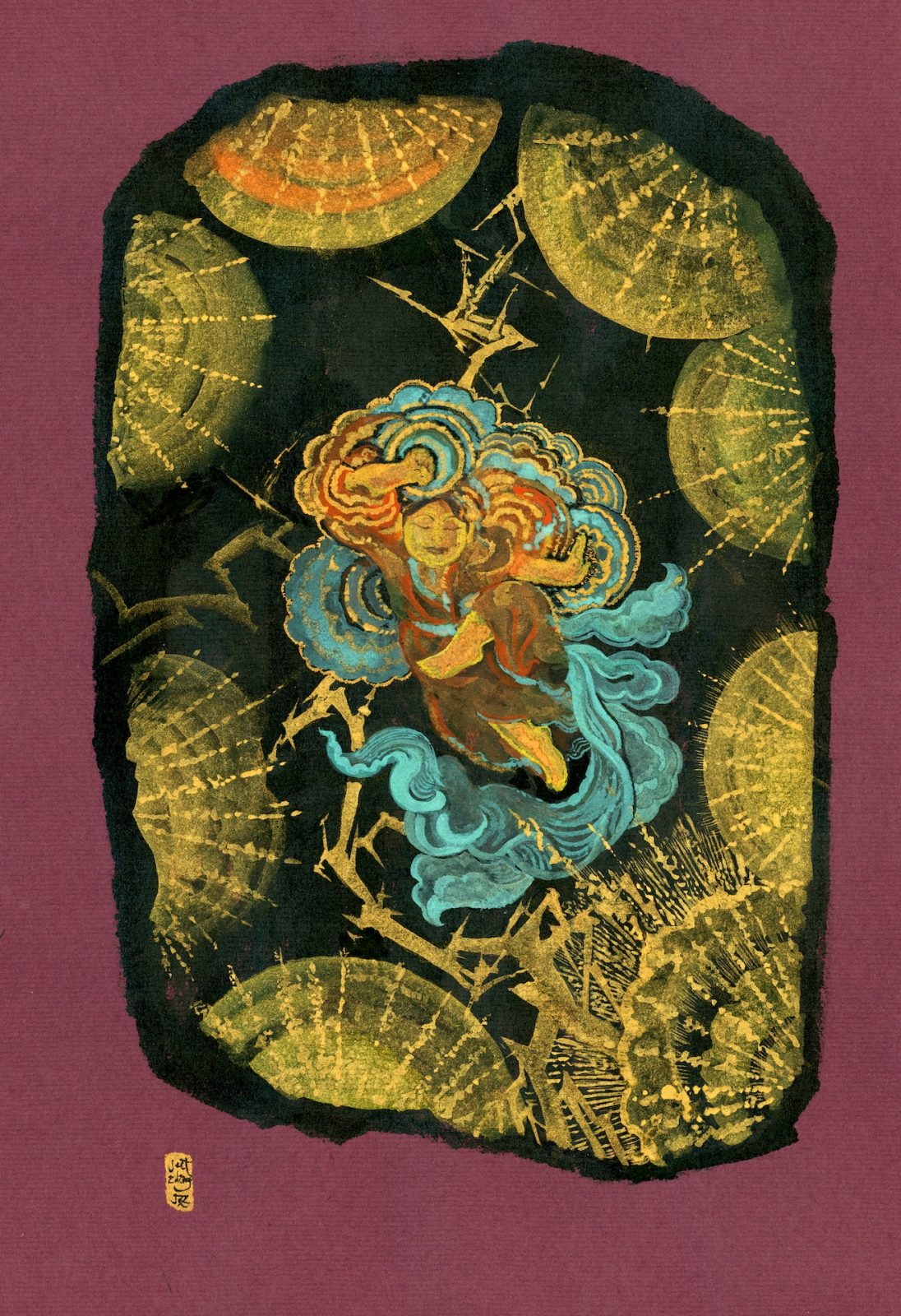
Faced with this unprecedented challenge, the Emperor once again turned to the Eight Vajrapani for assistance. The eight celestial warriors descended upon Transverse Pass, ready for battle. Lieu Hanh, sensing their approach, emerged alone, prepared to face them.
The ensuing conflict was cataclysmic. The Eight Vajrapani unleashed a powerful thunderstorm, conjuring torrential rain, gale-force winds, and widespread flooding, aiming to isolate and overwhelm Lieu Hanh. She, in turn, retaliated with her own potent magic, reanimating fallen trees and hurling debris at her adversaries. In a desperate move, the Vajrapani transformed into savage beasts, charging at her with fangs and claws bared. Lieu Hanh evaded their assault and unleashed a sweeping spell that subdued the beasts.
The battle raged for three days and nights, transforming Transverse Pass into a scene of utter devastation. Neither side could gain a decisive advantage. Recognizing the futility of continued combat, the Eight Vajrapani implored Quan Âm for aid. The bodhisattva cast down a magical bag, which ensnared Lieu Hanh. The Eight Vajrapani then transported the bag to the Emperor, opening it before him.
When questioned by the Emperor, Lieu Hanh revealed her celestial lineage, explaining her banishment and her refuge at Transverse Pass. When asked why she terrorized mortals and harmed his son, she offered a sharp retort: she was merely punishing men who took advantage of women and preyed on the vulnerable, an act she deemed not against the laws of the land. This astute response, coupled with the confirmation of her divine parentage, appeased the Emperor. He released her, with the sole admonition to refrain from causing further chaos or harming innocents.
The Legacy of a Celestial Mother
Shortly thereafter, Lieu Hanh gave birth to a son, marked by six fingers on each hand. She entrusted him to a monk at a Buddhist temple on the Red Mountains, with the hope that he would achieve greatness. Having completed her three-year sentence, she ascended back to Heaven. However, her volatile nature soon led to another transgression, resulting in a second banishment.
This time, her earthly domain was Three Folds Pass in Nghệ An Province. Here, she constructed a three-story pavilion, fortified by citadel walls, within which lay a garden of exotic flora and a lake teeming with fish. Similar to her previous establishment, she operated a tavern, selling various goods. Again, travelers who behaved respectfully were unharmed, but those who dared to steal or woo her faced immediate punishment.
During this second sojourn, she bore another son, this one possessing one missing finger on each hand. She entrusted this infant to a nun, expressing her desire for her sons to attain renown, one having too much and the other too little in their physical attributes. She hoped this child would become an Honored Graduate.
With her earthly time concluded, Lieu Hanh incinerated her citadel and returned to Heaven. Her sons, as prophesied, achieved considerable fame, the elder becoming the celebrated Graduate Quỳnh, revered for his intellect and wit. The sites of her former taverns in Thanh Hóa and Nghệ An were transformed into sacred temples, deep within the mountains. These temples, imbued with an aura of divine protection, remain untouched, a testament to the enduring respect and fear inspired by Mother Lieu Hanh. The narrative of Lieu Hanh transcends a simple tale of divine retribution; it is a complex tapestry woven with themes of rebellion, justice, maternal power, and the enduring influence of mythical figures on cultural identity and spiritual belief systems in Vietnam.

