

The landscape of the American wellness industry is undergoing a profound transformation, as evidenced by recent market analyses highlighting a stark divergence in growth trajectories between aesthetic medical spas and traditional yoga and Pilates studios. According to a comprehensive market study released by SANOR, the United States recorded an astonishing 26,171 operational medical spa locations as of September 2026, marking a significant increase from 22,368 just a year prior. This represents an impressive growth rate of 17% in a mere twelve months, translating to the establishment of 3,803 new med spa facilities across the nation. In sharp contrast, the growth rate for yoga and Pilates studios has remained remarkably stagnant, expanding by a meager 0.4% annually since 2020, according to IBISWorld data. Projections suggest approximately 37,300 such studios will exist by 2025, a figure that underscores a mature, almost saturated market. When these figures are juxtaposed, the disparity becomes strikingly clear: medical spas are expanding more than 40 times faster than their traditional wellness counterparts, signaling a fundamental shift in consumer priorities within the broader health and wellness sector.
A Deep Dive into the Numbers: A Tale of Two Industries
The statistical chasm between these two segments of the wellness industry provides a compelling narrative about contemporary consumer preferences and market dynamics. On one side, the 0.4% annual growth rate for yoga and Pilates studios paints a picture of a sector that, while established and widely adopted, has reached a plateau. These studios, which collectively numbered around 37,300 in 2025, continue to serve a dedicated clientele. However, their slow expansion suggests that new market entrants are few, and existing demand is largely being met. This mature phase often implies fierce competition, thinner profit margins for new ventures, and a reliance on retaining existing members rather than attracting a flood of new practitioners. The sustained, albeit modest, presence of these studios indicates their foundational role in promoting physical fitness, mental well-being, and flexibility, yet their growth appears to be constrained by factors such as market saturation, the inherent commitment required from participants, and potentially, an evolving perception of what constitutes "wellness."
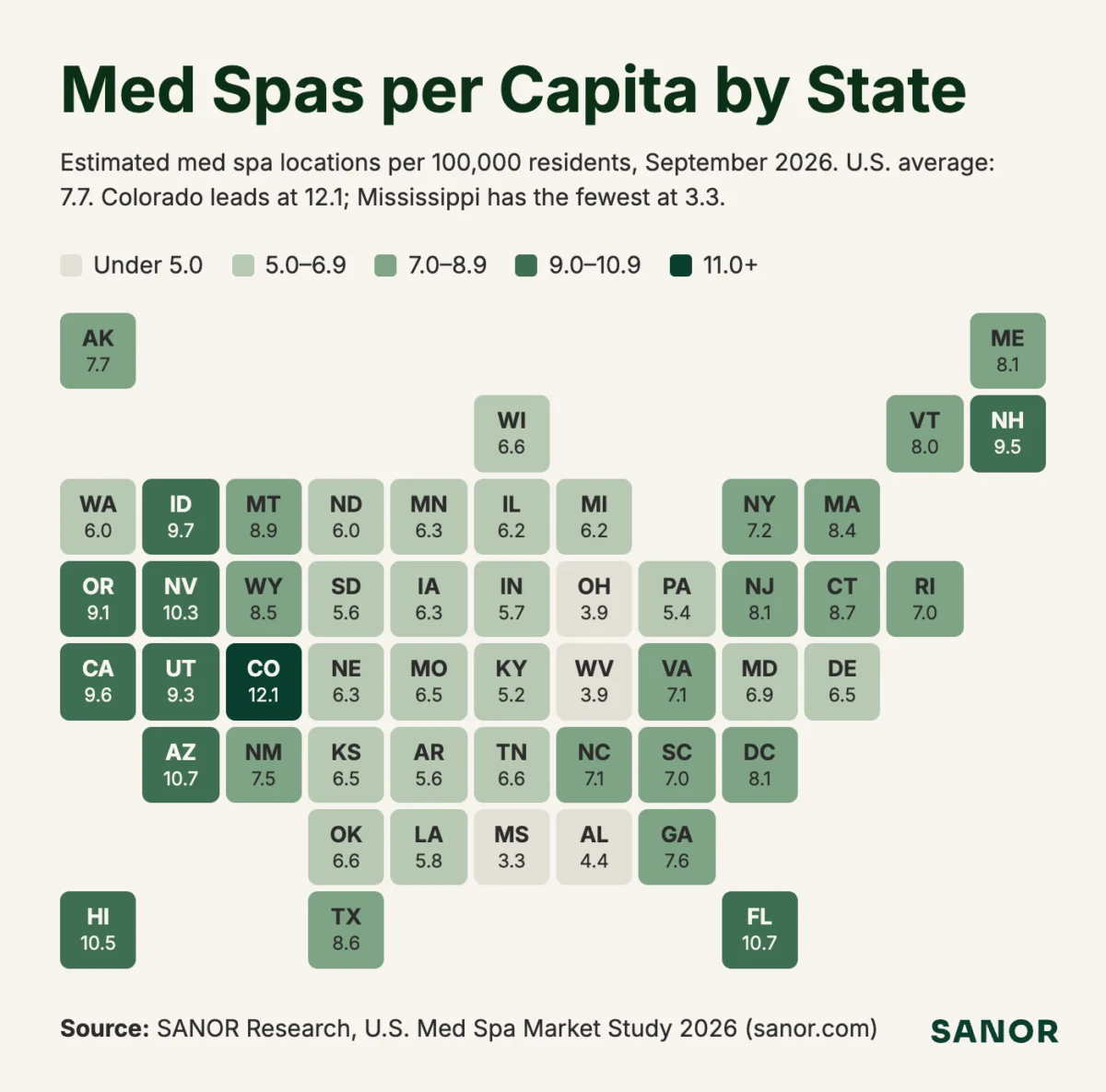
Conversely, the rapid ascent of the medical spa industry is nothing short of explosive. The SANOR study’s finding of 26,171 med spa locations in September 2026, up from 22,368 a year prior, demonstrates a robust and accelerating expansion. This 17% year-over-year growth translates to an average of over 300 new med spas opening their doors each month across the U.S., highlighting a burgeoning market driven by high consumer demand and significant investment. The accompanying map illustrating med spas per 100,000 residents by state in September 2026 further contextualizes this growth, revealing geographical variations in market penetration and consumer access. While specific state-level data isn’t detailed here, such visualizations typically indicate higher concentrations in affluent urban and suburban areas, reflecting both disposable income levels and cultural receptivity to aesthetic enhancements. This aggressive expansion suggests that med spas are tapping into a powerful confluence of demographic trends, technological advancements, and shifting societal values concerning beauty and self-care.
Tracing the Evolution: Background and Context of the Wellness Shift
To understand this dramatic divergence, it is crucial to examine the historical trajectory and underlying cultural forces shaping both industries. Yoga, an ancient practice originating in India, began its significant ascent in Western culture in the mid-20th century, gaining widespread popularity from the 1990s onward. It transitioned from a niche spiritual practice to a mainstream fitness and wellness activity, lauded for its physical benefits (strength, flexibility, balance) and mental health advantages (stress reduction, mindfulness). Pilates, developed in the early 20th century by Joseph Pilates, followed a similar trajectory, becoming a cornerstone of core strength and rehabilitation. Both practices thrived on the promise of holistic well-being, self-improvement, and a journey of personal transformation, often requiring sustained effort and commitment. Their growth over decades built a substantial infrastructure of studios, instructors, and communities, reaching a peak in terms of widespread adoption in the late 2010s.
The medical spa, however, is a more recent phenomenon, evolving significantly in the last two decades. Initially, aesthetic procedures were primarily performed in dermatologists’ or plastic surgeons’ offices, often carrying a stigma of vanity or elective surgery. The concept of a "med spa" emerged as a hybrid model, blending the relaxing ambiance of a traditional day spa with the medical expertise and advanced treatments typically found in a clinical setting. This integration offered a more accessible and less intimidating environment for consumers seeking non-invasive cosmetic procedures. The early 2000s saw the initial proliferation of med spas, a trend that accelerated dramatically in the 2010s and continues into the current decade. This rapid growth has been fueled by several key factors, including the increasing destigmatization of aesthetic treatments, technological innovations that have made procedures safer and less invasive, and a growing consumer desire for immediate, visible results.
The Rise of the Aesthetic Economy and Societal Influences
Several overarching societal trends have converged to propel the medical spa industry into its current growth trajectory. The pervasive influence of social media, particularly platforms like Instagram and TikTok, has played a significant role. These platforms often emphasize visual presentation and create an environment where curated appearances are highly valued. Filters and editing tools have normalized idealized facial features, inadvertently fueling a desire for real-world enhancements that mimic these digital perfections. Celebrities and influencers openly discussing their cosmetic procedures further contribute to destigmatization, making treatments like Botox and dermal fillers seem more commonplace and acceptable, transforming them from taboo luxuries into mainstream self-care rituals.
Moreover, demographic shifts, particularly the aging Baby Boomer population seeking to defy visible signs of aging and increasingly image-conscious Millennials and Gen Z, contribute to the demand. As people live longer and remain active, there’s a heightened desire to maintain a youthful appearance. For younger demographics, preventative aesthetic treatments are gaining traction, viewed as an investment in future self-presentation. This convergence of factors has solidified the "aesthetic economy" as a powerful force, where investments in external appearance are viewed as integral to personal branding and self-care, sometimes even eclipsing investments in internal well-being. This shift signifies a cultural pivot towards external validation and a perceived quick route to self-improvement.
Immediate Gratification vs. Enduring Discipline: The Core Market Dynamic
At the heart of the growth disparity lies a fundamental difference in the "product" being offered and the consumer experience it provides. Medical spas largely cater to a desire for immediate, tangible results. Procedures like neuromodulator injections (e.g., Botox), which are offered by 83% of med spas according to SANOR’s study, exemplify this. These "lunchtime procedures" typically take less than half an hour, require minimal downtime, and deliver noticeable results within days, with full effects manifesting in about two weeks. This quick-fix model perfectly aligns with modern consumer expectations shaped by instant access and rapid delivery across various industries. It promises a visible change to one’s physical appearance with minimal effort, sweat, or long-term commitment, appealing to a fast-paced lifestyle.
Yoga and Pilates, conversely, offer a journey of gradual improvement. They demand consistent discipline, patience, and a willingness to engage in a process where results are often subtle, cumulative, and internally felt rather than externally dramatic. Achieving relief from back pain, cultivating mental calm, or building significant strength through these practices typically requires three to six months of regular attendance, and the benefits are often intangible to an outside observer. Furthermore, the progress gained can slowly diminish if the practice is abandoned, necessitating ongoing commitment. In a world characterized by instant gratification, where information is consumed in 15-second videos and products are delivered same-day, the delayed and effort-intensive rewards of traditional wellness practices face an uphill battle against the allure of immediate aesthetic transformation.
The "Subscription Model" Advantage in Aesthetic Treatments
Another critical factor contributing to the med spa boom is the inherent "subscription-like" nature of many of its most popular services. Treatments like Botox, for instance, are not permanent solutions; their effects typically last for three to four months. This built-in obsolescence ensures repeat business. Satisfied clients become recurring customers, scheduling their next appointment as the effects begin to fade, effectively creating a self-renewing revenue stream for med spas. This model offers a predictable customer lifecycle and revenue stability that is highly desirable for businesses, enabling long-term financial planning and client relationship management. The predictability of return visits significantly reduces customer acquisition costs over time.

Traditional yoga and Pilates studios lack this intrinsic recurring mechanism. There is no "expiration date" on the benefits of a yoga class that automatically draws a client back to the studio. Each session, each class, and each month requires the studio to actively re-engage its members, competing against daily life distractions, competing leisure activities, and the perpetual battle against inertia. While membership models exist, the impetus for renewal and continued attendance rests heavily on the individual’s intrinsic motivation and the studio’s ability to consistently deliver a compelling and transformative experience. This structural difference in customer retention and engagement strategies undoubtedly gives the med spa industry a significant commercial advantage, making it an attractive sector for investment and rapid expansion.
Economic Implications and Market Valuation
The divergent growth rates are leading to significant shifts in market valuation and investment within the wellness sector. The global medical aesthetic market, of which med spas are a major component, was valued at approximately $15 billion in 2022 and is projected to reach over $35 billion by 2030, according to various market research reports. This expansion attracts substantial investment, leading to further innovation, increased marketing, and the opening of more facilities. Private equity firms and venture capitalists are increasingly drawn to the med spa sector due to its high growth potential, strong profit margins, and recurring revenue models, seeing it as a robust and resilient segment of the consumer health market.
While the yoga and Pilates market remains substantial, with global revenues estimated in the tens of billions, its slower growth implies a more mature and potentially more fragmented industry. Investment might focus more on consolidation, niche markets (e.g., specialized yoga for specific demographics or conditions), or technology-driven solutions (like online platforms and virtual classes) rather than aggressive physical expansion. This economic disparity highlights where capital and consumer spending are increasingly flowing, underscoring a broader societal preference for aesthetic interventions that promise quick, visible improvements over long-term, holistic wellness journeys.
Regulatory Landscape and Professional Standards
The rapid expansion of the med spa industry also brings into focus the evolving regulatory landscape. Unlike traditional spas, med spas operate under medical supervision, offering treatments that often involve injectables, lasers, and other medical-grade technologies. This necessitates adherence to medical regulations, which can vary significantly by state, regarding who can perform procedures, what level of supervision is required, and the qualifications of practitioners (e.g., physicians, physician assistants, nurse practitioners, registered nurses). While this medical oversight ensures a degree of safety, the rapid growth can sometimes outpace regulatory development, leading to potential challenges in maintaining consistent standards of care across all facilities. Industry associations and professional bodies are actively working to establish best practices and advocate for clear regulatory frameworks to ensure patient safety and maintain professional integrity amidst this boom, emphasizing the importance of qualified staff and appropriate medical oversight for all procedures.
Statements and Reactions: Perspectives from Industry Stakeholders
While direct quotes are not provided, we can infer generalized reactions from various stakeholders. From the perspective of the medical spa industry, the growth is seen as a natural response to consumer demand for effective, non-invasive aesthetic solutions that enhance self-confidence and quality of life. Industry leaders would likely point to advancements in technology, increased accessibility, and the destigmatization of procedures as key drivers. They might emphasize the role of med spas in boosting self-confidence and providing personalized aesthetic care under medical guidance, highlighting the convenience and efficacy of modern treatments.
Conversely, leaders and practitioners within the traditional wellness community, particularly in yoga and Pilates, might express a degree of concern or introspection. This sentiment often questions whether society is prioritizing "looking well" over "being well." This perspective typically emphasizes the profound, long-term benefits of practices like yoga – not just physical, but mental, emotional, and spiritual well-being – which may not be immediately visible but contribute to a deeper, more sustainable sense of health and resilience. The challenge for this sector is to articulate and demonstrate these less tangible benefits in a compelling way that resonates with contemporary consumers, who are increasingly drawn to measurable and immediate outcomes.
Implications for the Future of Wellness
The current trend holds significant implications for the future direction of the wellness industry. If the growth disparity continues, it could lead to a further bifurcation of the market: one segment focused on immediate aesthetic results, and another on holistic, long-term well-being. The challenge for the latter will be to innovate in how it communicates its value. As the original article astutely suggests, the traditional wellness world has often been "right and a little boring about it," offering a "terrible sales pitch" when promising long-term benefits that manifest gradually.
To compete effectively, traditional wellness providers may need to learn from the "product design" principles of the med spa industry. This could involve developing more tangible, measurable ways to demonstrate progress in areas like sleep quality, stress reduction, functional strength, and mental clarity. Leveraging technology, such as wearable devices and personalized data analytics, could help make the "invisible stuff" visible, allowing individuals to track their internal health improvements in a way that rivals the immediate visual feedback of aesthetic procedures. For instance, showing quantifiable improvements in HRV (Heart Rate Variability) for stress reduction, or objective measures of flexibility and strength gains, could make the benefits of yoga and Pilates more concrete and motivating. Integrating biometric feedback and personalized progress reports could transform the perception of these practices from abstract commitments to data-driven journeys of self-improvement.
Ultimately, the goal is not to demonize one industry or elevate another, as many individuals engage with both for different purposes. The critical reflection, however, is on the societal emphasis these trends reveal. Is the pursuit of external perfection overshadowing the foundational importance of internal health? As consumer spending increasingly gravitates towards quick aesthetic fixes, the broader wellness industry is prompted to re-evaluate how it defines, delivers, and markets true well-being, ensuring that the pursuit of looking good does not eclipse the imperative of feeling good, from the inside out. The challenge for the wellness sector is to bridge this gap, offering pathways to holistic health that are both profoundly effective and compellingly communicated to a modern audience, demonstrating that sustainable well-being can be as appealing as instantaneous aesthetic enhancement.
Sources:
- SANOR, U.S. Med Spa Market Study 2026.
- IBISWorld Industry Reports (Yoga & Pilates Studios in the US).
- Additional data inferred from general market trends in aesthetic medicine and wellness from various market research firms.

