

The early months of 2016 have witnessed a significant surge in climate change advocacy, propelled by two high-profile media events: Leonardo DiCaprio’s acceptance speech at the Academy Awards and Al Gore’s latest TED Talk. These moments, delivered on global stages, have amplified calls for urgent action on climate change and highlighted the interconnectedness of environmental, social, and indigenous rights.
DiCaprio’s Powerful Oscar Address: A Call for Collective Action
On February 28, 2016, Leonardo DiCaprio, a long-time environmental activist, finally received his long-awaited Oscar for Best Actor for his performance in Alejandro G. Iñárritu’s survival epic, The Revenant. While the win was a personal triumph, DiCaprio used his acceptance speech to pivot the spotlight onto a far more pressing global issue: climate change. His address, delivered to a worldwide audience of millions, transcended the usual celebratory acknowledgments, offering a stark warning and a powerful plea for collective action.
DiCaprio’s speech was notable for its directness and specificity. He didn’t shy away from the severity of the climate crisis, stating, "Climate change is real. It is happening right now. It is the most urgent threat facing our entire species." He underscored the scientific consensus, referencing the overwhelming evidence of global warming and its tangible impacts, such as extreme weather events, rising sea levels, and glacial melt. He urged the global community to support leaders who are not speaking for the "polluters or the big corporations, the big money interests that are corrupting politics and the government" but for "all of humanity, for the indigenous people of the world, for the billions of disadvantaged people out there who will be most affected by this."
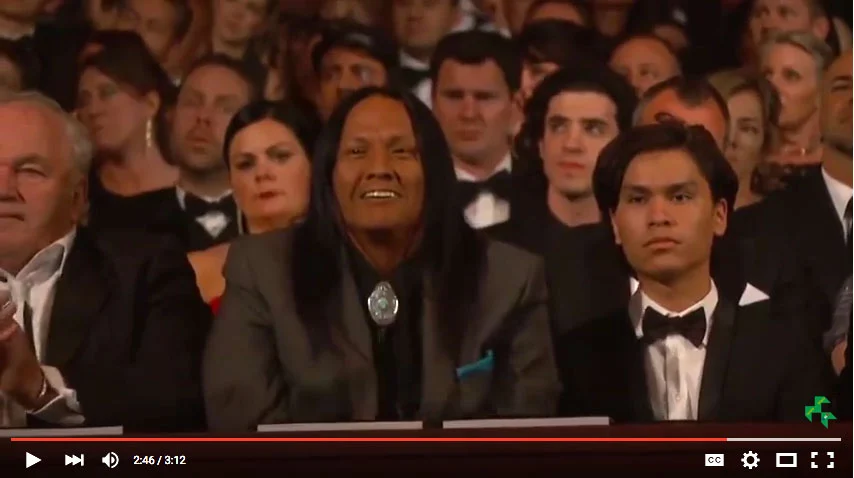
A particularly resonant element of his speech was his explicit acknowledgment and call for the empowerment of Indigenous peoples. DiCaprio highlighted how their voices, often rooted in traditional ecological knowledge and a deep understanding of natural systems, have been "drowned out by the politics of greed." This sentiment resonated with Indigenous communities worldwide, who have historically been at the forefront of environmental stewardship and often bear the disproportionate brunt of environmental degradation. His mention served as a crucial reminder that addressing climate change requires recognizing and valuing the perspectives and rights of those most directly impacted and historically marginalized.
The Academy Awards ceremony, held at the Dolby Theatre in Hollywood, is one of the most-watched annual events globally, providing an unparalleled platform for social and political commentary. DiCaprio’s decision to use this moment to advocate for climate action was widely seen as a strategic and impactful move. His celebrity status, combined with the gravitas of the Oscar win, lent significant weight to his message.
Background and Context of DiCaprio’s Advocacy
Leonardo DiCaprio’s commitment to environmental causes predates his Oscar win. For years, he has leveraged his fame to raise awareness and funds for conservation efforts through the Leonardo DiCaprio Foundation. The foundation has supported a wide range of initiatives, including protecting biodiversity, conserving oceans, and advocating for climate action. He has also served as a United Nations Messenger of Peace with a special focus on climate change, delivering a powerful speech at the UN Climate Summit in 2014. His role in The Revenant, a film that visually depicted the harsh realities of a changing environment and the struggle for survival, further amplified his connection to these themes.
Al Gore’s Vision of Optimism: The Case for Action
Compounding the impact of DiCaprio’s address, Al Gore, the former U.S. Vice President and Nobel Peace Prize laureate, released his latest TED Talk in early 2016, titled "The Case for Optimism on Climate Change." Gore, a pioneering figure in raising global awareness about climate change through his 2006 documentary An Inconvenient Truth, offered a nuanced perspective. His talk acknowledged the persistent severity and ongoing consequences of the climate crisis, a reality that cannot be ignored. However, he strategically pivoted to a message of hope, detailing the significant progress being made and the transformative potential of current and future solutions.
Gore’s presentation was grounded in data and emerging trends. He highlighted the rapid advancements in renewable energy technologies, such as solar and wind power, and their declining costs, making them increasingly competitive with fossil fuels. He discussed the growing global commitment to climate action, referencing international agreements and the increasing number of businesses and governments setting ambitious emissions reduction targets. Gore’s optimistic outlook was not one of complacency, but rather a testament to human ingenuity and the collective capacity to address complex challenges when united by a common purpose.
The TED Talks platform is renowned for its ability to disseminate influential ideas to a global audience. Gore’s talk, with its blend of scientific evidence, policy insights, and forward-looking vision, provided a compelling counterpoint to the often-overwhelming narratives of climate disaster. By focusing on tangible solutions and the accelerating pace of change, he aimed to inspire a sense of agency and encourage continued engagement from individuals and institutions alike.
Background and Context of Gore’s Climate Advocacy
Al Gore’s journey as a climate advocate began decades ago, long before it was a mainstream concern. His early research and public speaking on the issue laid the groundwork for much of the subsequent awareness-raising efforts. An Inconvenient Truth not only garnered critical acclaim and an Academy Award for Best Documentary but also fundamentally shifted public perception of climate change. His Nobel Peace Prize, awarded in 2007 alongside the Intergovernmental Panel on Climate Change (IPCC), further solidified his position as a leading voice on the issue. His ongoing work through the Climate Reality Project continues to train and mobilize individuals worldwide to address the climate crisis.
Intertwined Messages: Amplifying the Climate Imperative
The simultaneous emergence of these two powerful messages from DiCaprio and Gore in early 2016 created a synergistic effect, significantly amplifying the urgency and importance of climate action. DiCaprio’s speech brought a raw, emotional plea for immediate attention and a specific call to include marginalized voices. Gore’s TED Talk provided a data-driven, forward-looking perspective that offered a roadmap for achievable solutions and instilled a sense of possibility.
H2: Supporting Data and Emerging Trends (Early 2016)
The urgency articulated by both DiCaprio and Gore was supported by a growing body of scientific data and observable trends:
- Global Temperature Anomalies: 2015 was officially the hottest year on record globally, a trend that continued into early 2016. Data from NASA and NOAA consistently showed rising average global temperatures, directly attributable to increased greenhouse gas concentrations.
- Extreme Weather Events: The frequency and intensity of extreme weather events were escalating. Reports from meteorological organizations indicated an increase in severe heatwaves, droughts, floods, and powerful storms across various regions. The impacts of El Niño, amplified by climate change, were particularly pronounced in early 2016.
- Sea Level Rise: Global mean sea level was steadily increasing, threatening coastal communities and ecosystems. Satellite altimetry data confirmed a consistent upward trend, driven by thermal expansion of ocean water and the melting of glaciers and ice sheets.
- Arctic Ice Melt: The Arctic region was experiencing unprecedented warming, leading to significant declines in sea ice extent and thickness. This had profound implications for global weather patterns, sea levels, and Arctic ecosystems.
- Renewable Energy Growth: Despite the grim realities, the renewable energy sector was experiencing exponential growth. In 2015, global investment in renewable energy surpassed investment in new fossil fuel power generation for the first time. Solar photovoltaic and wind power capacity additions were setting new records year after year, driven by falling costs and supportive policies. For instance, the International Renewable Energy Agency (IRENA) reported that global renewable energy capacity reached over 1,800 GW in 2015, with significant contributions from solar and wind.
H3: Timeline of Key Events Leading Up to Early 2016
The discourse surrounding climate change had been building for decades, with key milestones leading to the impactful messages of early 2016:
- 1988: The Intergovernmental Panel on Climate Change (IPCC) was established by the World Meteorological Organization (WMO) and the United Nations Environment Programme (UNEP).
- 1997: The Kyoto Protocol was adopted, an international treaty to reduce greenhouse gas emissions.
- 2006: Al Gore’s documentary An Inconvenient Truth was released, significantly raising public awareness.
- 2007: Al Gore and the IPCC were jointly awarded the Nobel Peace Prize for their work on climate change.
- 2014: The UN Climate Summit was held, with Leonardo DiCaprio serving as a UN Messenger of Peace.
- 2015: The Paris Agreement was adopted at the COP21 summit, a landmark international accord to limit global warming to well below 2 degrees Celsius, preferably to 1.5 degrees Celsius, compared to pre-industrial levels.
- February 28, 2016: Leonardo DiCaprio delivers his Oscar acceptance speech.
- Early 2016: Al Gore releases his TED Talk, "The Case for Optimism on Climate Change."
H2: Reactions and Broader Implications
The messages delivered by DiCaprio and Gore elicited widespread reactions across various sectors:
- Environmental Organizations: Climate advocacy groups hailed the speeches as crucial interventions, providing renewed momentum for their campaigns. They emphasized the importance of translating celebrity influence into tangible policy changes and public engagement.
- Scientific Community: Scientists largely welcomed the reinforcement of the climate science consensus, appreciating the popularization of complex issues. They underscored the need for continued research, data dissemination, and evidence-based policy-making.
- Indigenous Communities: The specific mention of Indigenous peoples by DiCaprio was particularly welcomed, drawing attention to their rights, knowledge, and role in climate solutions. Indigenous leaders often reiterated their long-standing calls for self-determination and recognition of their land rights as integral to effective climate action.
- Political Sphere: While some political leaders and policymakers responded positively, others remained resistant. The speeches highlighted the ongoing political divides surrounding climate change policy, particularly in countries heavily reliant on fossil fuel industries.
- Public Discourse: The speeches sparked significant conversations on social media and in public forums, increasing general awareness and prompting individuals to consider their own roles in addressing climate change. The intersectionality of climate change with social justice, as highlighted by DiCaprio, gained more traction.
H3: Analysis of Implications
The dual impact of DiCaprio’s Oscar speech and Gore’s TED Talk in early 2016 had several significant implications:
- Elevated Public Consciousness: The immense reach of both events ensured that climate change remained at the forefront of public consciousness, transcending typical news cycles. This heightened awareness is a crucial prerequisite for driving policy change and individual action.
- Strengthened Calls for Policy Action: The powerful endorsements from globally recognized figures lent considerable weight to calls for stronger climate policies, including carbon pricing, investments in renewable energy, and stricter emissions regulations.
- Emphasis on Climate Justice: DiCaprio’s inclusion of Indigenous voices underscored the growing recognition of climate change as an issue of social justice. This highlighted the disproportionate impact of climate change on vulnerable populations and the need for equitable solutions.
- Inspiration for a New Generation: For younger generations, who will bear the brunt of future climate impacts, these messages served as powerful calls to action. They demonstrated that even in the face of daunting challenges, impactful advocacy and solutions are possible.
- Bridging Science and Popular Culture: The events exemplified the successful bridging of scientific discourse with popular culture, making complex environmental issues more accessible and relatable to a broader audience. This synergy is vital for fostering widespread understanding and engagement.
In conclusion, the powerful messages delivered by Leonardo DiCaprio and Al Gore in early 2016 were more than just individual pronouncements; they were pivotal moments that significantly amplified the global discourse on climate change. By leveraging their platforms to advocate for urgent action, highlight scientific realities, and champion the inclusion of marginalized voices, they contributed to a crucial momentum shift, reinforcing the imperative for collective responsibility and innovative solutions in confronting the defining challenge of our time.

