

On a frigid January morning in 2016, the University of Hyderabad became the site of a tragedy that would reverberate across India, igniting a national conversation about caste, institutional discrimination, and the enduring struggle for human dignity. Rohith Vemula, a 26-year-old Dalit PhD scholar and activist with the Ambedkar Students’ Association (ASA), penned a suicide note that has since become a poignant testament to the lived reality of caste in contemporary India. His words, "The value of a man was reduced to his immediate identity and nearest possibility. To a vote. To a number. To a thing. Never was a man treated as a mind. As a glorious thing made of star dust," spoke volumes about his profound disillusionment with a system that reduced individuals to their birth rather than their potential. Vemula’s suspension from the university, eviction from his hostel, and subsequent erasure from institutional life stemmed directly from his caste identity and his outspoken activism.
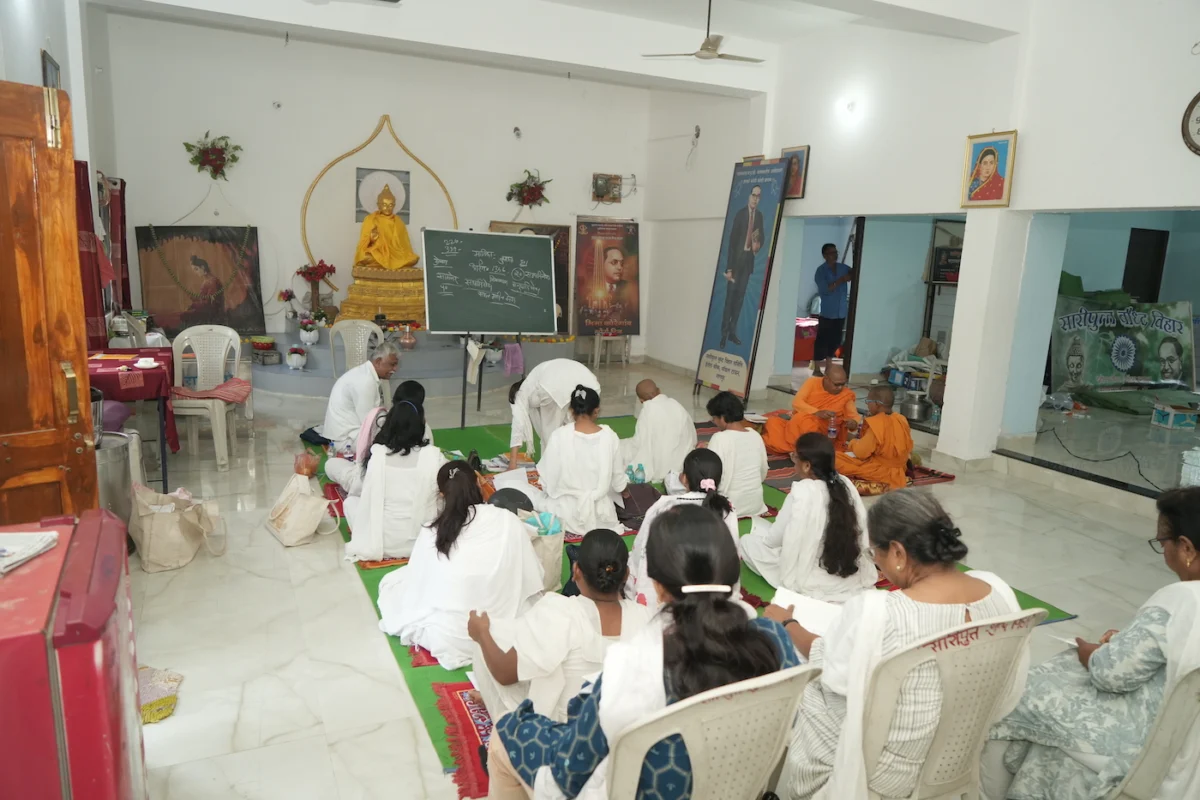
Vemula’s untimely death did not silence his family or quell the spirit of resistance he embodied. Just three months later, on April 14, 2016—the 125th birth anniversary of Dr. B. R. Ambedkar, the architect of the Indian Constitution and a towering figure of Dalit liberation—a profound act of defiance unfolded. Rohith’s mother, Radhika, and his brother, Raja, traveled from Hyderabad to the Dr. Babasaheb Ambedkar Bhavan in Dadar, Mumbai. There, in the presence of Prakash Ambedkar, Dr. Ambedkar’s grandson, thirty Buddhist monks administered the Deeksha vows, marking their conversion to Buddhism. They were joined by Rohith’s childhood friend, Riyaz Shaikh, and fellow ASA activist, Charbad Raju. This conversion was not merely a change of faith; it was a powerful statement of protest, a strategy for survival, and a radical refusal to remain within a religious framework that, in their experience, sanctified their humiliation and suffering.
This act of conversion in response to systemic violence is not an anomaly in India; it is a recurring pattern deeply woven into the fabric of Ambedkarite history. For decades, when caste-based atrocities occur and the state apparatus fails to provide adequate recourse or justice, Dalits have historically turned not to violence, but to the Dhamma. Conversion to Buddhism, in this context, represents a profound rejection of a religious system that perpetuates their subjugation and an embrace of a philosophy that offers equality, dignity, and a path towards liberation.
The Inherited World of Caste and the Genesis of Conversion
To comprehend the significance of Dalits embracing Buddhism as a response to violence, it is crucial to understand the system they are converting from. Caste is far more than mere social stratification; it is a deeply entrenched theological architecture of purity and pollution, meticulously inscribed in religious scriptures (shastras), enforced through pervasive violence, and perpetuated across generations. For those relegated to the status of "untouchables"—positioned entirely outside the traditional four-fold varna system—this meant systemic exclusion. Access to temples, public wells, educational institutions, transportation, and even basic amenities like roads was denied. They were compelled to announce their presence by striking two stones together, a sonic warning for caste Hindus to avert their gaze and maintain ritual purity. Their prescribed occupations—sweeping streets, carrying human waste, skinning dead cattle—were not chosen but dictated by birth. The very shadow of an "untouchable" was considered contaminating.
Dr. B. R. Ambedkar was born into this brutal reality on April 14, 1891. Despite his extraordinary intellect, earning doctorates from esteemed institutions like Columbia University and the London School of Economics, he faced relentless discrimination. He was denied access to common water sources in his own school and faced constant rejection from landlords and guesthouses throughout his illustrious career. Ambedkar recognized that no amount of personal achievement could dismantle the caste system as long as Hinduism provided its theological justification. After years of rigorous study, political struggle, and deep engagement with various religious traditions, his conclusion was unequivocal: Hinduism and caste were inseparable. Reform from within was a Sisyphean task; true liberation necessitated an exit.
The Dhamma Deeksha: Ambedkar’s Mass Conversion and its Enduring Echo
On October 14, 1956, in Nagpur, during the year marking the 2,500th anniversary of the Buddha’s passage into parinirvana, Dr. Ambedkar led an epochal event: the Dhamma Deeksha. Approximately 500,000 of his followers embraced Buddhism in a mass conversion. Ambedkar, then 64 and gravely ill, was acutely aware of his mortality. His life’s work culminated in the completion of "The Buddha and His Dhamma," a foundational text for the Ambedkarite movement, just days before his death six weeks later. His final endeavor was to establish a new school of engaged Buddhism, which he termed Navayana, or the "New Vehicle."
The twenty-two vows prescribed by Ambedkar for these new Buddhists were a powerful declaration of their humanity. They simultaneously renounced Hindu deities, the authority of Brahminical priests, the legitimacy of the caste system, and the very identity of untouchability. This was not merely joining a new religion; it was an assertion of their inherent worth. The vows explicitly stated: "I renounce Hinduism, which is harmful for humanity and impedes the advancement of human beings, and I embrace Buddhism as my religion," and "I believe that today I am taking new birth." The carefully chosen language of "rebirth" signified more than a spiritual awakening; it represented a complete metamorphosis of identity. Buddhism offered not just a new faith but a new selfhood—one where dignity was not contingent on caste, spiritual worth was not dictated by birth, and liberation was attainable in this life through ethical conduct. Crucially, the explicit refusal to worship Hindu deities or view the Buddha as an avatar of Vishnu directly challenged Hindu nationalist attempts to subsume Buddhism within Hinduism, thereby neutralizing its potent capacity to dismantle caste. These twenty-two vows laid the bedrock for Ambedkarite Buddhism, a movement characterized by a fierce rejection of Hindu nationalism and caste politics, and a steadfast affirmation of the inherent dignity and equality of all beings.
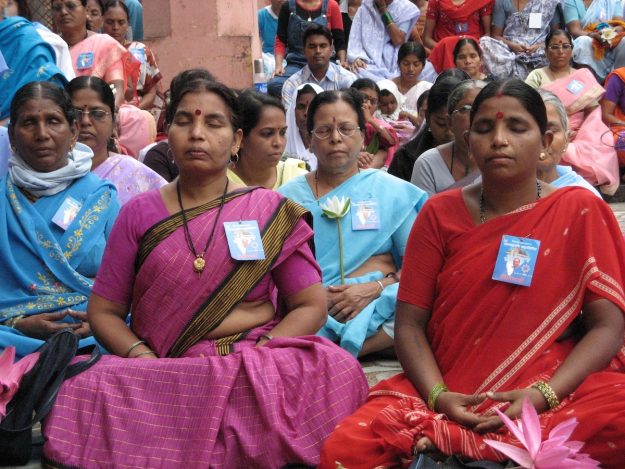
Ambedkar conceptualized the Navayana movement not as a path to a deity, but as a guide to the Margadata, the one who shows the way. In "The Buddha and His Dhamma," he posited that Dhamma served as a social blueprint, stating, "The function of Dhamma is to reconstruct the world." He drew inspiration from the Pali canon’s democratic sangha as a model for egalitarian community, the Mahayana’s bodhisattva ideal as a paradigm for social service, and his profound analysis of Indian society to reframe dukkha (suffering) not as cosmic lamentation but as the concrete, structural suffering imposed by the caste system.
The timing of the Dhamma Deeksha was deliberate, coinciding with Emperor Ashoka’s conversion to Buddhism in the 3rd century BCE. However, while Ashoka’s conversion was an imperial decree from the throne, supported by state patronage, Ambedkar’s revival emanated "from the people"—specifically, from those occupying the lowest rungs of Indian society. This origin from the very nadir of the social hierarchy profoundly shaped Ambedkarite Buddhism, imbuing it with a potent sense of moral urgency. What Ambedkar initiated was not merely a new iteration of Buddhism but a novel form of resistance, a spiritual and political refuge that subsequent generations of Dalits would seek when the violence of caste made remaining within Hinduism unbearable.
The Persistent Pattern: Caste Violence and Buddhist Response
In the seventy years since that historic conversion in Nagpur, the cycle of caste violence has tragically repeated with alarming regularity. Caste continues to inflict atrocities, and often, the state remains a passive observer. In response, Dalits, following Ambedkar’s precedent, have repeatedly turned to Buddhism—not in surrender, but in defiant affirmation of their worth.
In July 2016, the village of Mota Samadhiyala in Gujarat became the scene of another brutal incident. Four young Dalit men were publicly stripped, bound to an SUV, and brutally flogged by cow vigilantes. Their alleged offense: skinning a dead cow, a task traditionally assigned to their caste for centuries. The attackers, emboldened by the impunity they felt, filmed the assault and disseminated it widely. The police, despite video evidence, were notably slow to act. In a powerful act of protest and solidarity, the victims and hundreds of their family members embraced Buddhism. Their message was clear: if Hinduism assigned them the burden of handling dead cattle and then subjected them to violence for it, they would renounce Hinduism. This conversion was a dual act: a rejection of the theological framework that dictated their labor and an assertion of their inherent dignity in the face of brutal humiliation.

Similarly, in 2019, a Dalit youth in Gundlupet was subjected to the degrading ordeal of being stripped and paraded naked. This act of public shaming was intended to reinforce his caste’s prescribed position within the social hierarchy. In response, Dalit activists organized protest marches that culminated in the conversion of several individuals to Buddhism. The symbolism was potent: in the face of forced stripping and degradation, these Dalits voluntarily adopted a tradition that, at the moment of conversion, symbolically strips individuals of their caste identity.
In 2022, two Dalit youths in Bhulon Village faced assault from upper-caste men simply for participating in aarti (a Hindu devotional ritual) at a temple, an act deemed the exclusive prerogative of caste Hindus. The local police refused to register cases against the perpetrators. In response, over 200 Dalit families collectively converted to Buddhism, seeking refuge in a faith that offered them a space for worship free from the gatekeeping and discrimination of upper-caste Hindus.
These conversions are not always isolated incidents but often represent the culmination of protracted struggles. The Namantar Andolan, a sixteen-year movement to rename Marathwada University after Dr. Ambedkar, was marked by relentless upper-caste violence, including riots, murders, destruction of Dalit property, and arson. Dominant castes fiercely opposed any move to honor Ambedkar with an institution bearing his name. Yet, this sustained violence did not extinguish the Dalit Buddhist movement. After nearly two decades of advocacy, the university was finally renamed in 1994. More enduringly, however, the struggle solidified a regional Buddhist identity inextricably linked to political resistance.
Rohith Vemula: A Life Valued Beyond a Number
The case of Rohith Vemula stands as a stark and deeply moving illustration of the intersection of caste, institutional violence, and the Buddhist response. His suicide note transcended mere expressions of despair; it was a profound philosophical protest. A young man who dreamt of stars and galaxies articulated the devastating impact of the caste system on the inner life of an individual. The phrase "My birth is a fatal accident" was not a commentary on personal misfortune but a critique of a social system where one’s caste of birth amounted to a life sentence. His final words, "From shadows to the stars," encapsulated a yearning for transcendence beyond the confines of caste-imposed limitations.
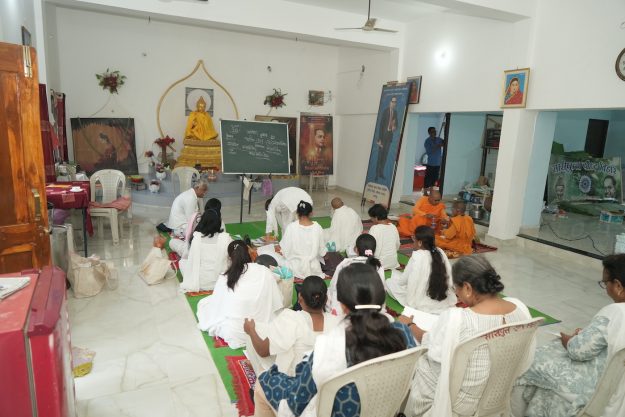
His family understood this profound yearning. Rohith’s body was cremated according to Buddhist rites, a poignant affirmation of his chosen spiritual path. Three months later, on Ambedkar Jayanti, his mother and brother embraced Buddhism, taking the Deeksha vows. Raja Vemula articulated their newfound liberation: "From today, my mother and I will be free from shame, free from the daily humiliation, free from the guilt of praying to the same god in whose name our people have been tortured for centuries. . . . We want azadi [freedom] from the caste system." Rohith, in his lifetime, had encouraged his family to consider Buddhism. In his death, he became the catalyst for their spiritual and social liberation.
A New Buddhism Forged from Ancient Symbols
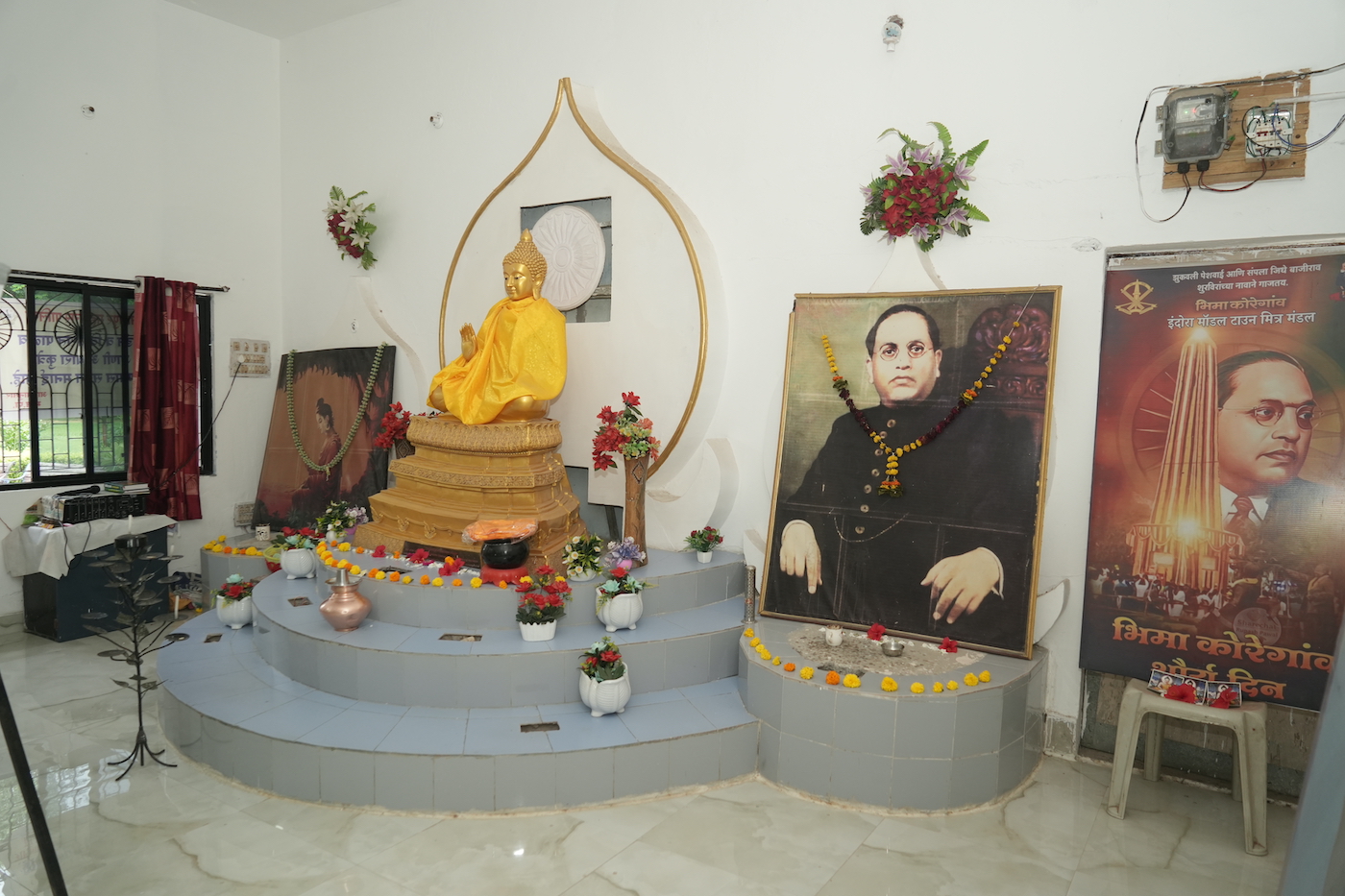
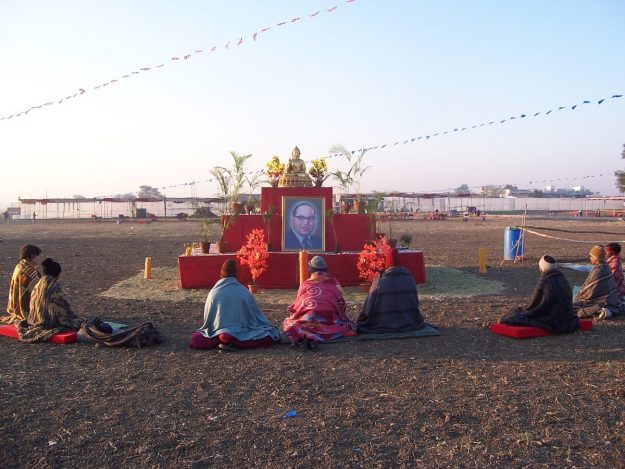
The conversions occurring across India are not simply a transfer of religious affiliation; they signify the emergence of a distinct Ambedkarite Buddhist culture, deeply rooted in the lived experience of caste oppression. In Buddhist viharas (monasteries) throughout Maharashtra, altars typically bear the images of two figures: the meditating Buddha and Dr. Ambedkar, often depicted in his characteristic blue suit, holding a pen and the Constitution he helped draft. This juxtaposition is deliberate: the Buddha represents the path to enlightenment, while Ambedkar symbolizes the practical application of that path in modern India, offering a framework for social justice and equality.
Ancient Buddhist symbols are being reinterpreted through an Ambedkarite lens. The dharmachakra (wheel of dharma) now appears on protest banners alongside photographs of atrocity victims. The color blue, associated with Ambedkar’s attire, has become a potent symbol of Dalit assertion. The Bodhi tree, traditionally a symbol of enlightenment, is reclaimed as a beacon of awareness accessible to all, irrespective of ritual purity. Conversion ceremonies are strategically held on Ambedkar Jayanti and Dhamma Chakra Pravartan Din, linking individual acts of liberation to the collective historical journey initiated in 1956. At local viharas, monks and laypeople often administer the twenty-two vows together, dismantling the traditional hierarchies that often separate clergy from laity. In Rohith’s case, even his death was transformed into a Buddhist ritual act, his cremation underscoring the belief that his mind, "a glorious thing made of star dust," could never be reduced to his caste identity.
From Shadows to the Stars: A Path to Liberation
When Rohith Vemula penned "From shadows to the stars," he was referencing Carl Sagan’s fascination with the cosmos. However, his words have transcended a personal biography to become an Ambedkarite mantra, encapsulating the journey from the pervasive shadow of caste to the luminous path of Buddhist liberation, from the imposed darkness of untouchability to the realization of human dignity.
Ambedkar profoundly understood this transformative journey. He wrote, "The greatest thing that the Buddha has done is to tell the world that the world cannot be reformed except by the reformation of the mind of the man and the mind of the world." This spiritual revolution serves as the bedrock for social transformation. Conversion, in this context, is an act of reformation of the mind, a conscious shedding of the shame that caste seeks to impose. It is what Raja Vemula articulated when he spoke of his family being free from shame—a shame inherently structured into the caste system, which Buddhism, in the Ambedkarite tradition, systematically dismantles.
For the estimated 10 million Ambedkarite Buddhists in India, the Dhamma provides the moral and philosophical foundation upon which constitutional democracy can truly flourish. Ambedkar reconceptualized core Buddhist principles within a socio-political framework. The Buddhist tenet of maitri (loving-kindness) becomes the democratic principle of fraternity. The concept of anatta (not-self) provides the basis for constitutional equality, revealing caste hierarchies as an illusory construct. The descriptions of sangha in the Pali canon serve as a model for democratic governance and community building. Ultimately, however, the answer lies not just in doctrine but in the people themselves. When they march with Buddhist flags rather than weapons, when they demand justice with dignity, and when they forge communities of equality in a deeply hierarchical society, they are collectively embodying the vision of Ambedkar’s Constitution, breathing life into its democratic ideals.
Seventy years after Ambedkar’s pivotal conversion, his movement stands at a critical juncture, its trajectory holding implications not only for the future of Dalits in India but potentially for the global landscape of engaged Buddhism. The challenges this movement confronts offer a vital template for how Buddhism can effectively address contemporary social issues, charting a course towards liberation that benefits not only individuals seeking inner peace but entire communities striving for justice. For the broader global Buddhist community, Ambedkarite Buddhism poses a necessary, albeit perhaps uncomfortable, question: Will we learn from Buddhists who are actively transforming society, or will we continue to overlook their profound contributions?
When we speak of engaged Buddhism, it is imperative to acknowledge that ten million people are already living this reality. It is not a theoretical construct but a lived experience, carrying within their very beings the collective memory of every flogging, every temple door slammed shut, every instance of institutional violence. Yet, despite this history, they steadfastly choose the path of peace. The critical question that remains is whether the rest of the world will continue to watch silently, or whether we will finally pay attention and stand ready to join them in their struggle for a more just and equitable world.

