

The traditional paradigm of strength and conditioning, which for decades has mandated a strictly symmetrical approach to bilateral movements such as the squat and deadlift, is currently undergoing a significant scientific re-evaluation. For years, fitness professionals and clinicians operated under the assumption that a symmetrical stance—where feet are perfectly aligned and movements are mirrored—was the gold standard for preventing injury and maximizing performance. However, emerging biomechanical research and the clinical observations of leading industry experts suggest that forcing the human body into a symmetrical mold may be counterproductive, and in some cases, physically deleterious. The core of this shifting perspective lies in the realization that human anatomy is inherently asymmetrical, and that "perfect" symmetry is a biological myth rather than a functional reality.
The Biological Reality of Internal Asymmetry
The human body is often perceived as a mirrored image across the sagittal plane, but internal examination reveals a different reality. The anatomical design of the human form is fundamentally asymmetrical. The heart is situated primarily on the left side of the thoracic cavity, while the liver, the body’s largest internal organ, occupies a significant portion of the right upper quadrant of the abdomen. This internal distribution has profound effects on the respiratory system; the right diaphragm is larger and more robust than the left, supported by the liver beneath it. These internal differences create a natural bias in how humans shift weight and rotate their torsos, a phenomenon extensively documented by the Postural Restoration Institute (PRI).
In a professional setting, experts like Neil Rampe and Michael Mullin have demonstrated that these internal asymmetries lead to predictable patterns of movement and posture. The "Left AIC" (Anterior Interior Chain) pattern, for instance, describes a common tendency for the pelvis to rotate toward the right, influenced by the dominant right diaphragm and the way the body compensates for its internal weight distribution. When a coach forces an athlete with this natural bias into a perfectly symmetrical squat stance, they may be forcing the joints to move through ranges of motion that the individual’s bone structure cannot safely accommodate.
The Evolution of Biomechanical Thought: A Chronological Perspective
The journey toward understanding human asymmetry in the context of strength training has evolved over several decades. In the 1980s and 1990s, the fitness industry was dominated by the "corrective exercise" movement, which viewed any deviation from a symmetrical baseline as a "dysfunction" that needed to be "fixed." Posture was assessed through the lens of a plumb line, and any hip hike or shoulder tilt was treated as a pathology.
By the early 2000s, the emergence of the Postural Restoration Institute began to challenge these notions. Founded by Ron Hruska, PRI introduced the concept that asymmetry is not a flaw but a functional adaptation of the human species. This period marked a transition from viewing the body as a series of levers and pulleys (the mechanical model) to viewing it as an integrated, breathing, and naturally biased organism (the biological model).
In the mid-2010s, this philosophy began to permeate the mainstream strength and conditioning world through the work of practitioners such as Tony Gentilcore, Dean Somerset, and Dr. Stuart McGill. Workshops like the "Complete Shoulder & Hip Blueprint" became pivotal in educating trainers on the vast differences in bony structure. By 2017, the industry saw a marked increase in the use of individualized assessments, such as the "hip scour" test, to determine an athlete’s unique anatomical capabilities rather than adhering to a one-size-fits-all model.

Anatomical Variance and the Geometry of the Hip
The most compelling evidence against mandated symmetry is found in the study of human osteology. Research into the morphology of the human pelvis and femur shows significant variance among individuals, and even between the left and right sides of the same individual.
Key anatomical variables include:
- Acetabular Version: The angle at which the hip socket (acetabulum) faces. Some individuals have sockets that face more forward (anteverted), while others face more toward the side (retroverted).
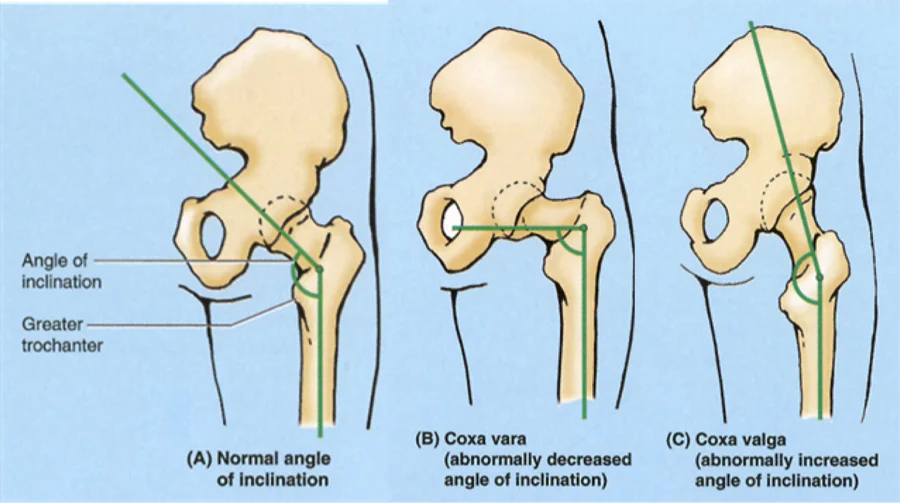
- Femoral Neck Angle: The angle of the femoral neck relative to the shaft of the femur. A wider angle (coxa valga) or a narrower angle (coxa vara) drastically changes the mechanics of a squat.
- Femoral Torsion: The "twist" in the thigh bone itself.
Data from orthopedic studies indicate that it is common for a person to have a more anteverted hip on the right and a more retroverted hip on the left. If a trainer requires this individual to place their feet in a perfectly symmetrical, "toes-forward" position, the femur on one side may prematurely impact the rim of the acetabulum, leading to labral tears or femoroacetabular impingement (FAI). By allowing for an asymmetrical or "staggered" stance, the trainer enables both hip joints to move through their optimal range of motion without bony interference.
The Fallacy of the Mechanical Analogy
A common counter-argument in favor of symmetry is the "car alignment" analogy. Proponents of this view argue that just as a car must have its wheels aligned to prevent tire wear, a human must be "aligned" to prevent joint wear. However, biomechanists argue that this comparison is fundamentally flawed. A car is a machine designed by engineers using identical, mass-produced parts. It is intended to be a "closed system" that does not adapt to stress.
In contrast, the human body is a "biological system." It is self-organizing and adaptive. Unlike a Volvo or a Ford, the human body has the capacity to reinforce its tissues in response to load, provided the load is applied within the constraints of its unique anatomy. Forcing a biological system to mimic a mechanical one ignores the principle of biological individuality. As experts like Dr. Ryan DeBell and Dr. John Rusin have noted, the goal of training should not be to achieve a visual ideal of symmetry, but to achieve "functional competence" within the user’s specific structural framework.
Expert Reactions and the Shift in Coaching Methodology
The shift toward accepting asymmetry has been met with both acclaim and resistance. Traditionalists argue that allowing asymmetrical lifting patterns could lead to muscle imbalances. However, the consensus among modern performance specialists is that the risk of joint injury from forced symmetry far outweighs the risk of minor muscular imbalances.
Dean Somerset, a prominent kinesiologist, emphasizes that when an athlete is placed in a stance that matches their hip anatomy—even if that stance looks "crooked" to an observer—they often report immediate improvements in power output and a reduction in joint pain. This "optometrist approach"—testing different foot widths and angles to find the "clearest" and strongest movement path—is becoming the new standard in high-performance centers.

Dr. Stuart McGill, a world-renowned expert on spinal biomechanics, has also highlighted the importance of "hip-spine" integration. His research suggests that if the hips cannot move freely due to anatomical constraints, the lower back (lumbar spine) will often compensate by rounding, which is a leading cause of disc herniation. Therefore, allowing an asymmetrical stance at the feet and hips is often a primary strategy for protecting the spine.
Broader Implications for the Fitness Industry
The move away from mandated symmetry has significant implications for the future of fitness and rehabilitation. Firstly, it necessitates a higher level of education for personal trainers and coaches. The ability to perform a thorough orthopedic assessment—looking at hip internal and external rotation, tibial torsion, and pelvic tilt—is becoming a required skill set rather than an advanced specialty.
Secondly, this shift is changing the way gym equipment is designed and used. There is a growing trend toward "unilateral" training (training one side at a time) and the use of equipment that allows for independent limb movement, such as dumbbells and cable machines, which accommodate natural asymmetrical paths of motion better than fixed-path machines or standard barbells.
Finally, the acceptance of asymmetry fosters a more inclusive environment for trainees with prior injuries or congenital structural differences. By acknowledging that "normal" is a spectrum rather than a single point of symmetry, the industry can better serve a population that is inherently diverse in its physical makeup.
In conclusion, the pursuit of perfect symmetry in human movement is a relic of an era that prioritized aesthetic ideals over biological reality. The human body is a marvel of asymmetrical engineering, designed to navigate a complex, non-linear world. By embracing these natural variances and tailoring training protocols to the individual’s unique bony structure, fitness professionals can enhance performance, improve longevity, and move closer to a truly evidence-based model of physical culture. The evidence is clear: we are not machines, and our strength protocols should reflect our status as unique biological entities.

