

A groundbreaking 2026 German interview study has revealed a strong consensus among peer support workers and individuals diagnosed with schizophrenia: they demand a genuine, influential role in determining the direction and execution of mental health research. The study, conducted by researchers at Ulm University, found that while participants valued medication and brain research, they placed equal, if not greater, importance on studies focusing on therapy, relationships, and everyday care. This finding challenges the prevailing biomedical model often dominant in psychiatric research and underscores a growing call for more patient-centered approaches.
The insights gleaned from this study are not merely anecdotal; they represent a critical perspective from those directly impacted by schizophrenia, offering a roadmap for a more relevant and humane research agenda. It highlights a persistent disconnect between the priorities of researchers and the lived experiences of patients, a gap that experts argue hinders effective care and perpetuates stigma.
The Shifting Landscape of Mental Health Research Priorities
For decades, psychiatric research, particularly concerning severe mental illnesses like schizophrenia, has heavily leaned into neurobiological and pharmacological investigations. This emphasis, while yielding important advancements in understanding brain function and developing psychotropic medications, has often overshadowed the equally crucial psychosocial aspects of recovery and daily living. The Ulm University study serves as a powerful reminder that mental illness is not solely a biological phenomenon but a complex interplay of biological, psychological, and social factors.
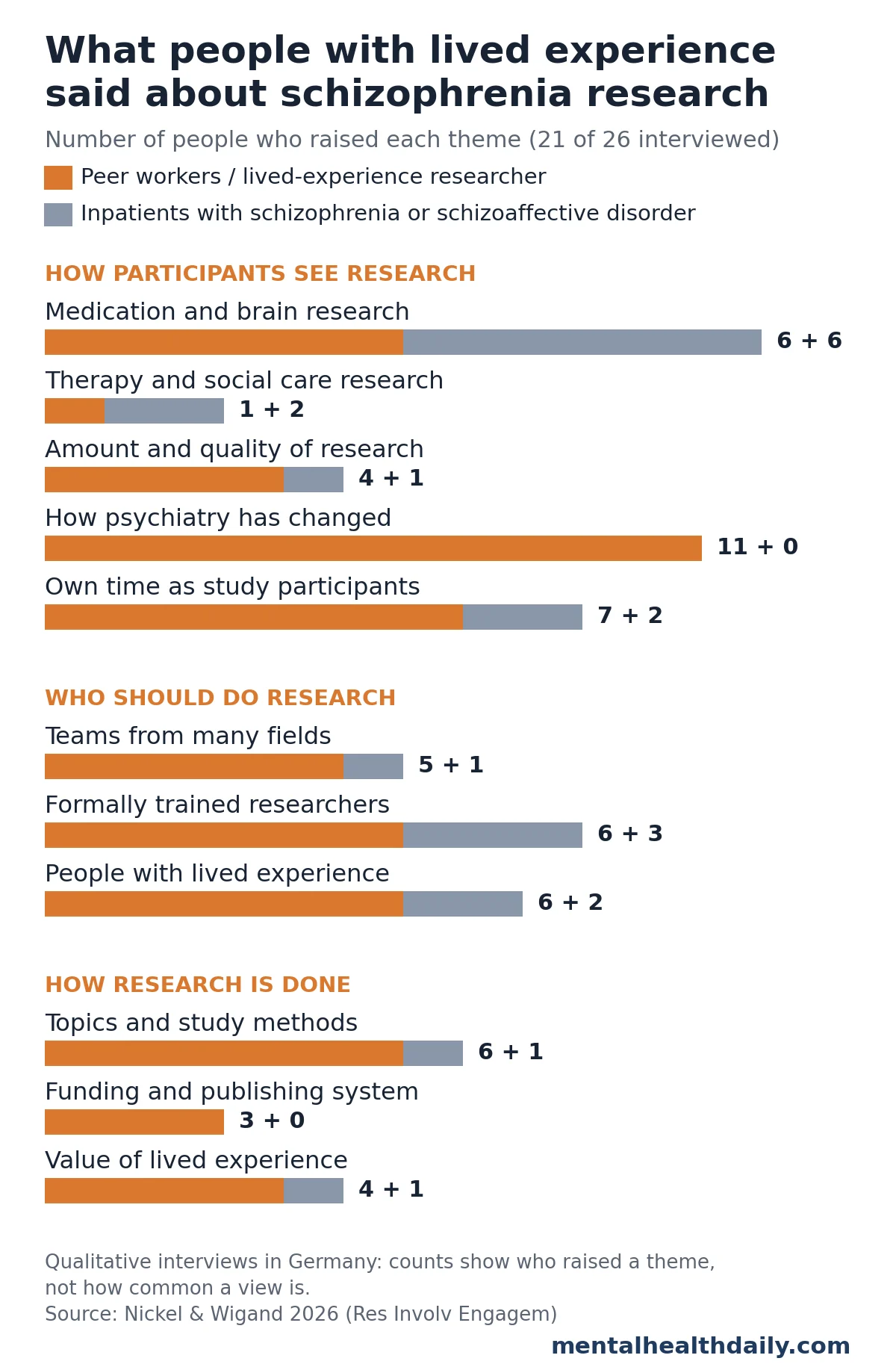
Participants in the study articulated a nuanced view: they recognized the importance of pharmacological interventions, often expressing hope for improved drug development to alleviate symptoms and reduce side effects. One patient notably stated, "drug development is incredibly important," while another hoped for tablets that could "improve the way you interact with people," illustrating a desire for an integrated approach where biology and social care synergize. However, this acknowledgment was consistently balanced with an equally fervent desire for research into therapeutic modalities, the quality of relationships, and practical support for navigating daily life with schizophrenia. Several experts, including one with a background in brain research, pushed back against the notion that biology alone holds "the ultimate truth," calling such a perspective "a bit arrogant." This sentiment reflects a broader movement within mental health advocacy to embrace a holistic, biopsychosocial model of understanding and intervention.
Methodology: Centering Lived Experience in German Academia
The study, titled "How the German Schizophrenia Research Interviews Worked," was spearheaded by Paul Nickel and Moritz Wigand at Ulm University and published in Research Involvement and Engagement. It involved 26 one-on-one interviews conducted between October 2021 and February 2022, a timeframe that allowed for in-depth, qualitative data collection during a period of increasing advocacy for patient involvement in research globally.
The researchers adopted a semi-structured interview approach, which provided a guiding framework of fixed topics while allowing participants the freedom to express themselves in their own words and steer the conversation toward areas they deemed most pertinent. Research was one of 18 themes explored, ensuring a comprehensive understanding of participants’ perspectives on various aspects of mental health care. Participants were prompted with questions such as what came to mind regarding psychiatric studies, how studies should be conducted, and what they would research if given their own institute.
Two distinct groups were recruited:
- Experts by Experience: This group included peer support workers and individuals with a diagnosis of schizophrenia (5 participants) or schizoaffective disorder (3 participants). Others had diagnoses such as depression or bipolar disorder but worked closely with people experiencing psychosis. Their average age was approximately 53 years. These individuals often brought a dual perspective of personal experience combined with professional insight into the mental health system.
- Patients: This group comprised inpatients primarily diagnosed with schizophrenia, with an average age of about 43 years.
The transcripts were meticulously analyzed using qualitative content analysis, a method that systematically codes verbal data into categories and subcategories, allowing researchers to identify recurring themes and deeper meanings. Notably, expert interviews, averaging 71 minutes, were significantly longer and more detailed than those with patients (43 minutes), leading the analysis to primarily rest on the experts’ insights, supplemented by patient views where they converged or diverged. This methodological choice underscores the value placed on the articulate and often professionally informed perspectives of the "experts by experience."
Progress and Persistent Frustrations: A Dual Narrative
Participants acknowledged significant progress in psychiatric care over recent decades, painting a picture of a more humane system. They pointed to positive developments such as:
- Lower medication doses, reducing the burden of side effects.
- Less reliance on sedation and physical restraints, respecting patient autonomy.
- Increased patient autonomy in treatment decisions.
- Improved, more collaborative relationships with staff.
These observations align with broader trends in mental health reform across Western countries, where efforts have been made to de-institutionalize care and adopt more patient-centered models.
However, alongside these improvements, a litany of frustrations persisted, highlighting areas where research and policy still fall short:
- Lack of Individualized Therapy: A common complaint was the scarcity of personalized therapeutic interventions, often replaced by group therapies or a sole focus on medication management.
- Inadequate Outpatient Care: Participants frequently cited poor quality or insufficient availability of outpatient support, leading to revolving-door admissions or a lack of sustained recovery in the community.
- Enduring Stigma: The societal stigma associated with schizophrenia remained a profound source of distress, affecting employment, housing, and social integration.
- Over-Medication and Side Effects: Despite acknowledging the utility of medication, many expressed concerns about over-prescription and the debilitating side effects that often accompany psychotropic drugs.
- Limited Housing and Employment Support: The practical challenges of finding stable housing and meaningful employment were consistently raised as barriers to recovery, areas where more research and intervention are desperately needed.
These frustrations underscore the urgent need for research that directly addresses the daily challenges faced by individuals with schizophrenia, moving beyond purely symptomatic relief to foster holistic well-being and social inclusion.
Demanding Multiperspective Teams and Lived Experience in Research
A central theme emerging from the interviews was the emphatic call for "multiperspective" research teams. Participants argued that complex mental health issues require diverse expertise, extending beyond traditional medical and psychological disciplines. One expert passionately advocated for the inclusion of philosophy and sociology alongside psychiatry and psychology, emphasizing that questions of ethics and social values are intrinsically linked to mental health research. This reflects a desire for a more humanistic and socially conscious approach to understanding and treating mental illness.
The discussion around who should conduct schizophrenia research also illuminated a tension between formal scientific training and lived experience. Initially, several participants emphasized the necessity of formal training, with one patient likening it to specialized professions: "Nobody can work as a bar manager or kitchen manager who is not a kitchen manager." However, many experts, often drawing on their own journey as peer workers or individuals with lived experience, subsequently revised this view. One expert noted, "it can be anybody, it can be a peer support worker; I’ve been on a [research] trial before." The researchers themselves suggest that deeply ingrained hierarchies within psychiatry might lead individuals to undervalue their own invaluable contributions, even when they possess both formal training and lived experience.
The involvement of people who have been patients was a particularly strong and resonant theme. A patient envisioned "a great opportunity if patients were trained to participate in research," while a peer worker asserted unequivocally: "Persons being researched should have their say. By all means." This isn’t merely a call for tokenistic representation but for meaningful, empowered participation throughout the research lifecycle, from conceptualization to dissemination.
A particularly poignant argument came from a researcher with lived experience, who pointed out that given the prevalence of mental illness, any large research group likely already includes individuals with their own psychiatric histories. However, fear of career repercussions often prevents them from disclosing this, leading institutions to bring in "outside" peer researchers instead. This highlights a systemic issue of stigma within academia itself, which can impede genuine integration of lived experience.
Furthermore, an expert cautioned against romanticizing patients, stating, "We’re not better people just because we have experience of psychiatry, but we really do have a different perspective, and I don’t think mental health research is possible without including this view." This grounded perspective emphasizes that lived experience is a distinct and essential epistemological contribution, not merely a moral imperative.
Critiques of Research Practices and Participant Treatment
While generally supportive of research’s potential, participants voiced significant criticisms regarding how studies are conducted and how participants are treated. Their main grievances included:
- Irrelevant Research Topics: Many felt that studies often focused on questions that held little relevance to their daily lives or recovery journeys.
- Lack of Respect and Debriefing: Participants expressed frustration over being treated merely as data points, with little respect for their time, privacy, or intellectual contribution. The absence of debriefing sessions or feedback on study results was a common complaint.
- Ethical Concerns: Some described experiences bordering on unethical treatment, including perceived coercion, insufficient informed consent, and inadequate compensation for their time and effort.
- Deficit-Oriented Research: There was a strong desire for research to move beyond a focus on symptoms and deficits, instead exploring strengths, resilience, and pathways to recovery.
Despite these criticisms, participants did not reject basic science entirely. One expert noted, "Basic research is also very important and is needed," but crucially added the caveat that people with lived experience should help identify what fundamental questions need to be studied. This highlights a desire for basic research to be more directly informed by real-world challenges.
A Global Discrepancy: Research Priorities vs. Patient Needs
The findings from the Ulm University study are not isolated; they resonate with a growing body of evidence indicating a significant disparity between what mental health research prioritizes and what patients and clinicians truly need.
-
Journal Trends: A related analysis by Wigand et al. (referenced in the original study) examined the titles and abstracts of papers in 10 top-ranked psychiatry journals across 1999, 2009, and 2019. This study revealed a consistent and concerning trend: neurobiological research, particularly genetic and animal studies, significantly increased in prominence after 1999. Conversely, social and psychological themes remained consistently underrepresented across all three time points. This academic trend directly contradicts the balanced priorities articulated by the participants in the Ulm University interviews.
-
Priorities vs. Registered Trials: Further supporting this disconnect, Crowe et al. compared treatment priorities jointly identified by patients and clinicians through James Lind Alliance partnerships with trials registered between 2003 and 2012. Their findings were stark: while drugs, vaccines, and biologicals constituted 18% of the interventions prioritized by patients and clinicians, they accounted for a staggering 86% of interventions in commercial trials. Conversely, non-pharmacological approaches such as education, psychological therapy, exercise, and service changes made up 59% of patient/clinician priorities but only a mere 3% of commercial trial interventions. This commercial bias highlights the powerful influence of pharmaceutical interests on the research landscape, often at the expense of patient-identified needs.
-
Lived Experience in Agenda-Setting: An Australian analysis spanning 2013 to 2022, which synthesized three research agenda-setting studies, underscored that individuals with lived experience consistently view their insights as a critical, indispensable component of mental health research. They advocate for their experience to be instrumental in setting research agendas, rather than merely serving as study participants. This aligns perfectly with the German study’s call for fundamental involvement from the outset.
-
The Unique Urgency for Schizophrenia Research: Nickel and Wigand specifically cite German population surveys over 30 years that indicate an increase in stigma towards people with schizophrenia, marked by greater fear and a desire for social distance, even as stigma towards depression slightly eased. This persistent and worsening stigma for schizophrenia makes research that genuinely addresses patients’ needs and improves their quality of life particularly pressing, as it can directly counter misinformation and foster understanding.
Limitations and Future Directions
As with all qualitative research, the Ulm University study’s primary aim was to uncover what issues matter to people and why, rather than to quantify the prevalence of specific views. The counts presented in the original chart reflect who raised a particular theme in an open conversation, not necessarily how widely that view is held across the broader population of people with schizophrenia. Key limitations include:
- Sample Size: The study involved a relatively small sample of 26 participants.
- Participant Articulacy: The participants were predominantly highly articulate, particularly the "experts by experience," which might not fully represent the views of all individuals living with schizophrenia, especially those with more severe cognitive impairments or communication challenges.
- Geographical Focus: The study was conducted solely in Germany, and while its findings resonate globally, cultural and healthcare system specificities might influence some perspectives.
- Potential for Social Desirability Bias: Participants might have tailored their answers to align with what they perceived researchers wanted to hear, though the semi-structured nature and skilled interviewers aimed to mitigate this.
Despite these limitations, the study offers invaluable insights that underscore the urgent need for a paradigm shift in mental health research. Nickel and Wigand distilled three key recommendations from their interviews:
- Integrate Lived Experience: Meaningful involvement of people with lived experience should be integrated across the entire research cycle, from identifying research questions and designing studies to conducting the research and disseminating findings.
- Fund Psychosocial and Care Research: There needs to be a significant increase in funding allocated to research focused on psychosocial interventions, therapy, relationship support, and practical everyday care, balancing the current overemphasis on biomedical research.
- Respectful Treatment of Participants: Study participants must be treated with utmost respect, their input seriously considered, and ethical guidelines rigorously followed, especially in qualitative studies where their personal narratives form the core data.
The researchers also highlighted that participatory research, while gaining traction internationally, is still an emerging field in Germany. This study can serve as a catalyst for greater adoption of such inclusive methodologies within German academia and beyond.
For individuals living with schizophrenia and their families, this study provides powerful validation: their experiences and priorities are not only valid but essential for shaping effective and relevant research. It empowers them to demand greater involvement and to critically assess research initiatives, asking whether studies have genuinely incorporated lived experience in their design before choosing to participate. For researchers, institutions, and policymakers, the message is clear: the future of schizophrenia research must be co-created with those it aims to serve, embracing a more inclusive, holistic, and ultimately more impactful approach. The call for an equal voice is not merely an ethical consideration; it is a scientific imperative for advancing understanding and improving lives.

