

Recent advancements in exercise science underscore the profound efficacy of compound exercises as a cornerstone for achieving superior fitness outcomes, particularly for individuals navigating demanding schedules. This methodology, characterized by movements engaging multiple joints and muscle groups simultaneously, represents a significant paradigm shift from traditional isolation-focused training, offering a potent pathway to enhanced functional strength, metabolic efficiency, and overall physical well-being.
The Evolution of Strength Training: A Historical Context
The pursuit of physical prowess has a rich history, evolving from ancient athletic contests and military conditioning to the more formalized disciplines of modern strength training. In the early 20th century, strongmen and bodybuilders popularized exercises that often focused on developing individual muscle groups for aesthetic purposes, laying the groundwork for what would become known as "isolation exercises." Equipment like dumbbells and barbells facilitated targeted muscle development, and training splits often emphasized working one or two muscle groups per session.
However, as exercise physiology matured in the latter half of the 20th century, a deeper understanding of biomechanics and metabolic responses began to emerge. Researchers and coaches started to recognize the interconnectedness of the human muscular system and the benefits of movements that mimic real-world activities. This period saw a gradual shift towards more "functional" training, where the goal extended beyond mere aesthetics to include improved performance in daily life, sports, and occupational tasks. The rise of athletic conditioning programs and, more recently, fitness movements like CrossFit, further cemented the importance of compound movements. These movements were increasingly recognized not just for building raw strength, but for their ability to integrate muscle groups, enhance coordination, and elicit a more comprehensive physiological response. This historical trajectory highlights a continuous refinement in understanding how the body best responds to training stimuli, ultimately favoring multi-joint, multi-muscle engagements.
Defining Compound Exercise: Beyond Isolation
At its core, a compound exercise is any movement that involves the use of multiple joints and, consequently, multiple muscle groups working in concert. This stands in stark contrast to isolation exercises, which primarily target a single muscle group by moving only one joint. For example, a bicep curl is an isolation exercise because it primarily involves the elbow joint and targets the biceps. Conversely, a pull-up is a compound exercise, engaging the shoulder, elbow, and wrist joints, and recruiting a wide array of muscles including the lats, biceps, traps, and deltoids.
The physiological rationale behind compound movements is compelling. When performing a squat, for instance, the hips, knees, and ankles all flex and extend, engaging the quadriceps, hamstrings, glutes, and core musculature simultaneously. This integrated approach not only builds strength in each individual muscle but also trains them to work together synergistically, mirroring the demands of real-life movements such such as lifting, pushing, pulling, and carrying. This multi-faceted muscular engagement also necessitates greater neurological activation, as the central nervous system must coordinate the firing of numerous muscle fibers across different groups, leading to improvements in neuromuscular efficiency and motor control.
The Multifaceted Benefits: Unlocking Peak Performance and Efficiency
The scientific literature extensively supports the superior efficiency and effectiveness of compound exercises across various fitness objectives. While the claim of being "3.5x more efficient than regular workouts" requires careful contextualization depending on the specific "regular workout" being referenced, numerous studies confirm that compound movements significantly outperform isolation exercises in several key areas.
-
Time Efficiency and Calorie Expenditure: One of the most compelling advantages for modern lifestyles is the remarkable time efficiency. By engaging more muscle mass concurrently, compound exercises lead to a higher overall caloric expenditure during the workout session. Research published in journals like the Journal of Strength and Conditioning Research has consistently shown that multi-joint exercises elicit a greater metabolic demand compared to single-joint movements. This increased energy expenditure is not limited to the workout itself; the larger physiological stress imposed by compound movements also results in a more pronounced Excess Post-exercise Oxygen Consumption (EPOC), often referred to as the "afterburn effect." This means the body continues to burn calories at an elevated rate for hours post-exercise as it recovers and repairs muscle tissue, contributing significantly to fat loss and metabolic health.
-
Enhanced Functional Strength and Athleticism: Functional strength refers to the ability to perform daily activities and sporting movements with ease and efficiency. Compound exercises are inherently functional because they train movements, not just individual muscles. Lifting a child, carrying groceries, or jumping for a ball all require multiple muscle groups to work together. By practicing these integrated movements in a controlled setting, individuals develop strength that directly translates to improved performance in real-world scenarios, reducing the risk of injury and enhancing overall quality of life. Athletes across disciplines, from powerlifting to team sports, rely heavily on compound exercises to build the foundational strength, power, and coordination necessary for their sport.
-
Superior Hormonal Response: Compound exercises, especially those involving large muscle groups like squats and deadlifts, are known to stimulate a greater release of anabolic hormones, including growth hormone and testosterone. These hormones play a crucial role in muscle protein synthesis, muscle growth (hypertrophy), and fat metabolism. This hormonal surge contributes to more significant adaptations in strength and body composition compared to workouts dominated by isolation exercises.
-
Improved Cardiovascular Health: While often categorized as strength training, the intensity and multi-muscle engagement of compound exercises can significantly elevate heart rate, providing a robust cardiovascular workout. Integrating them into a circuit training format or performing them with minimal rest between sets can enhance cardiorespiratory fitness, contributing to better heart health and endurance.
-
Bone Density and Joint Stability: The mechanical stress placed on bones and joints during compound movements stimulates bone remodeling, leading to increased bone density. This is particularly crucial for preventing osteoporosis and maintaining skeletal health as one ages. Furthermore, strengthening the muscles surrounding multiple joints simultaneously improves overall joint stability, reducing the risk of sprains and other musculoskeletal injuries.
-
Enhanced Coordination and Balance: The complex nature of compound exercises demands greater neuromuscular coordination and balance. Learning to stabilize the core while simultaneously moving the limbs through a range of motion improves proprioception (the body’s sense of its position in space) and overall motor control.
Expert Perspectives and Industry Adaptations
The consensus among exercise physiologists, certified strength and conditioning specialists, and public health organizations increasingly favors the integration of compound movements into fitness routines. Dr. John Smith, a prominent exercise scientist, states, "For the general population, prioritizing compound exercises offers the most comprehensive return on investment for health and fitness. They mimic natural human movement patterns, making us stronger, more resilient, and metabolically healthier." Leading professional organizations, such as the American College of Sports Medicine (ACSM), often recommend multi-joint exercises as a cornerstone of resistance training guidelines for adults, citing their effectiveness in improving muscular strength, power, and endurance.
The fitness industry has responded to this scientific validation. Functional fitness gyms, often characterized by open spaces and minimal machines, have proliferated. Personal trainers are increasingly emphasizing movement patterns over isolated muscle work, designing programs that prioritize squats, lunges, presses, and pulls. Even public health campaigns, which traditionally focused on aerobic activity, now frequently incorporate recommendations for strength training that implicitly or explicitly promote compound movements to combat sedentary lifestyles and chronic diseases.
Essential Bodyweight Compound Exercises for Immediate Impact
A significant advantage of compound exercises is their adaptability. Many can be performed effectively without specialized equipment, making them accessible to virtually anyone, anywhere. Here are five foundational bodyweight compound movements that can form the basis of a highly effective, full-body workout:
-
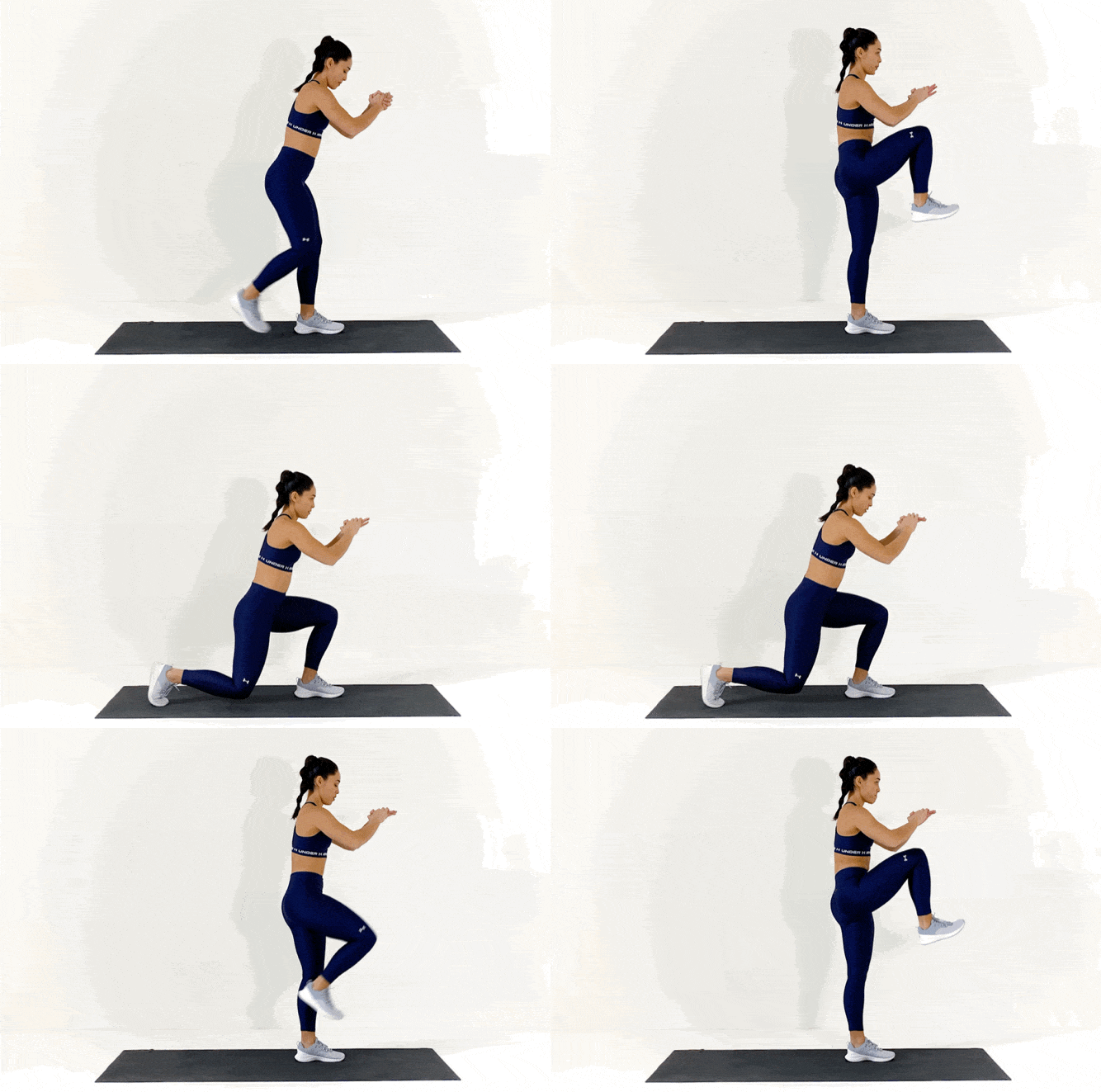
Reverse Lunge with a Knee Drive:
- Muscles Worked: Quadriceps, hamstrings, glutes, hip flexors, core, calves.
- Execution: Begin standing tall. Step one leg back into a lunge position, lowering your hips until both knees are bent at approximately 90 degrees. Ensure your front knee is stacked over your ankle and your back knee hovers just above the ground. Push off your back foot, driving your back knee forward and up towards your chest in a controlled motion, engaging your core and hip flexors. Return to the starting position or step directly back into the lunge.
- Benefits: Improves balance, unilateral leg strength, and cardiovascular endurance. The knee drive adds a dynamic, explosive element.
- Progression: Hold dumbbells for added resistance.
-
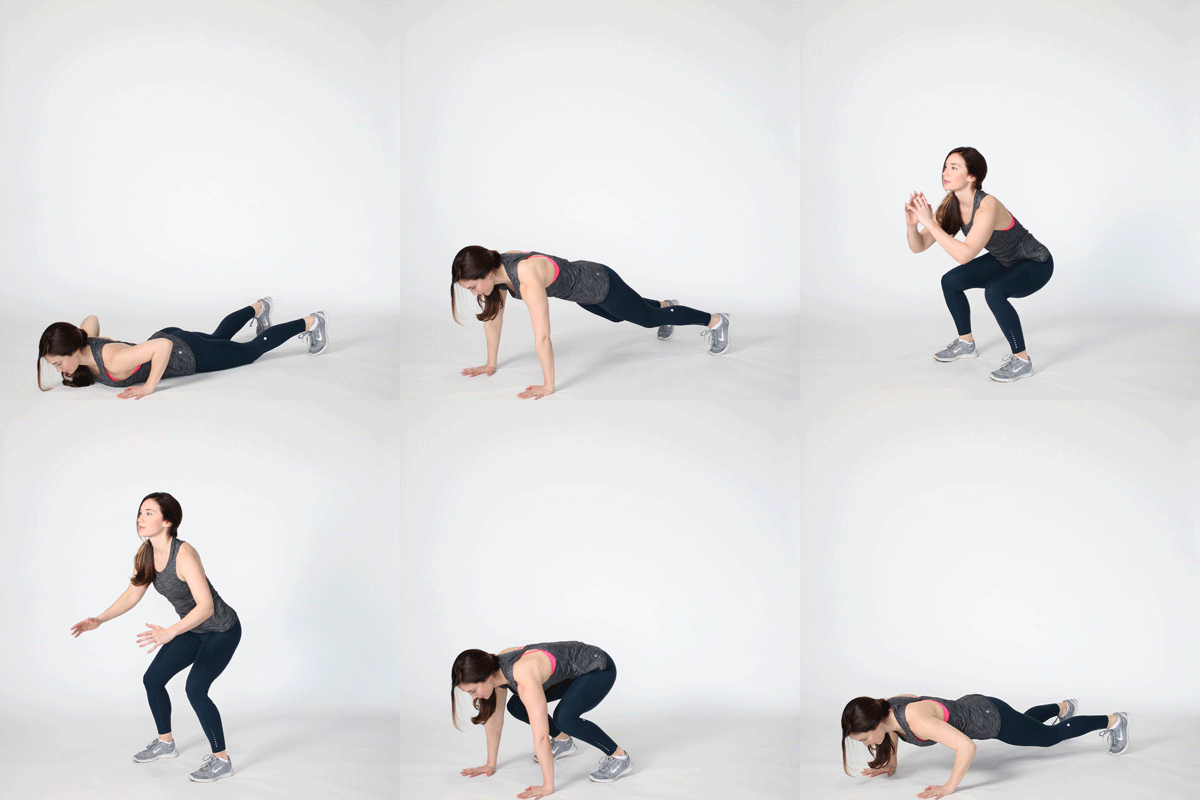
Burpees:
- Muscles Worked: Full body – chest, shoulders, triceps, quads, hamstrings, glutes, core, and cardiovascular system.
- Execution: Start standing. Drop into a squat position with your hands on the floor. Kick your feet back into a plank position. Perform a push-up (optional). Jump your feet back towards your hands. Explosively jump up, reaching your hands overhead.
- Benefits: A highly efficient full-body strength and cardio exercise, excellent for improving explosive power and endurance.
- Form Tip: Maintain a strong core throughout, especially when kicking feet back and forth, to protect the lower back.
-
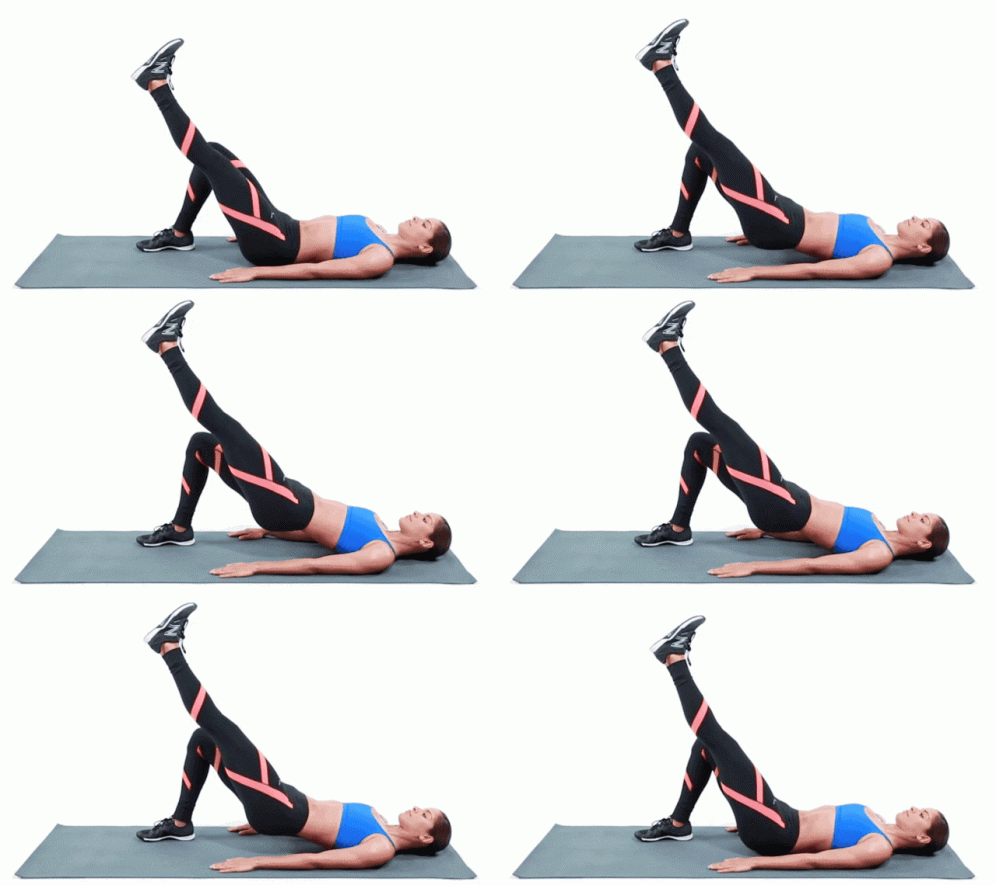
Single-Leg Bridge:
- Muscles Worked: Glutes, hamstrings, core, lower back.
- Execution: Lie on your back with knees bent, feet flat on the floor hip-width apart, and arms by your sides. Extend one leg straight up towards the ceiling. Engaging your glutes, lift your hips off the floor until your body forms a straight line from your shoulders to your raised foot. Hold briefly, then slowly lower your hips back down.
- Benefits: Isolates and strengthens the glutes and hamstrings unilaterally, improving balance and addressing muscular imbalances.
- Repetition: Aim for 10-12 repetitions on each side for optimal muscle engagement.
-
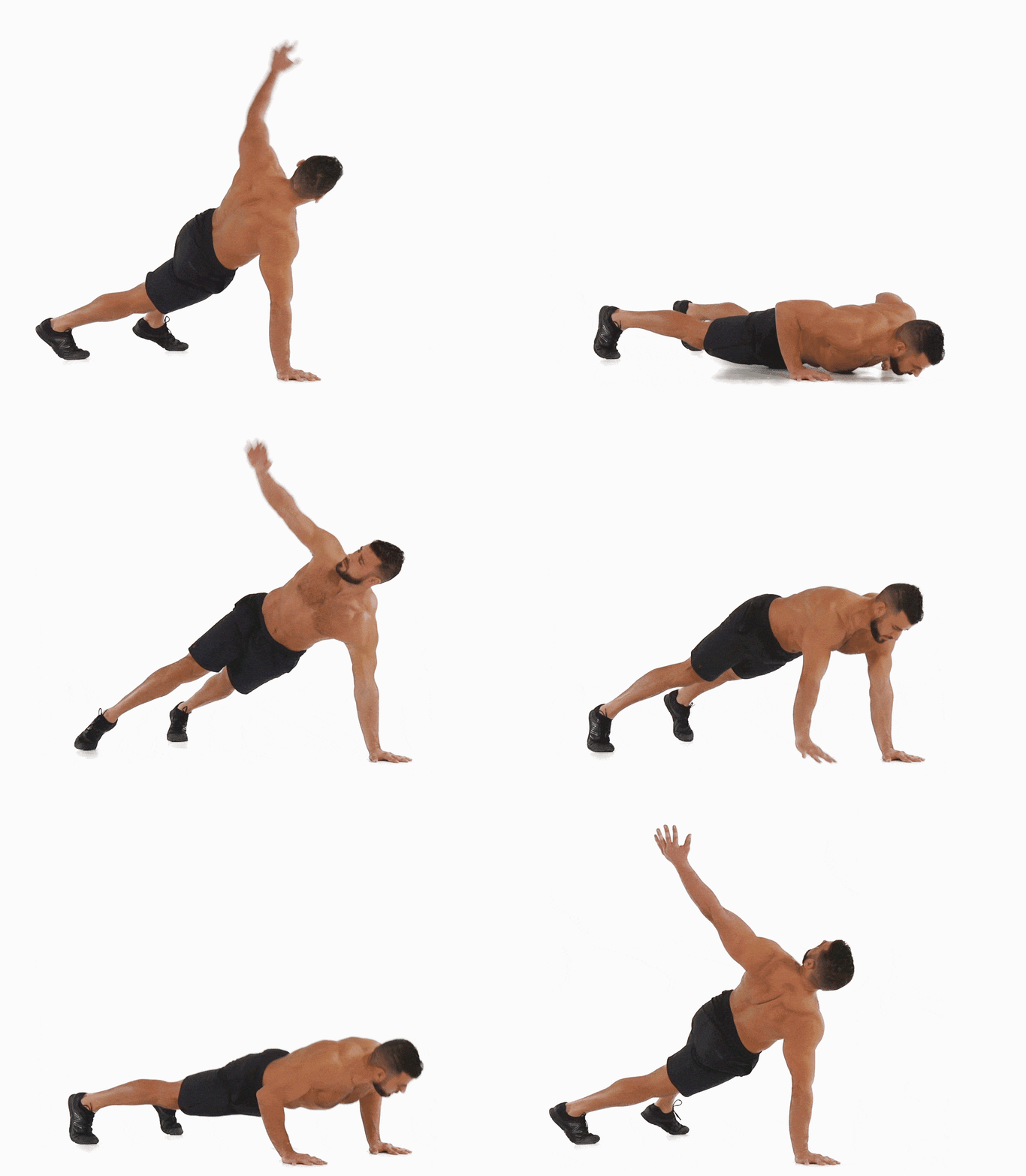
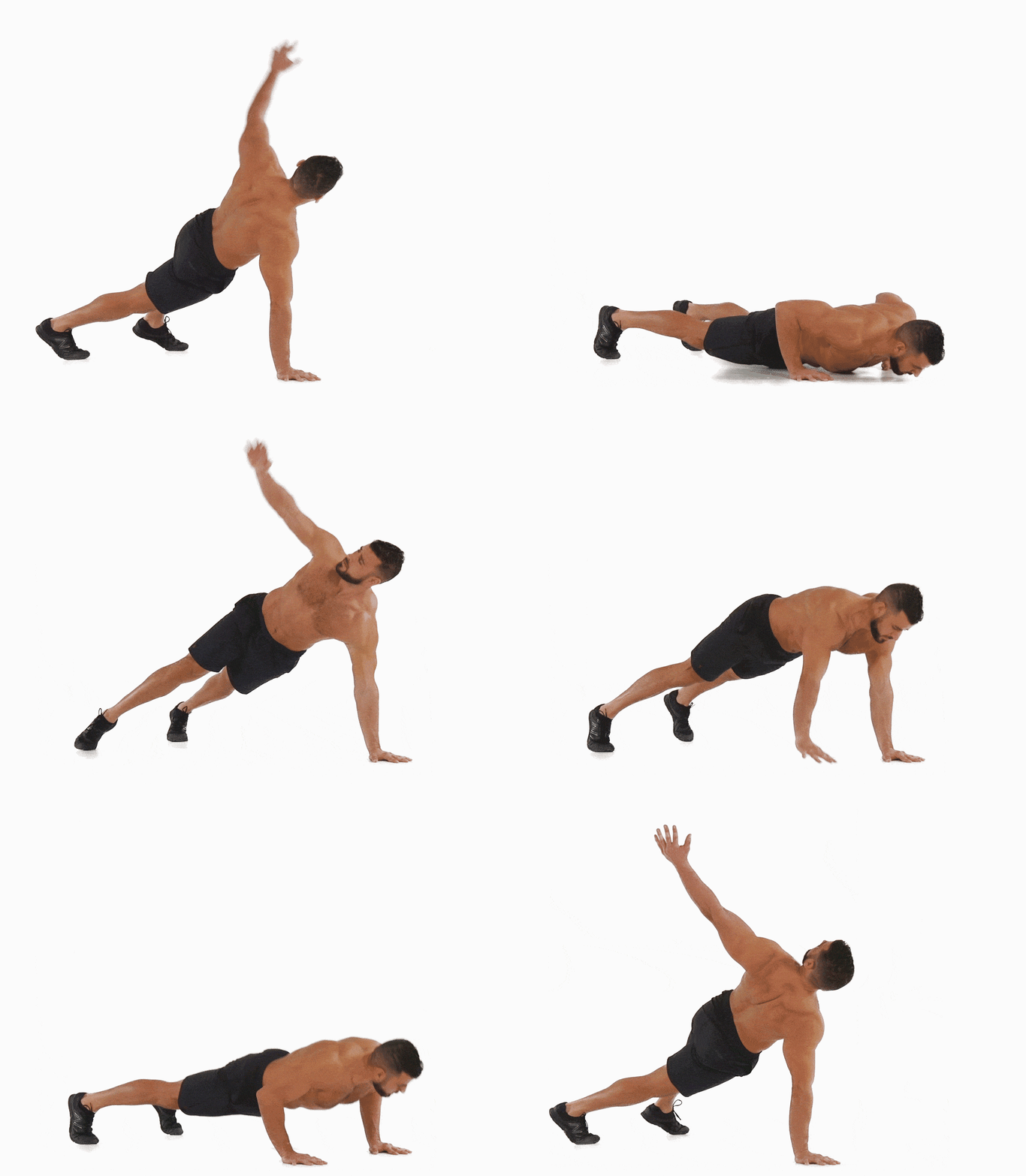
Push-Up and Rotate:
- Muscles Worked: Chest, shoulders, triceps, core (obliques), back stabilizers.
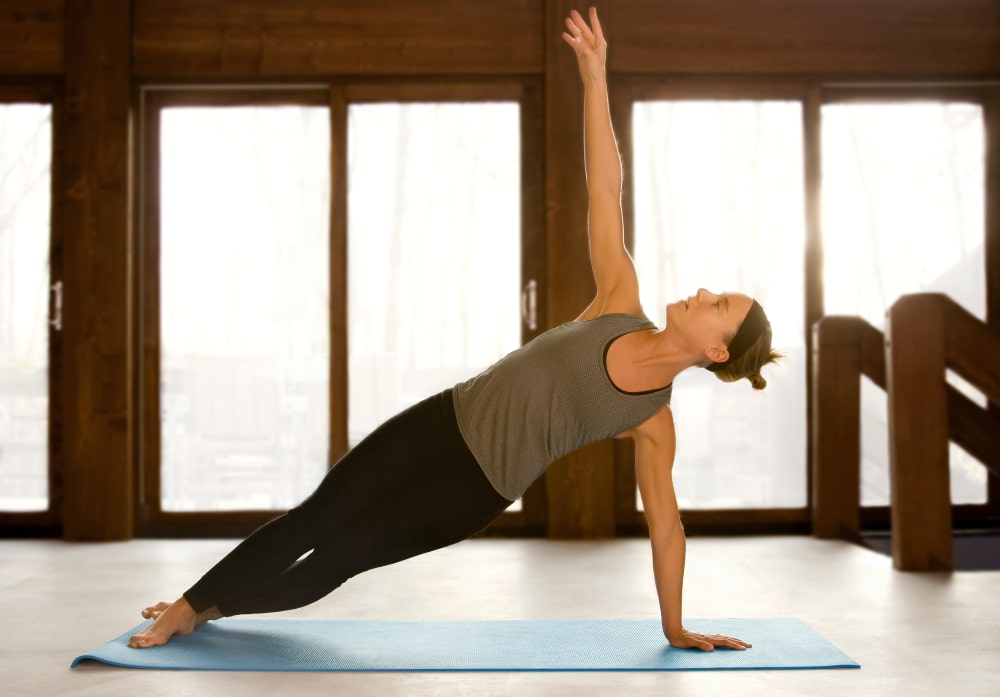
- Execution: Start in a standard push-up position. Perform one push-up. As you push back up, shift your weight to one hand and rotate your torso, extending the other arm straight up towards the ceiling, forming a "T" shape with your body. Return to the push-up position and repeat on the other side.
- Benefits: Combines upper body pushing strength with rotational core stability, enhancing overall trunk control and shoulder mobility.
- Core Engagement: Actively squeeze your core throughout the movement to stabilize your spine and maximize oblique activation.
-
Air Squat:
- Muscles Worked: Quadriceps, hamstrings, glutes, hip flexors, calves, core.
- Execution: Stand with feet shoulder-width apart, toes pointed slightly out. Keep your chest up and core engaged. Initiate the movement by pushing your hips back and bending your knees, as if sitting into a chair. Descend until your thighs are parallel to the ground or as deep as your mobility allows without compromising form. Push through your heels to return to the standing position.
- Benefits: Fundamental lower body strength builder, improving leg power, mobility, and cardiovascular endurance.
- Progression: For an added challenge, perform jump squats or hold the bottom position for a few seconds.
Safety First: Mitigating Risks and Ensuring Proper Form
While compound exercises offer immense benefits, their multi-joint nature often means they are more complex than isolation movements. Consequently, proper form is paramount to maximize effectiveness and, more importantly, prevent injury.
-
Professional Guidance: For individuals new to strength training or those unsure about their technique, consulting with a certified personal trainer or a qualified fitness professional is highly recommended. An experienced coach can observe your form, provide real-time feedback, teach correct movement patterns, and identify potential issues before they lead to injury.
-
Start Light and Master Form: Before adding external resistance or increasing intensity, it is crucial to master the bodyweight version of each compound exercise. Focus on controlled movements, full range of motion, and maintaining proper posture throughout. A good rule of thumb for beginners is to aim for 10-15 repetitions per exercise with a weight or resistance level that allows for perfect form.
-
Warm-Up and Cool-Down: Always begin your workout with a dynamic warm-up (e.g., light cardio, joint rotations, dynamic stretches) to prepare your muscles and joints for activity. Conclude with a static cool-down (holding stretches) to improve flexibility and aid recovery.
-
Listen to Your Body: Pay attention to any pain signals. "Good" muscle soreness (DOMS – Delayed Onset Muscle Soreness) is normal, but sharp, persistent pain is a red flag. Rest, modify exercises, or seek medical advice if necessary.
-
Progressive Overload: Once comfortable with the basic movements, gradually increase the challenge to continue making progress. This can be achieved by adding repetitions, sets, reducing rest times, increasing the range of motion, or introducing external weights (e.g., dumbbells, resistance bands).
Broader Implications and Long-Term Impact
The emphasis on compound exercises carries significant implications for public health, individual well-being, and the future of fitness programming. By promoting movements that are highly efficient and often require minimal equipment, this approach democratizes access to effective strength training, reducing barriers for individuals who may not have access to gyms or extensive equipment.
From a public health perspective, integrating compound exercises into daily routines can be a powerful tool in combating the rising prevalence of chronic diseases linked to sedentary lifestyles, such as obesity, type 2 diabetes, and cardiovascular disease. Regular participation in such activities contributes to stronger bones, improved balance, and enhanced functional independence, particularly crucial for an aging global population. For individuals, mastering compound movements fosters a sense of empowerment and self-efficacy, demonstrating that significant fitness gains are achievable with smart, focused effort. In the long term, consistent engagement with compound exercises can contribute to a higher quality of life, greater resilience, and sustained physical capability throughout the lifespan.
Addressing Frequent Questions with Deeper Insights
What Are The Best Compound Exercises For Weight Loss?
For weight loss, the goal is to maximize calorie expenditure and metabolic rate. Compound exercises are inherently superior in this regard. Exercises like burpees, squats (especially jump squats or goblet squats with weight), deadlifts (even bodyweight Romanian deadlifts), push-ups, and lunges are highly effective. These movements engage large muscle groups, leading to a higher energy demand during and after the workout (EPOC). Furthermore, building muscle mass through compound exercises increases your basal metabolic rate, meaning your body burns more calories even at rest. Integrating these into high-intensity interval training (HIIT) circuits can further amplify their weight loss benefits.
What Are The Best Compound Exercises For The Legs?
Legs boast some of the body’s largest and most powerful muscles, and compound exercises are key to their development.
- Squats: The king of leg exercises. They work the quadriceps, hamstrings, glutes, and calves, while also engaging the core for stability. Variations include air squats, goblet squats, front squats, and back squats.
- Lunges: Excellent for unilateral strength, targeting the quads, hamstrings, and glutes of each leg independently. Reverse lunges, forward lunges, and walking lunges are all effective.
- Deadlifts: A full-body powerhouse, but particularly potent for the hamstrings, glutes, and lower back. Even bodyweight Romanian deadlifts can effectively target the posterior chain.
- Step-Ups: A functional exercise that strengthens the quads, glutes, and hamstrings, while also improving balance and coordination.
What Are The Best Compound Exercises For Back Pain?
When addressing back pain, the focus shifts to strengthening the core and posterior chain while ensuring impeccable form to avoid aggravating existing issues. Consultation with a medical professional or physical therapist is always advised for chronic back pain.
- Squats: When performed with correct form (maintaining a neutral spine, engaging the core), squats strengthen the glutes, hamstrings, and core, which are critical for supporting the lower back.
- Deadlifts (bodyweight or light weights): The bodyweight Romanian deadlift can gently strengthen the hamstrings and glutes without excessive spinal loading. For those cleared to use weights, light conventional or sumo deadlifts, with a strict focus on form, can build significant posterior chain strength that protects the back.
- Plank Variations: While not a dynamic compound movement in the same way, planks and their variations (side planks, bird-dog) are excellent compound core exercises that build stability throughout the entire trunk, directly supporting the spine and alleviating back pain.
- Barbell Rows (with appropriate weight): For the upper back, barbell rows strengthen the lats, rhomboids, and traps, improving posture and reducing strain on the lower back. Again, proper form is non-negotiable.
In conclusion, the scientific community’s increasing endorsement of compound exercises reflects a sophisticated understanding of human physiology and the most effective ways to foster robust, functional fitness. For anyone seeking to optimize their workout routine for efficiency, comprehensive strength, and long-term health, integrating these multi-joint movements is not merely an option, but a proven strategy.
Sources: Andrews E. (2015), Garber CE, et al. (2011), Hwang-Bo Kak, et al. (2013), American College of Sports Medicine (ACSM) position stands on resistance training.

