

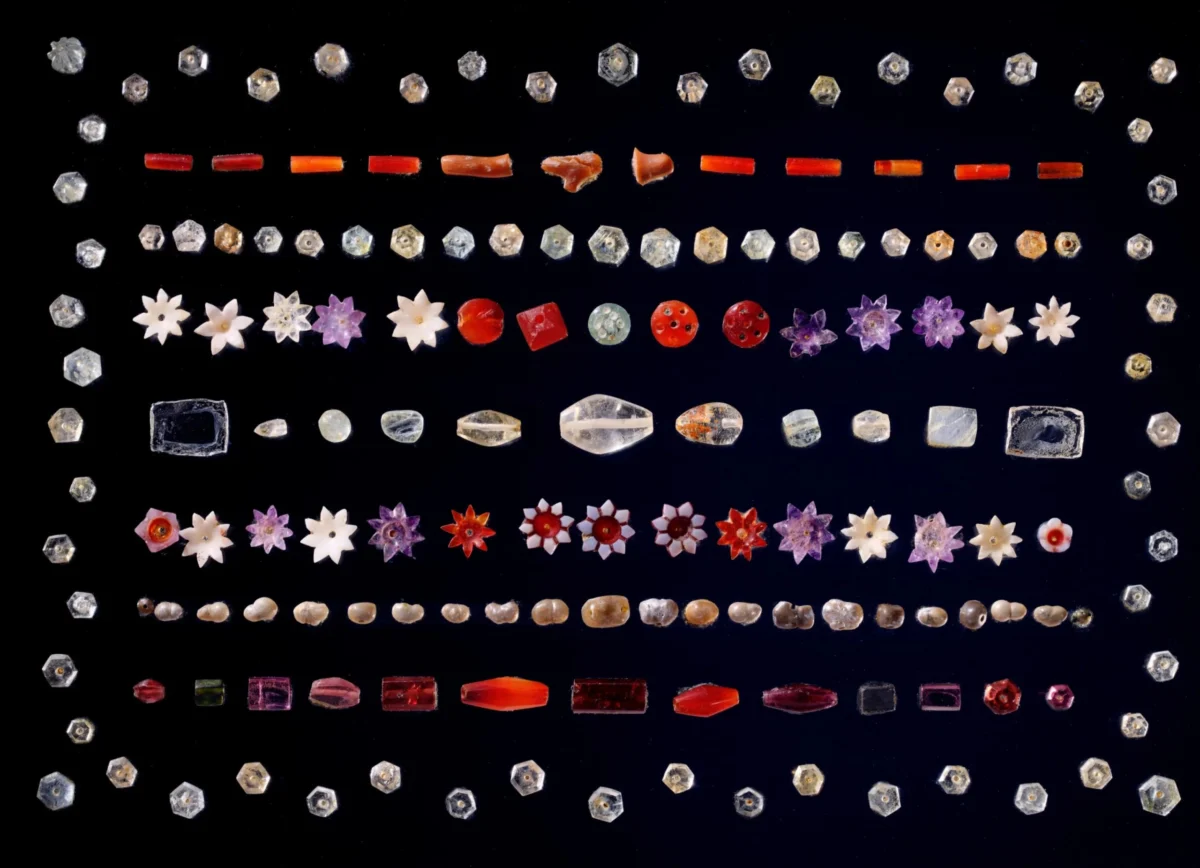
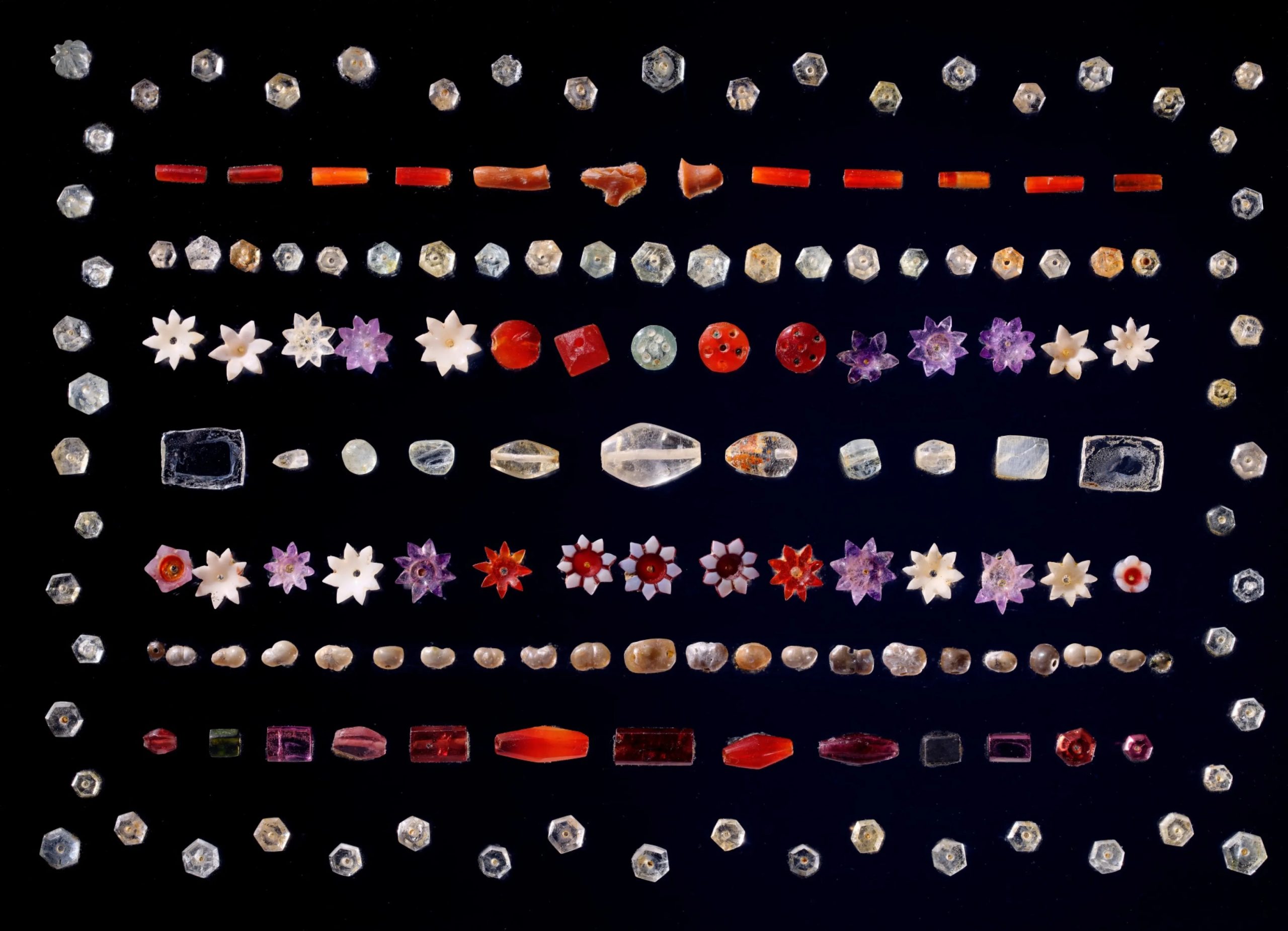
The proposed sale of Buddhist relics, specifically gems and gold ornaments unearthed from the Piprahwa Stupa in India in 1898, by Sotheby’s in Hong Kong in May 2025, ignited a firestorm of ethical, historical, and religious debate. The auction house’s decision to list these artifacts for sale, treating them as material objects distinct from the human remains traditionally considered relics, contrasted sharply with the deeply held beliefs of many Buddhists worldwide. This incident has thrust into the spotlight fundamental questions about what constitutes a sacred relic and the responsibilities that accompany its custodianship, issues that the subsequent return of these artifacts to India has not fully resolved.
Background of the Piprahwa Relics
The Piprahwa Stupa, located in the Indian state of Uttar Pradesh, has long been identified as the site of ancient Buddhist significance. Excavated in 1898 by William Claxton Peppé, a colonial landowner, the site yielded a reliquary inscribed with Brahmi script. This inscription, a crucial piece of evidence, identified the contents as relics of the Buddha himself, belonging to the Sakya clan, the Buddha’s own lineage. Alongside the inscribed reliquary, the excavation uncovered a collection of gems and gold ornaments, which, while not corporeal remains, have been considered by many Buddhists to be integral parts of the sacred cache, imbued with the Buddha’s presence. For centuries, these items have been revered as sarira, physical embodiments or remnants of the Buddha and other enlightened beings that are believed to remain in the world, serving as focal points for devotion and spiritual practice.
The Sotheby’s Auction and Subsequent Controversy
The decision by Sotheby’s to include the Piprahwa jewels in its Hong Kong auction was met with immediate and widespread condemnation from Buddhist leaders, scholars, and cultural heritage advocates. The core of the controversy lay in the differing interpretations of what constitutes a Buddhist relic. Sotheby’s, operating within the framework of art and antiquities, categorized the gems and ornaments as historical artifacts, suitable for market transaction. Conversely, many Buddhist practitioners and religious authorities viewed these items as sacred relics, imbued with spiritual significance and therefore inappropriate for commercial sale. This distinction is not merely semantic; it touches upon the very essence of Buddhist veneration, where relics are seen as living links to the Buddha, capable of transmitting blessings and inspiring spiritual growth.
The proposed sale ignited concerns about the commodification of sacred objects and the potential for their dispersal into private collections, away from public veneration. The historical context of the excavation, undertaken during the colonial era, also added a layer of complexity, raising questions about ownership and the legacy of colonial-era artifact acquisition.
Timeline of Events:
- 1898: Excavation of the Piprahwa Stupa by William Claxton Peppé, leading to the discovery of a reliquary containing gems, gold ornaments, and inscriptions identifying them as relics of the Buddha.
- Early 20th Century: The Piprahwa relics, including the disputed jewels, are held in private collections.
- May 2025: Sotheby’s announces an auction of Buddhist relics, including the Piprahwa jewels, at its Maison in Hong Kong.
- May 2025: Widespread objections arise from Buddhist leaders, scholars, and the Indian government, citing ethical and religious concerns. Sotheby’s abruptly halts the auction.
- July 2025: A public-private partnership facilitates the return of the Piprahwa relics to India.
- Post-July 2025: The returned relics are put on public display in New Delhi, but questions about their ultimate custodianship and accessibility persist.
The concept of relics in Buddhism is multifaceted. Traditional Buddhist texts, such as the Mahavamsa, a Sri Lankan chronicle, emphasize the profound connection between seeing a relic and beholding the Buddha himself. This belief extends to various forms of material remnants, including bone fragments, crystalline "pearls" found in cremated remains, and even the personal belongings or attire of revered masters. The Piprahwa jewels, found alongside the inscribed reliquary, are believed by many to hold the same sacred status as corporeal remains. The inscription itself serves as a direct testament to their origin, linking them to the historical Buddha and his lineage.
The Role of Stupas and the Concept of Presence
Stupas, the monumental dome-shaped structures, are traditionally built to enshrine relics. They are not merely repositories but are conceived as literal embodiments of enlightened presence. The act of circumambulating a stupa, offering prayers, and engaging in devotional rites around it is a way of connecting with this presence. Beyond specific enshrined objects, relics also highlight a broader Buddhist principle: how objects, places, and symbols acquire sacredness through human interaction and devotion. For many practitioners, the presence of the Buddha, conveyed through relics, is not symbolic but a tangible, ongoing connection that invites continued reverence, offerings, and a deep sense of relationship. This dynamic interaction transforms mundane objects into powerful conduits of spiritual energy and inspiration.
Relics in Transit: Historical Precedents and Colonial Legacies
The movement of relics is not a new phenomenon; it has been an integral part of Buddhism’s historical expansion and cultural diffusion. King Asoka, the Mauryan emperor of the 3rd century BCE, is famously credited with dividing the Buddha’s relics among numerous stupas across his vast empire, thereby mapping and solidifying his dominion with spiritual authority. Relics traveled with monks and merchants, serving as legitimizing agents for the spread of Buddhism across diverse cultures and geographies. Beyond bodily remains, the garments and ritual implements of past enlightened masters have also been cherished as objects that carry blessings and transmit spiritual authority across generations.
However, the modern era has introduced new complexities to the movement and ownership of relics. The postcolonial period has seen increased scrutiny of how sacred objects were acquired and disseminated during colonial rule. The removal of sacred artifacts from their traditional sites and their subsequent classification as art or collectibles has become a contentious issue. Repatriation, the return of such objects to their countries of origin, addresses a part of this historical injustice. Yet, as scholars like Conan Cheong have argued in Tricycle, repatriation alone does not always equate to restitution in the truest sense. The question of who ultimately holds custodianship and whether these returned relics are made accessible for their intended purpose—veneration—remains a critical point of discussion.
Ownership, Access, and Religious Authority
The Piprahwa incident underscores the persistent tension between the secular market and the sacred domain of religious practice. While communities continue to venerate relics on ceremonial occasions, the movement of these objects through international trade and auction houses raises significant ethical questions. Touring relics can generate revenue and prestige, but they also bring into sharp focus issues of control, access, and the potential for exploitation. These concerns are often intertwined with broader discussions about religious authority and state sovereignty.
A related incident in 2025 involving an illicit image of the Buddha’s tooth further illustrates the complexities surrounding the handling of sacred objects outside their traditional ritual contexts. When relics are removed from the sacred spaces of stupas or shrines, their profound religious significance can be easily obscured or misunderstood. This recontextualization can lead to their devaluation and appropriation, transforming objects of devotion into mere curiosities or commodities. The question of who has the right to possess, control, and display these objects becomes paramount, particularly when their spiritual value is deeply embedded in community practice and tradition. The return of the Piprahwa relics to India, while a significant step, leaves open the question of whether they have truly been returned to the people who venerate them, or simply to the custodianship of a nation-state.
Perceiving the Sacred: Subjectivity and Reality
The debate surrounding relics ultimately leads to a fundamental philosophical inquiry: the nature of sacredness itself. For some, relics may be perceived as objects of superstition or even idolatry, a misdirected focus of devotion. For others, they are potent sources of faith, inspiration, and a tangible connection to the divine. This divergence in perception raises a crucial question: are sacred objects inherently powerful, or does their power derive from the beliefs and attitudes of those who interact with them?
Buddhist philosophy often emphasizes the role of perception in shaping reality. Traditional Buddhist narratives, as well as contemporary literary works, often explore this ambiguity. Even seemingly ordinary objects can acquire a profound significance and offer blessings when individuals imbue them with a sense of the sacred. The multiple ways in which relics are viewed—as historical artifacts, as spiritual conduits, as commodities, or as sources of inspiration—serve to illustrate this key Buddhist principle: perception, in many ways, shapes our experience of reality, including our understanding and interaction with the sacred. The unresolved questions surrounding the Piprahwa relics highlight the enduring challenge of navigating the intersection of material culture, religious belief, and the enduring human quest for connection to something transcendent. The desire to possess, display, and trade these objects reflects broader societal values that often clash with the spiritual imperative of reverence and devotion.
Additional Resources:
- The historical significance of the Piprahwa Stupa and its archaeological findings.
- Scholarly interpretations of Buddhist relics and their role in devotional practices.
- The legal and ethical frameworks governing the trade and repatriation of cultural heritage, particularly religious artifacts.
- Comparative studies of relic veneration across different Buddhist traditions and other world religions.
- Analysis of the impact of globalization and commercialization on religious artifacts and practices.

