

The landscape of autism spectrum disorder (ASD) treatment is continually evolving, with researchers and clinicians seeking effective interventions for co-occurring conditions that significantly impact quality of life. Hyperactivity and impulsivity are common challenges for many autistic individuals, often managed with stimulant medications or other non-stimulants like guanfacine. A recent and significant development in understanding guanfacine’s potential mechanisms and applications in autism comes from a 2026 review published in Frontiers in Molecular Neuroscience. This extensive review, spearheaded by Kazuhiko Yamamuro and colleagues from Nara Medical University and Kumamoto University in Japan, synthesizes existing knowledge across pharmacology, animal neuroscience, immunology, and clinical studies, offering a dual-pronged hypothesis for how guanfacine may exert its beneficial effects.
Understanding Guanfacine’s Established Role and Proposed Mechanisms
Guanfacine’s journey began not as a psychiatric medication but as a treatment for hypertension. Its extended-release formulation gained FDA approval for attention-deficit/hyperactivity disorder (ADHD) in children in 2009. Clinicians have since frequently prescribed it off-label to address hyperactivity and impulsivity in autistic individuals, recognizing the significant overlap and co-occurrence of ADHD symptoms within the autism spectrum.
At its core, guanfacine operates by selectively stimulating alpha-2A adrenergic receptors, a specific subtype of receptors responsive to norepinephrine, a key neurotransmitter involved in alertness, attention, and physiological arousal. When these alpha-2A receptors are activated, they initiate a cascade that ultimately leads to a reduction in cyclic AMP (cAMP), a crucial chemical messenger within cells. The 2026 review argues that this fundamental cellular action triggers two primary downstream effects, both highly relevant to the neurological underpinnings observed in autism:
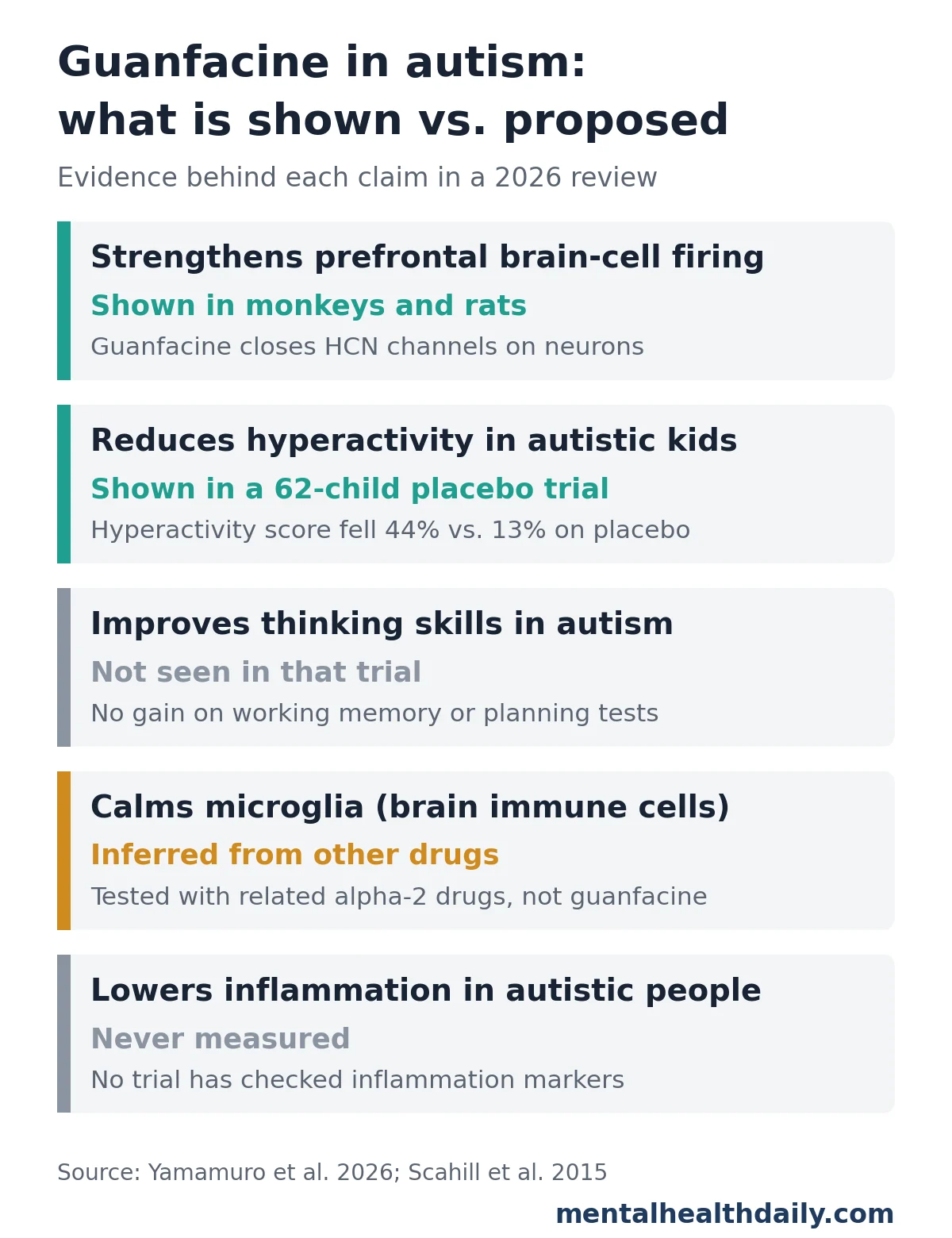
- Stabilization of Prefrontal Cortex Signaling: By lowering cAMP, guanfacine is believed to facilitate the closure of HCN (hyperpolarization-activated cyclic nucleotide-gated) channels in prefrontal neurons. These channels play a critical role in regulating neuronal excitability and maintaining stable brain activity, particularly in regions vital for executive functions like working memory, attention, and impulse control. Atypical prefrontal connectivity has been consistently reported in brain imaging studies of autistic individuals, suggesting that interventions targeting this region could hold significant therapeutic promise.
- Modulation of Neuroinflammation: The review further proposes that guanfacine’s reduction of intracellular cAMP could lead to the calming of microglia, the brain’s resident immune cells. While essential for brain health, chronic activation of microglia and subsequent neuroinflammation are increasingly implicated in a subset of autistic individuals, evidenced by postmortem brain studies and analyses of inflammatory cytokines in blood. A drug capable of impacting both neuronal stability and immune cell activity presents an compelling, albeit still largely theoretical, therapeutic avenue.
The convergence of these two lines of research – atypical prefrontal connectivity and heightened neuroinflammation in autism – forms the central hypothesis of the Yamamuro et al. review, presenting guanfacine as a potential agent capable of addressing both neural circuit dysfunction and immune dysregulation in ASD.
Clinical Efficacy: Reducing Hyperactivity in Autistic Children
The most robust clinical evidence supporting guanfacine’s utility in autism stems from a landmark trial conducted by the Research Units on Pediatric Psychopharmacology (RUPP) Autism Network. This study, published in 2017, represents the largest placebo-controlled investigation of guanfacine specifically in autistic children, providing a crucial clinical anchor for the 2026 review’s discussion.
The RUPP trial involved 62 autistic children, aged 6-12 years, who exhibited moderate to severe hyperactivity. These participants were recruited across five sites in the United States and were randomized to receive either extended-release guanfacine or a placebo for an eight-week period. The primary outcome measure focused on changes in hyperactivity scores.
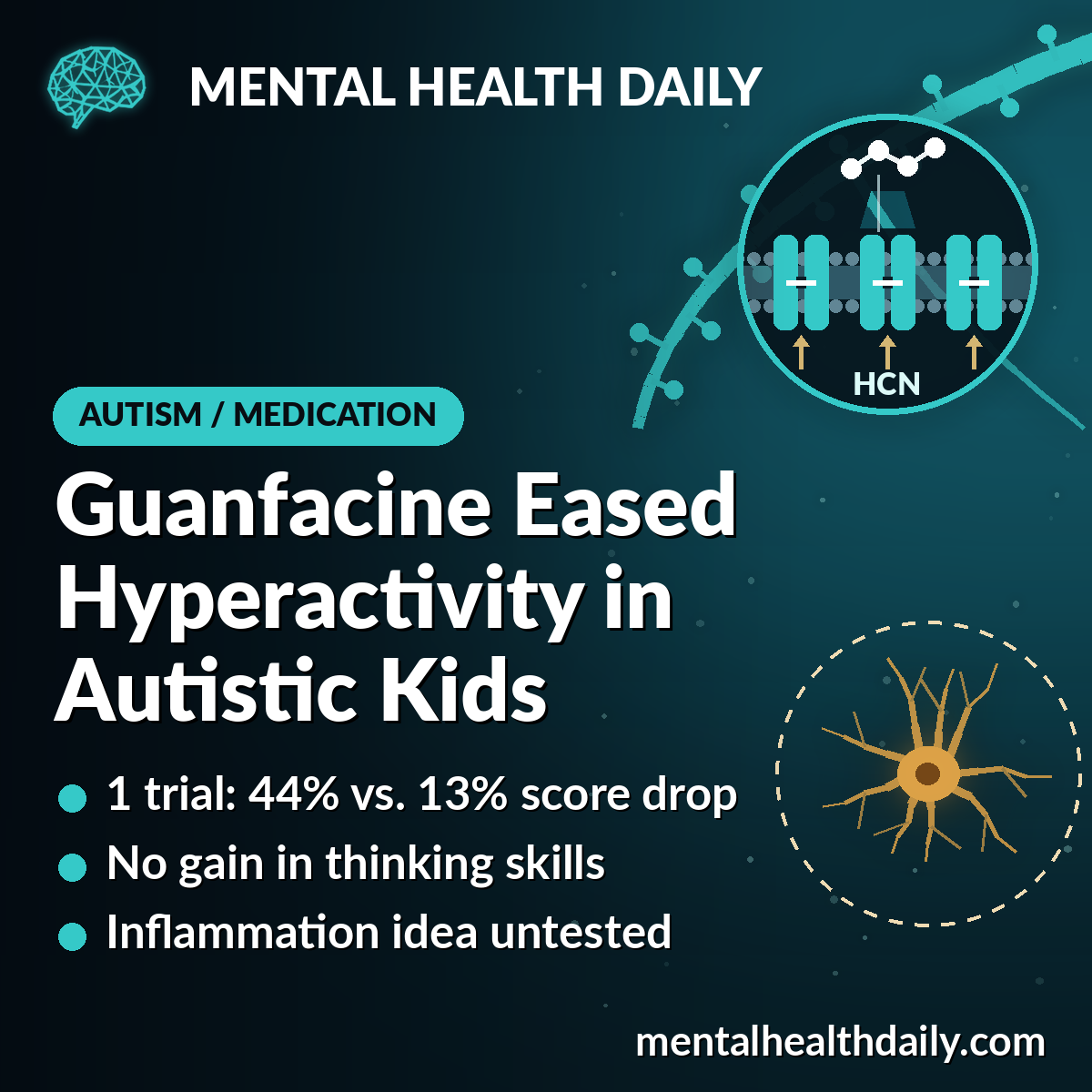
The results were compelling: children treated with guanfacine showed a significant 44% reduction in hyperactivity symptoms, as measured by the Aberrant Behavior Checklist-Hyperactivity/Noncompliance subscale. In contrast, the placebo group experienced only a 13% reduction, highlighting a clear and statistically significant advantage for guanfacine.
Beyond hyperactivity, secondary analyses of the RUPP trial data revealed additional behavioral improvements. Oppositional behavior, often a challenging aspect of ASD, decreased by 44% in the guanfacine group compared to a modest 12% in the placebo group. Repetitive behaviors, a core symptom of autism, also saw a 24% reduction with guanfacine, while the placebo group showed less than a 1% change. It is important to note that the study did not find significant differences between the groups regarding anxiety levels or sleep patterns.
Behavioral Benefits vs. Cognitive Enhancement
The authors of the 2026 review are careful to emphasize that while these behavioral improvements are clinically meaningful and can significantly enhance daily functioning, they are distinct from improvements in cognitive domains such as working memory or attention. The RUPP trial, while demonstrating efficacy in behavior, did not show a corresponding improvement in thinking skills. This distinction is crucial for managing expectations among families and for guiding future research. Calmer and less impulsive behavior, while valuable in itself, does not directly equate to enhanced cognitive abilities as measured by standardized neuropsychological tests.
Safety Profile and Real-World Observations
Like any medication, guanfacine is associated with side effects. The RUPP trial identified drowsiness, fatigue, and decreased appetite as the most common adverse events. Blood pressure, which guanfacine was originally designed to lower, did show a dip during the initial four weeks of treatment but tended to return close to baseline by the end of the eight-week study period. Pulse rates, however, remained consistently lower than baseline throughout the trial. This necessitates careful monitoring of vital signs, particularly during the initial titration phase, when prescribing guanfacine.
Further supporting the clinical utility of guanfacine are real-world observations. A 2025 retrospective study, involving 29 autistic children with co-occurring ADHD from three clinical sites, reported similar positive outcomes. This uncontrolled study indicated reductions in hyperactivity, irritability, and repetitive movement scores with guanfacine treatment. However, it also highlighted that three children discontinued the medication due to worsening irritability, underscoring the individual variability in response and tolerability. The absence of a control group in such studies means their findings, while supportive, are not as definitive as those from placebo-controlled trials.
The Neurological Hypothesis: Evidence from Animal Models
The hypothesis that guanfacine stabilizes prefrontal brain signaling via HCN channels draws substantial support from sophisticated animal neuroscience research. A pivotal 2007 study by Min Wang and colleagues provided direct evidence for this mechanism. In this research, guanfacine was applied directly to prefrontal neurons in monkeys engaged in a working memory task. The direct application of guanfacine resulted in increased neuronal firing during the memory delay period, indicating enhanced prefrontal cortex activity crucial for working memory. Critically, this effect was reversed by the addition of a cAMP-boosting compound, thereby reinforcing the proposed cAMP-dependent mechanism. Further experiments in the same study demonstrated that blocking HCN channels mimicked guanfacine’s effects, and genetically reducing the expression of the HCN1 channel in the rat prefrontal cortex also led to improved working memory performance.
Other animal studies cited in the 2026 review corroborate these findings, consistently demonstrating guanfacine’s ability to enhance prefrontal cortical function, improve attention, and reduce impulsivity in various animal models. This body of work provides a robust mechanistic framework for how guanfacine might improve behavioral regulation in humans.
The "Autism Gap" in Basic Neuroscience
Despite the strong evidence from general animal models, the review points out a crucial "autism gap" in the mechanistic understanding. No study has yet directly manipulated alpha-2A receptors or HCN channels within a specific genetic or environmental animal model of autism and subsequently measured autism-related behaviors. The review’s intriguing proposal that guanfacine rebalances excitation and inhibition within prefrontal circuits, potentially through its effects on fast-spiking interneurons, is acknowledged by the authors themselves as a testable hypothesis currently lacking direct supporting data. Bridging this gap with targeted research in autism-specific animal models is a critical next step for fully understanding guanfacine’s neurological impact in ASD.
The Immunological Hypothesis: A Frontier for Future Research
While the neurological pathway enjoys substantial support, the evidence for guanfacine’s anti-inflammatory effects, particularly in the context of autism, is considerably less direct and primarily inferential. The immune-cell studies referenced in the 2026 review largely rely on other alpha-2 adrenergic drugs (such as dexmedetomidine or clonidine) or examine guanfacine’s effects in entirely different physiological settings, not directly in autism.
For instance, studies on dexmedetomidine, a related alpha-2 agonist, have shown anti-inflammatory properties in contexts like sepsis, stroke, or surgical inflammation. While these findings suggest a class effect, they do not confirm that guanfacine itself exerts similar anti-inflammatory actions in the brain of an autistic individual.
A small pilot study on long COVID brain fog, involving 12 patients, reported that 8 individuals improved on a combination of guanfacine and N-acetylcysteine (an antioxidant supplement). However, two patients discontinued due to side effects (low blood pressure or dizziness). Crucially, this study did not measure inflammatory markers, and since two drugs were administered concurrently, it is impossible to attribute any observed benefit or immune effect specifically to guanfacine.
The review also highlights the presence of HCN channels on microglia, where in vitro (lab dish) studies have shown that blocking these channels can make microglia less reactive. While interesting, this evidence is derived from a handful of cell-culture studies and has not been directly linked to autism pathology or to guanfacine’s specific actions on microglial HCN channels in vivo.
Therefore, while the concept of guanfacine calming brain immune cells is a compelling theoretical proposition, it remains an area ripe for dedicated research. The evidence is currently indirect, largely based on related drugs or in vitro models, and has not been substantiated with guanfacine itself in autistic populations.
Guanfacine vs. Clonidine: A Comparative Perspective
When considering non-stimulant options for hyperactivity, guanfacine is often compared to clonidine, another alpha-2 adrenergic agonist. The 2026 review favors guanfacine for managing daytime hyperactivity, citing that older clonidine trials in autism were generally smaller and often limited by sedation as a dose-limiting side effect. Clonidine’s more pronounced sedative properties may, however, make it a more suitable choice for addressing sleep-onset difficulties in autistic individuals. Importantly, no head-to-head clinical trial has directly compared the efficacy and tolerability of guanfacine and clonidine in an autistic population, leaving clinicians to rely on indirect comparisons and individual patient profiles.
Broader Implications and Future Research Imperatives
The 2026 review offers a compelling framework for understanding guanfacine’s potential, extending beyond its established role in hyperactivity. Its "dual-target" appeal – addressing both neural circuit stability and potential neuroinflammation – aligns with contemporary theories of autism heterogeneity and multi-system involvement.
For families and clinicians considering guanfacine, the current evidence strongly supports its use for hyperactivity and impulsivity in school-aged autistic children, based on robust placebo-controlled trial data and supportive real-world observations. Prescribers typically initiate treatment with careful monitoring of blood pressure and pulse, particularly during the initial weeks, and emphasize that the medication should not be discontinued abruptly without medical guidance.
However, for broader outcomes such as improvements in thinking skills, social communication, or direct reduction of brain inflammation, clinical evidence is currently lacking. The proposed immune pathway, while mechanistically interesting, is primarily built on indirect evidence from related drugs or in vitro studies.
The critical next step for research, as articulated by the review, would be to conduct adequately powered autism trials that not only measure behavioral and cognitive outcomes but also incorporate objective inflammatory markers before and after guanfacine treatment. Such studies would be instrumental in validating or refuting the immunological hypothesis and could pave the way for a more targeted and personalized approach to treating autism-related challenges. Further research is also needed to bridge the "autism gap" in basic neuroscience, directly investigating guanfacine’s mechanisms within autism-specific animal models.
Ultimately, guanfacine represents a valuable non-stimulant option in the management of hyperactivity and impulsivity in autistic children. While the 2026 review expands our theoretical understanding of its potential broader impact, particularly on neuroinflammation and prefrontal function, these intriguing hypotheses await further rigorous clinical and mechanistic validation to fully realize guanfacine’s therapeutic promise for the diverse needs of the autistic population.

