

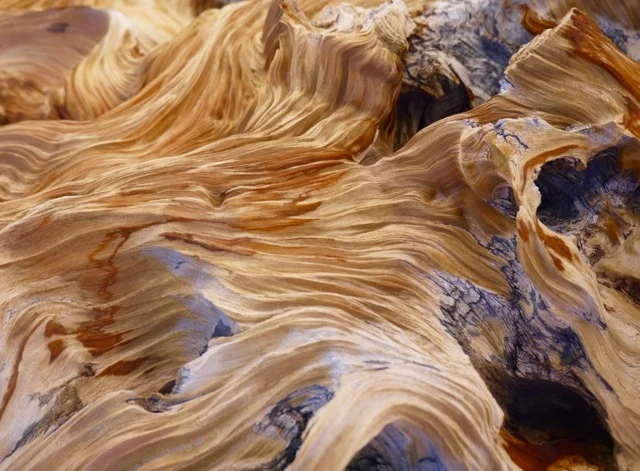
For over eighteen months, a compelling correspondence has unfolded between the digital pages of ecopsychology.org and David Malinsky, a writer, photographer, and devoted nature enthusiast. Malinsky has cultivated a profound appreciation for the Great Basin Bristlecone Pine (Pinus longaeva), a species he affectionately refers to as "Old Friends in High Places." This ongoing dialogue offers a rare glimpse into the profound beauty and philosophical insights Malinsky gleans from his expeditions into the rugged terrains inhabited by these ancient trees. His work invites readers to not only witness the stoic grandeur of these arboreal elders but also to engage in a broader conversation about our connection to the natural world. Those interested in contributing their perspectives to this exploration are encouraged to contact Malinsky directly via email at [email protected] to join his dedicated listserv.
The Ancient Sentinels of the Great Basin
The Great Basin Bristlecone Pine is a remarkable species, renowned for its exceptional longevity and its ability to thrive in some of the harshest environments on Earth. These trees, found primarily in the arid, mountainous regions of California, Nevada, and Utah, are among the oldest living organisms on the planet. Their extreme resilience is a testament to millions of years of adaptation. Bristlecone pines typically grow at high altitudes, often above 10,000 feet, in rocky, alkaline soils with minimal precipitation. Their slow growth rate, often measured in inches per century, contributes to their dense, resinous wood, which is highly resistant to insect infestation and decay. This remarkable durability allows them to survive for millennia, with some individuals exceeding 5,000 years in age. The Methuselah tree, located in the White Mountains of California, is famously documented as being over 4,850 years old, making it one of the oldest known non-clonal organisms. Another, unnamed specimen in the same region, discovered in 2012, was determined to be over 5,060 years old.
Malinsky’s Photographic Exploration: A Metaphor for Human Endeavor
Malinsky’s communications are not merely descriptive accounts of his photographic pursuits; they are infused with a contemplative spirit that draws parallels between the resilience and wisdom of the bristlecone pines and the human journey. One particular excerpt from his correspondence, shared with the ecopsychology.org community, offers a powerful metaphor for personal growth and the pursuit of knowledge:
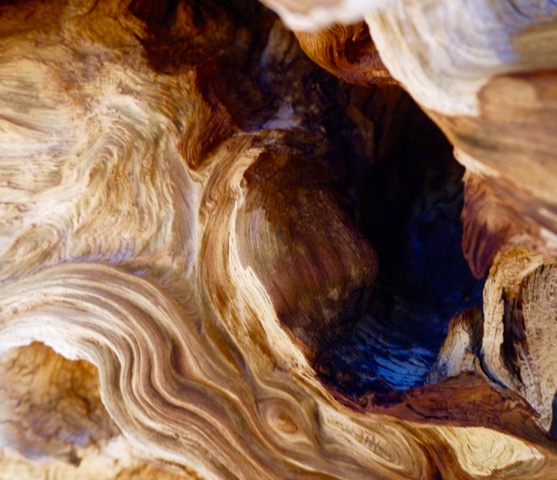
"Daring to take a path towards what may be unknowable can be among the most noble pursuits of the human spirit. Known targets bring tangible opportunities for achievement, but also limitations; even a well-aimed arrow is forced to halt its arc, having reached a bullseye. Allow the arrow to be what it is, a tool for a particular purpose, but after your fingers release the bowstring do not let the confines of the arc define you. It was what you did, but only a small piece of who you are. Without narrowing the focus on the bullseye, there can be so much to see, much that will be missed if our sights are too confined. You do not have to reduce all of this to a single place; there is room in your consciousness for all of it, if you allow it in."
This passage suggests that while setting and achieving specific goals is valuable, an over-reliance on predefined targets can limit our perception and hinder deeper exploration. Malinsky implies that true growth and discovery often lie in venturing beyond the predictable, embracing the uncertain, and allowing our consciousness to expand to encompass a broader spectrum of experience. The bristlecone pines, in their slow, unwavering existence, embody this principle – enduring through millennia without a predefined "bullseye," simply being and adapting.
The Journey Inward: Connecting Place and Self
Further elaborating on this theme, Malinsky articulates how the act of exploration, particularly in communion with nature, can lead to profound self-discovery:
"It is in taking a path beyond established targets that you begin the journey of yourself, a path whose first steps may appear as though on the way to a ‘Where,’ but as you venture will almost magically turn into as much a ‘Who,’ person and place becoming one. When you feel something inside of yourself growing with each step, and your developing senses appreciating what surrounds the path even more, then you are on the verge of the most important discovery you can make, and any notions of maps can be discarded. Your path has no end, for both you and Nature are constantly evolving, and it is in that trust of Nature that you can place yourself, and explore the labyrinths ahead filled with the joy of anticipation, instead of trepidation."
This sentiment underscores the reciprocal relationship between the external landscape and our internal state. As we venture into the wild, particularly into environments as ancient and resilient as those inhabited by bristlecone pines, we are invited to embark on a journey of self-understanding. The "Where" of our physical location becomes intrinsically linked to the "Who" of our identity. The appreciation for the surrounding environment, fostered by heightened senses and a willingness to move beyond fixed destinations, cultivates a sense of evolving selfhood. Malinsky’s philosophy suggests that embracing the unpredictable, trusting in the natural processes of evolution, and finding joy in anticipation rather than fear of the unknown are essential components of a fulfilling life journey.
Embracing the Unknown: Light in Darkness
The photographer’s insights extend to the acceptance of challenges and the transformative power of an open spirit:
"Once you develop that trust, both of Nature and of yourself, when you come across what appears to be a darkness you do not fear. That darkness is only a place that is currently without illumination, and should you venture forward with an open spirit, your path may well take you to where it was intended to all along — the place where it is you that are the light."
This final reflection speaks to the profound psychological impact of connecting with the natural world, particularly with beings that have witnessed the passage of countless ages. The "darkness" encountered on a journey can be interpreted as periods of uncertainty, difficulty, or the unfamiliar. However, by cultivating trust – in nature’s inherent wisdom and in one’s own capacity for resilience – these perceived obstacles can be transformed. Malinsky suggests that embracing these moments with an open spirit allows for illumination, revealing that we ourselves possess the capacity to be a source of light, guiding our way through the unknown. The ancient bristlecone pines, having navigated millennia of environmental change, serve as silent witnesses to this principle, embodying an enduring presence that inspires a similar strength within the observer.

Broader Implications: Ecopsychology and Ancient Trees
David Malinsky’s work resonates deeply within the field of ecopsychology, which explores the interconnectedness between human psychology and the natural environment. The Great Basin Bristlecone Pine, as a symbol of ancient wisdom, resilience, and deep time, offers a powerful subject for such contemplation. Its ability to thrive in seemingly inhospitable conditions and its immense lifespan serve as a potent reminder of nature’s enduring power and its capacity for adaptation.
The insights shared by Malinsky highlight several key themes relevant to ecopsychological discourse:
- Deep Time and Perspective: Bristlecone pines provide a tangible connection to geological timescales, encouraging humans to broaden their perspective beyond immediate concerns and consider the long arc of natural history. This can foster a sense of humility and interconnectedness with past and future generations.
- Resilience and Adaptation: The trees’ survival strategies in extreme environments offer valuable lessons in resilience and adaptation, encouraging individuals to re-evaluate their own responses to challenges and environmental change.
- The Unfolding Journey: Malinsky’s emphasis on embracing the "unknowable" and the "journey of yourself" aligns with ecopsychological principles that advocate for a less goal-oriented, more process-driven approach to life, fostering a deeper engagement with the present moment and the natural world.
- Inner Light and Nature Connection: The idea of finding one’s "inner light" through connection with nature suggests that the therapeutic and transformative potential of the natural world is not merely external but can catalyze profound internal shifts.
The engagement facilitated by Malinsky’s listserv offers a platform for individuals to share their own experiences and reflections, contributing to a growing body of knowledge about the profound impact of nature on human well-being. As climate change and environmental degradation continue to be pressing concerns, understanding and appreciating the resilience of species like the Great Basin Bristlecone Pine, and drawing inspiration from their enduring presence, becomes increasingly vital. Malinsky’s photographic journeys and philosophical musings serve as a powerful invitation to connect with these ancient sentinels and, in doing so, to embark on a more meaningful exploration of ourselves and our place within the natural world. The invitation to join his conversation underscores the collaborative spirit inherent in ecopsychology – that understanding and appreciation are best cultivated through shared dialogue and experience.

