

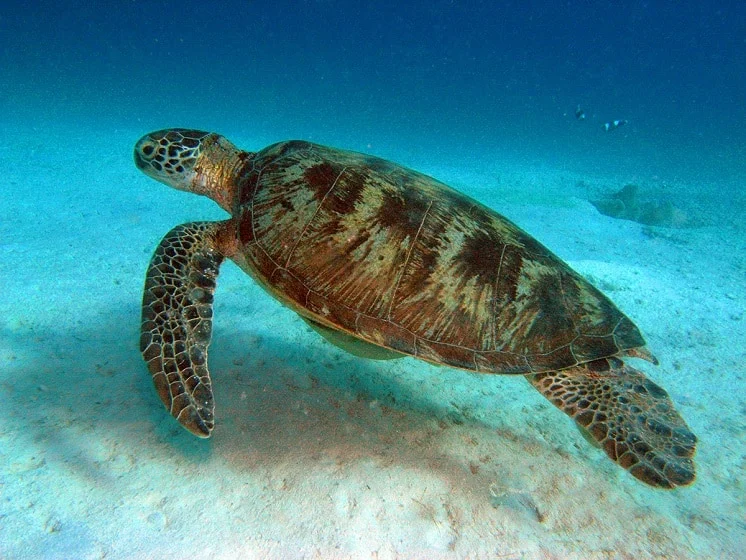
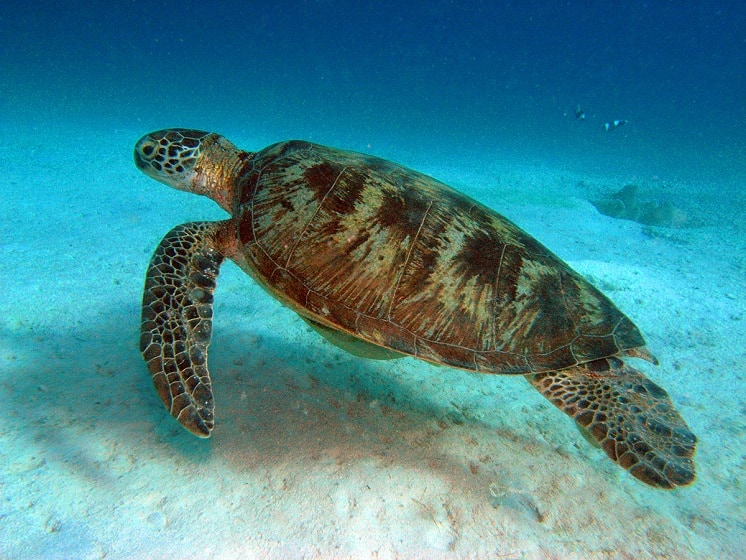
The Galapagos Islands, an Ecuadorian archipelago situated approximately 600 miles off the coast of South America, have solidified their status as a premier global destination for ecotourism and scientific study. Known as a "living laboratory" of evolution, the islands have seen a significant surge in interest, with annual visitor numbers historically exceeding 150,000 and reaching upwards of 270,000 in recent peak years. To manage this influx and mitigate the ecological footprint of human presence, the Galapagos National Park Authority (GNPA) has implemented stringent regulatory frameworks designed to balance economic benefits with environmental preservation.
The 2011 Regulatory Shift and Tourism Management
In 2011, the GNPA introduced a pivotal set of regulations that fundamentally altered the landscape of Galapagos tourism. Prior to these changes, popular sites like San Cristobal and Santa Cruz faced mounting pressure from concentrated visitor traffic. The 2011 mandate reorganized cruise itineraries into 15-day cycles, ensuring that no single site would be visited by the same vessel more than once in a two-week period.
This restructuring was designed to disperse the environmental impact and encourage tour operators to explore the "outer" or more remote islands. For the traveler, this has resulted in a more secluded experience, characterized by smaller crowds and more intimate wildlife encounters. Cruising, particularly on small-capacity vessels, remains the primary method for accessing the archipelago’s most isolated and biologically diverse regions—areas that remain inaccessible to land-based visitors.
1. Remote Marine Exploration at Wolf Island
Located nearly 100 miles northwest of Isabela Island, Wolf Island represents one of the most remote frontiers of the Galapagos. Because the GNPA prohibits land excursions on the island to protect its fragile ecosystem, the only way to experience its biological riches is via live-aboard dive vessels or specialized cruises.
Wolf Island, specifically the site known as Shark Point, is internationally recognized as one of the world’s premier scuba diving locations. The area is a critical node in the "Eastern Tropical Pacific Marine Corridor," a migratory highway for large pelagic species. Divers at Wolf Island frequently encounter massive whale sharks, schools of hundreds of scalloped hammerhead sharks, and Galapagos sharks. The site is also home to dolphins and thick schools of pelagic fish. However, due to the island’s exposure to the open Pacific, the currents are notoriously strong and visibility can be unpredictable, leading authorities and operators to recommend these sites exclusively for experienced divers.
2. Avian Biodiversity on Genovesa Island
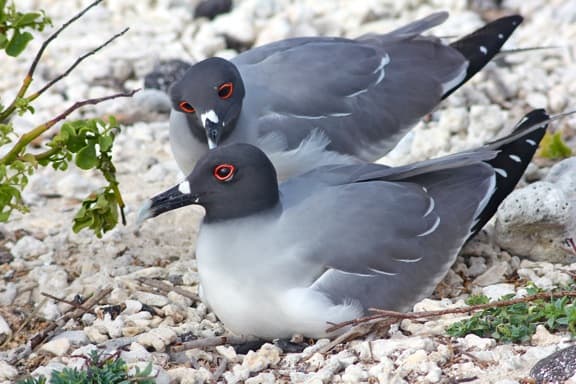
Genovesa Island, often referred to as "Bird Island," is a collapsed volcanic caldera that serves as a sanctuary for an extraordinary density of avian species. The island’s geography—characterized by steep cliffs and a sheltered bay—provides an ideal nesting ground for both resident and migratory birds.
The island is one of the few places in the archipelago where visitors can observe the red-footed booby, a species that nests in trees rather than on the ground like its blue-footed counterparts. A hike up Prince Philip’s Steps (El Barranco) leads visitors through a Palo Santo forest teeming with life. In a single excursion, it is possible to witness the entire life cycle of various species: Nazca boobies performing mating rituals, Great Frigatebirds inflating their crimson gular sacs, and Swallow-tailed gulls—the world’s only nocturnal gull—tending to their young. The isolation of Genovesa has resulted in a lack of fear among the wildlife, allowing for close-range observation that is rarely possible elsewhere in the world.
3. Historical Tradition at Post Office Bay
While the Galapagos are primarily known for their natural history, Floreana Island offers a compelling look into human history and the early era of Pacific exploration. Post Office Bay is home to a wooden barrel that has served as a functional, informal postal system since the late 18th century.
Established by British whalers who were often away from home for years, the "post office" operated on a system of honor and convenience. Sailors would leave letters in the barrel, and passing ships headed toward the letters’ destinations would collect them for hand delivery. Today, cruise passengers continue this tradition by leaving postcards and sorting through the existing mail to see if any are destined for their own hometowns.
Beyond its postal history, Floreana is the site of the "Galapagos Affair," a 1930s mystery involving a self-proclaimed Austrian baroness and German settlers that ended in disappearance and suspected murder. This blend of eccentric human history and rugged volcanic landscapes makes Floreana a unique stop on southern cruise itineraries.
4. The Evolutionary Adaptations of Fernandina’s Marine Iguanas
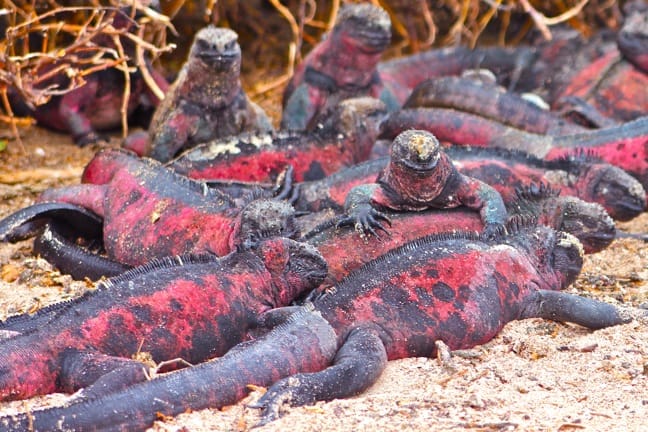
Fernandina is the youngest and most volcanically active island in the archipelago. It is also considered one of the most pristine islands in the world, as no invasive mammals have ever been introduced to its shores. The island’s black lava coastline provides the backdrop for one of the most remarkable sights in nature: the mass congregation of marine iguanas.

The marine iguana is the only lizard in the world that has adapted to forage in the ocean. On Fernandina, hundreds of these endemic reptiles can be seen huddled together to conserve heat after diving into the frigid, nutrient-rich waters to feed on algae. These creatures have evolved specialized glands to expel excess salt from their bodies, a process that manifests as a frequent "sneezing" of salt spray. From a cruise vessel, snorkelers have the rare opportunity to watch these prehistoric-looking reptiles swim with powerful lateral undulations of their tails, a vivid demonstration of evolution in real-time.
5. Genetic Preservation at Wolf Volcano
Isabela Island, the largest in the chain, is formed by six shield volcanoes. Wolf Volcano, the highest peak at 5,600 feet, is a site of significant scientific interest. Its 2015 eruption highlighted the dynamic nature of the archipelago, but its biological importance lies in its tortoises and iguanas.
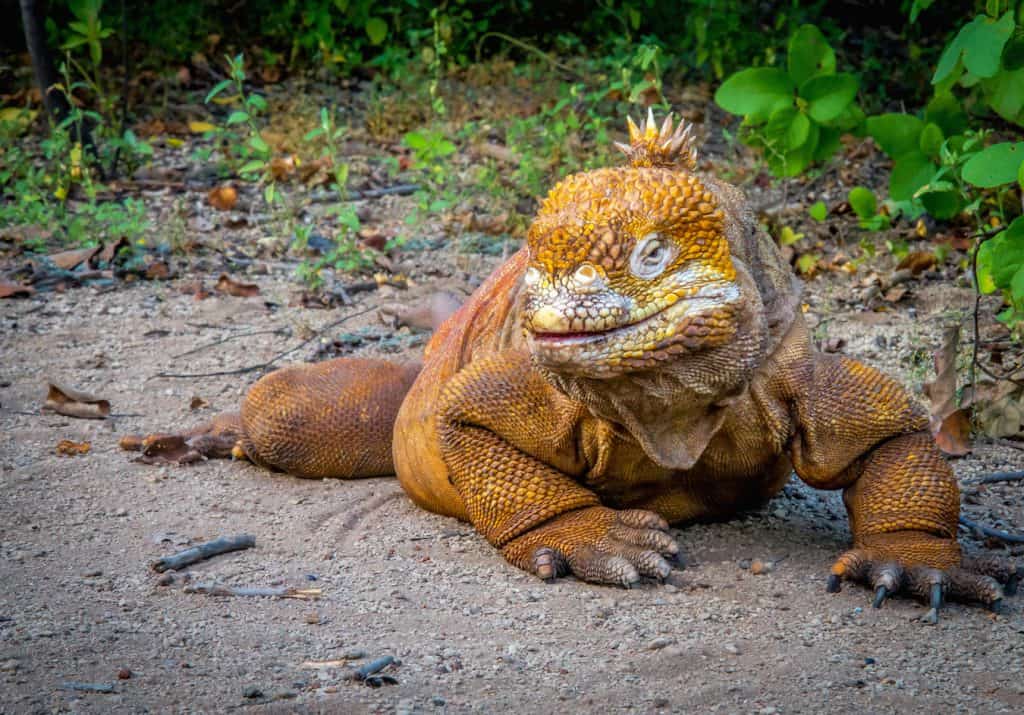
The slopes of Wolf Volcano are home to the rare Pink Land Iguana, a species that was only formally described by scientists in 2009. This species is genetically distinct from the more common yellow land iguanas found elsewhere. Furthermore, the volcano is a focal point for tortoise conservation. Genetic testing of the tortoises on Wolf Volcano revealed DNA belonging to the extinct Pinta Island tortoise—the species of the famous "Lonesome George." Scientists believe that 19th-century whalers may have discarded Pinta tortoises near Wolf Volcano to lighten their loads, leading to hybridization. The Charles Darwin Research Station is currently utilizing these hybrid individuals in a long-term project to "back-breed" and eventually restore the Pinta lineage.
6. Snorkeling with the Galapagos Penguin at Tagus Cove
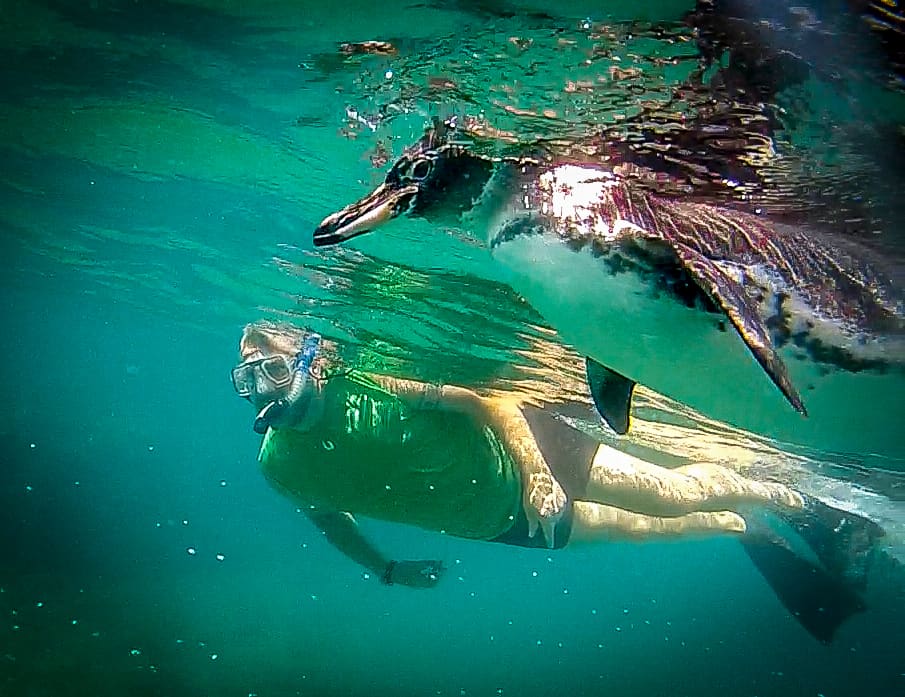
Tagus Cove, located on the western coast of Isabela, served as a historic anchorage for pirates and whalers, many of whom carved their ship names into the cliffs. However, the cove’s modern draw is its population of Galapagos Penguins, the only penguin species found north of the equator.
The presence of penguins in a tropical environment is made possible by the Cromwell Current, which brings cold, nutrient-dense water to the western islands. Snorkeling at Tagus Cove offers a high probability of encountering these birds in their element. Unlike their clumsy gait on land, Galapagos Penguins are exceptionally fast and agile underwater. Because the population is small—estimated at fewer than 2,000 individuals—seeing them in the wild is a rare privilege reserved largely for those on cruise itineraries that include the western archipelago.
7. Social Dynamics of Sea Lions on Española Island
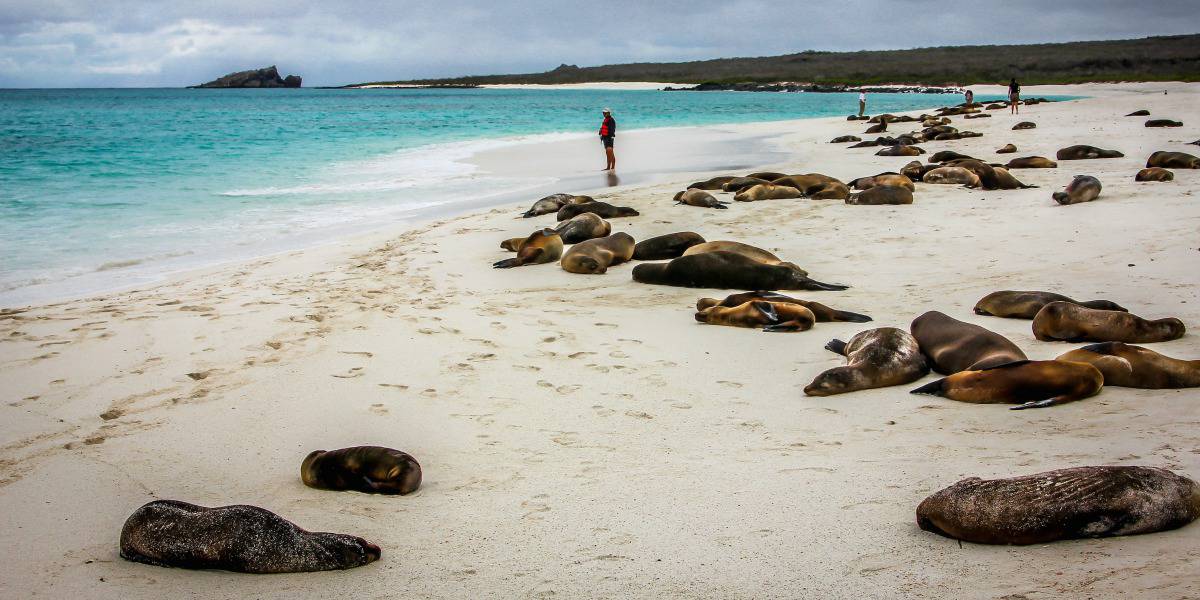
Española Island is the southernmost island in the Galapagos and, at approximately 4 million years old, one of the oldest. Gardner Bay, with its expansive white coral sand beach, is the site of one of the largest and most active sea lion colonies in the region.
The Galapagos sea lion is a distinct subspecies of the California sea lion, and on Española, their social structure is on full display. Visitors can observe the complex hierarchy of the colony, from the dominant "beach master" bulls patrolling the shoreline to the nurseries where pups interact. The lack of natural predators on land has made these animals remarkably indifferent to human presence, though strict park rules require visitors to maintain a distance of at least six feet. The turquoise waters of Gardner Bay also provide an exceptional environment for snorkeling alongside playful adolescents, who often mimic the movements of swimmers.
Broader Impact and Conservation Outlook
The unique experiences offered by Galapagos cruises are inextricably linked to the archipelago’s conservation status. The "high-value, low-volume" tourism model adopted by Ecuador is essential for the survival of the islands’ 56 native bird species and numerous endemic reptiles. However, challenges remain. Climate change and the intensification of El Niño events pose a direct threat to species like the Galapagos penguin and marine iguana, which rely on cold-water upwellings for food.
In 2022, the Ecuadorian government expanded the Galapagos Marine Reserve by 23,000 square miles, creating a new "Hermandad" (Brotherhood) reserve that links Galapagos waters with those of Costa Rica. This expansion is a critical step in protecting the migratory paths of the sharks and whales that cruise passengers travel thousands of miles to see.
By channeling tourism through regulated cruise itineraries, the Galapagos National Park Authority ensures that the economic revenue generated by visitors is reinvested into invasive species management and habitat restoration. For the modern traveler, a small-ship cruise is more than a vacation; it is a lesson in the delicate balance between human curiosity and the preservation of the natural world. As the archipelago continues to face global environmental pressures, the role of responsible, cruise-based ecotourism remains a cornerstone of the islands’ long-term survival strategy.

