

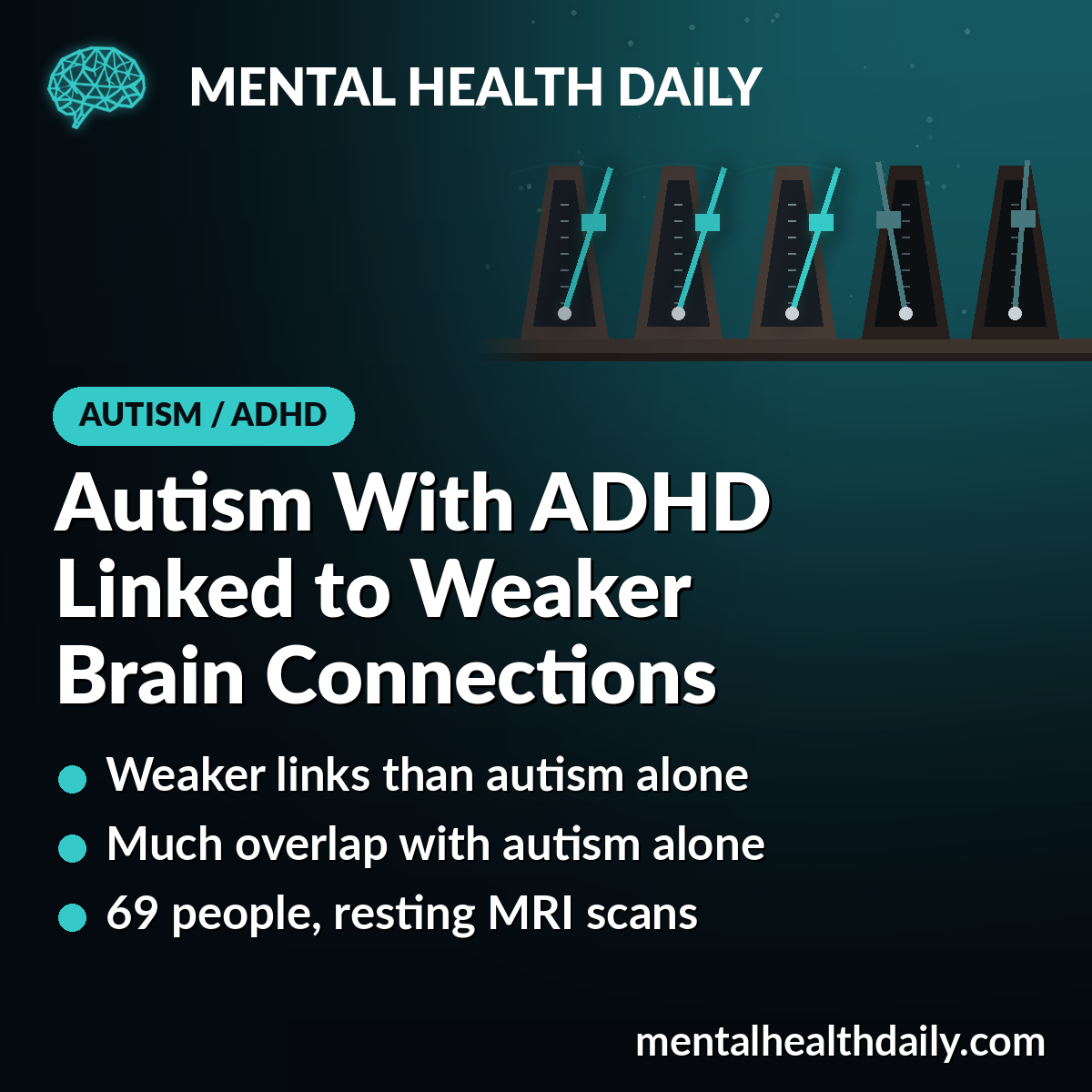
A groundbreaking 2026 brain-imaging study of 69 individuals has revealed that autistic young people who also have Attention-Deficit/Hyperactivity Disorder (ADHD) exhibit weaker resting brain connections compared to their autistic peers without ADHD. While many autism-linked neural differences were shared across both autistic groups, the presence of an additional ADHD diagnosis introduced its own unique pattern, particularly affecting a crucial brain area responsible for attention and self-control. This research, led by Lang Chen et al. at Santa Clara University, marks a significant step in understanding the complex neurobiological landscape of co-occurring neurodevelopmental conditions, moving beyond a simplistic "layered symptoms" model towards recognizing distinct neurobiological variants.
The Evolving Understanding of Autism and ADHD Co-occurrence
For decades, medical professionals operated under a diagnostic constraint: the rule against diagnosing both autism and ADHD in the same individual. This guideline, prevalent during the era of the DSM-IV (Diagnostic and Statistical Manual of Mental Disorders, Fourth Edition), stemmed from a historical belief that the symptomatic overlap between the two conditions made a dual diagnosis either redundant or indicative of a single, overarching disorder. Autism, characterized by differences in social communication, along with restricted interests and repetitive behaviors, was often seen as encompassing attention and hyperactivity issues as secondary features. Similarly, ADHD, defined by patterns of inattention, hyperactivity, and impulsivity, might have its social challenges attributed to the primary attention deficit.
This restrictive approach began to change with the publication of the DSM-5 in 2013. The updated manual explicitly dropped the prohibition on co-diagnosing autism and ADHD, acknowledging the growing body of clinical experience and research suggesting that these conditions could, and frequently do, co-exist as distinct yet interacting diagnoses. This shift was a pivotal moment, opening doors for more accurate diagnoses and, critically, for research into the unique profiles of individuals experiencing both conditions.
The decision to allow co-diagnosis was prescient, as subsequent research has underscored the substantial overlap. A comprehensive 2021 meta-analysis, synthesizing data from 63 studies, estimated that a remarkable 38.5% of autistic individuals currently meet the diagnostic criteria for ADHD, with an even higher 40.2% having experienced ADHD at some point in their lives. These figures highlight not just a common co-occurrence, but a pressing clinical and research question: Is autism coupled with ADHD merely a presentation of autism with additional attention problems, or does this dual diagnosis represent a fundamentally different neurobiological profile requiring tailored understanding and intervention? The study by Chen et al. directly sought to answer this by examining the brain’s intrinsic wiring at rest.
Mapping the Brain’s Intrinsic Networks: Resting-State Connectivity and the Triple Network
To investigate the nuances of brain organization in individuals with co-occurring autism and ADHD, the researchers employed resting-state functional connectivity (rsfMRI). This sophisticated brain-imaging technique measures how closely the activity of different brain regions fluctuates together while a person lies quietly in an MRI scanner, not engaged in any specific task. When brain areas show synchronized activity – rising and falling in step – they are inferred to be functionally connected and working as a coordinated team. Stronger or weaker "connectivity" thus provides a group-level insight into the efficiency and organization of brain systems. Unlike task-based fMRI, which probes how the brain responds to external stimuli, rsfMRI offers a window into the brain’s inherent architecture and how its various networks communicate during an unstimulated state.
The study strategically focused on the "triple network," a widely recognized model comprising three large-scale brain systems implicated in a multitude of psychiatric and developmental conditions:
- The Default Mode Network (DMN): Active during introspection, self-referential thought, future planning, and mind-wandering. It’s often "deactivated" during demanding external tasks. Dysregulation in the DMN is frequently observed in autism, linked to social cognition difficulties and repetitive behaviors.
- The Central Executive Network (CEN): Engaged during demanding cognitive tasks requiring attention, working memory, problem-solving, and decision-making. It’s crucial for goal-directed behavior. Disruptions in the CEN are a hallmark of ADHD.
- The Salience Network (SN): Acts as a crucial switch, detecting and filtering salient internal and external stimuli, and mediating between the DMN and CEN to direct attention appropriately. It helps in recognizing emotionally significant events and guiding behavioral responses. Impairment in the SN is associated with difficulties in attention regulation and emotional processing, relevant to both autism and ADHD.
In addition to these core networks, the research team also incorporated the hippocampus, a seahorse-shaped structure located deep within each temporal lobe. The hippocampus is indispensable for the formation of new memories and plays a critical role in spatial navigation and emotional regulation. Given the growing research interest in memory differences observed in autistic individuals, its inclusion provided a vital dimension to the connectivity analysis. By examining these interconnected systems, the researchers aimed to build a comprehensive picture of how brain regions coordinate in different neurodevelopmental profiles.
Study Design: Comparing Matched Groups from a Public Dataset
The researchers leveraged existing neuroimaging data from the Autism Brain Imaging Data Exchange (ABIDE I), a publicly available collection of resting-state MRI scans from both autistic and non-autistic individuals. To ensure the robustness of their comparisons, they specifically utilized data from two prominent sites within ABIDE I – New York University (NYU) and the Kennedy Krieger Institute – as these sites meticulously recorded information on co-occurring conditions, a critical requirement for differentiating their study groups.
The study involved 69 participants, carefully divided into three matched groups of 23 individuals each:
- Autism with ADHD: Individuals diagnosed with both conditions.
- Autism-only: Individuals diagnosed with autism but without ADHD.
- Non-autistic peers: Neurotypical individuals without either diagnosis.
Rigorous matching criteria were applied to minimize confounding variables. The three groups were similar in key demographic and cognitive factors, including sex (each group comprised 4 or 5 girls or women), average age (approximately 12 to 13 years), IQ scores, the site where their scans were acquired, and the amount of head movement during the MRI scan (a critical factor in rsfMRI data quality). Crucially, the two autistic groups also exhibited similar scores on standard autism symptom assessments, ensuring that any observed neural differences were attributable to the presence of ADHD rather than variations in autism severity.
The methodological approach involved selecting 11 specific "seed" regions across the four networks of interest (DMN, CEN, SN, and hippocampus). For each seed, the researchers analyzed which other brain areas exhibited synchronized activity, effectively mapping the functional connections radiating from these key hubs. These connectivity patterns were then systematically compared across the three participant groups.
Key Findings: A Unique Neural Signature for Co-occurring Conditions
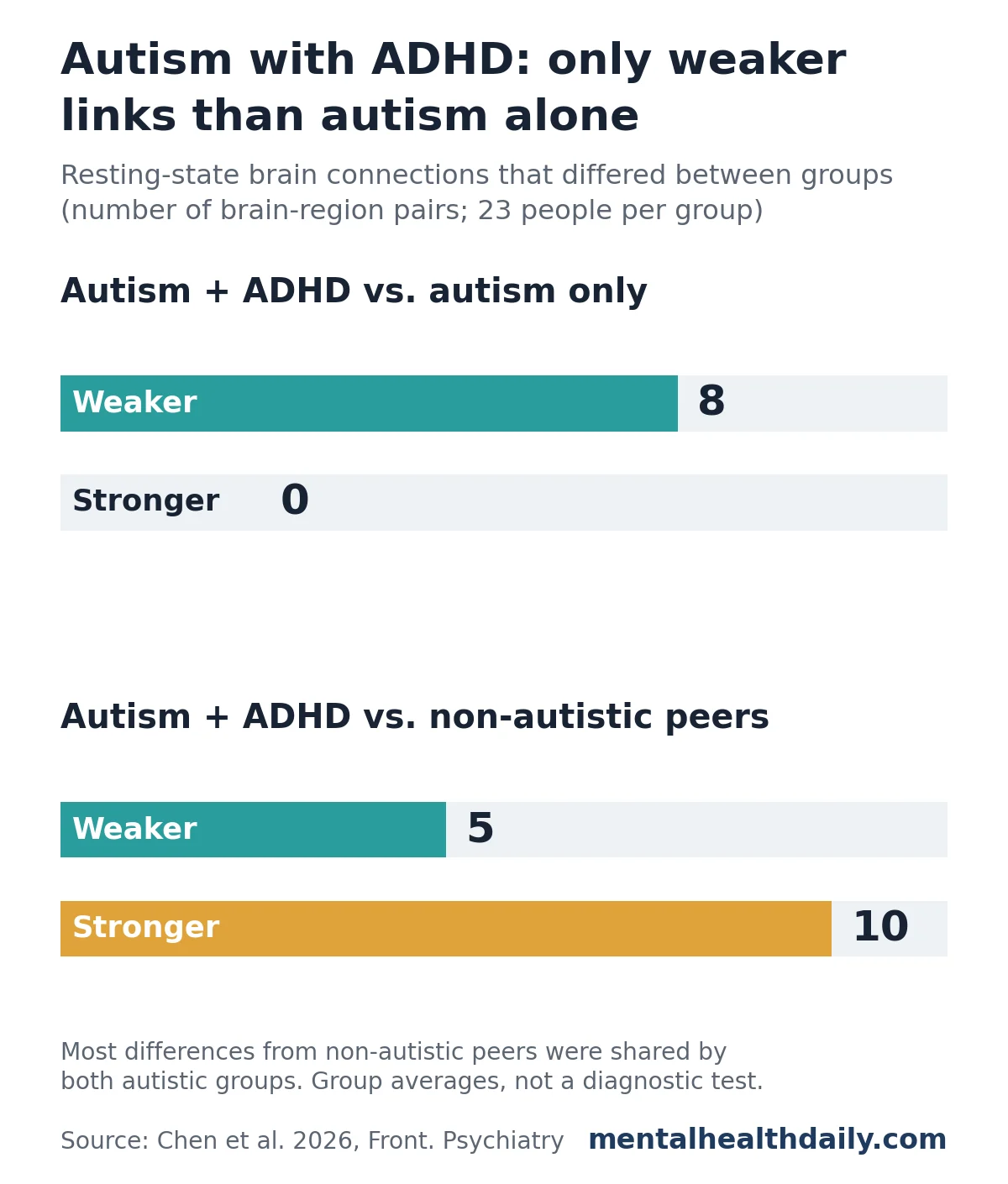
The comparative analysis yielded compelling results, underscoring a distinct neurobiological signature for individuals with co-occurring autism and ADHD. When the autism-plus-ADHD group was directly contrasted with the autism-only group, a striking pattern emerged: every observed difference pointed towards weaker connectivity. Specifically, 8 brain-region pairs showed significantly reduced functional connections, while not a single pair exhibited stronger connections. These weaker links involved critical interactions between:
- The default mode network and the central executive network: Indicating reduced coordination between internally focused thought and externally directed attention.
- The salience network and the central executive network: Suggesting impaired ability to detect important stimuli and reallocate attentional resources effectively.
- The hippocampus and parts of the salience network: Potentially impacting how emotionally salient information is integrated with memory processes.
- The hippocampus and the default mode network: Implicating memory processes in self-referential thought and internal states.
This consistent directionality of weaker connectivity in the autism-plus-ADHD group, compared to the autism-only group, strongly suggests a unique neurophysiological impact of the co-occurring ADHD diagnosis. While a stricter statistical threshold confirmed only one of these eight differences, the overall trend remained compelling.
In contrast, when the autism-plus-ADHD group was compared to non-autistic peers, the picture was more mixed. This group showed 10 instances of stronger functional links and 5 instances of weaker ones. The stronger connections predominantly involved pathways from the hippocampus to the lower frontal brain regions, and from a default mode hub to executive control regions. This intricate pattern further highlights that the neurobiological profile of autism with ADHD is not simply a deficit model, but a complex rearrangement of brain connectivity.
Shared Autism Patterns, Plus an ADHD-Linked Salience Difference
By meticulously comparing connectivity patterns across all three groups, the researchers were able to categorize the observed differences into distinct types:
- Shared Autism Patterns: Several connections showed similar differences in both the autism-plus-ADHD group and the autism-only group when compared to non-autistic peers. These likely represent core neurobiological features associated with autism itself, irrespective of ADHD.
- Unique ADHD-Linked Patterns: Crucially, some connections showed differences only in the autism-plus-ADHD group, or exhibited a specific pattern related to the presence of ADHD. A particularly notable finding was the weaker connectivity involving the anterior cingulate cortex (ACC) within the salience network in the autism-plus-ADHD group. The ACC is a pivotal region known for its role in monitoring actions, detecting errors, and inhibiting unwanted responses. Its weaker connections align precisely with the well-documented challenges in attention regulation, impulsivity, and self-control that are central to ADHD. This specific finding provides a neurobiological correlate for the behavioral manifestations of ADHD when it co-occurs with autism.
Importantly, no connection exhibited a stepwise pattern where the autism-plus-ADHD group was furthest from non-autistic peers, with the autism-only group positioned intermediately. This observation led the researchers to interpret their findings as indicating that autism plus ADHD represents a distinct variant of autism, rather than simply a more severe manifestation or an exacerbated version of autism alone. This "distinct variant" concept aligns with a corroborating 2025 study of 282 children and teens, which similarly found shared default mode network differences in autism with and without ADHD, alongside unique network patterns for each group that also evolved with age. Such findings are critical for reframing our understanding of neurodevelopmental heterogeneity.
An exploratory analysis also investigated the relationship between brain connectivity and autism symptom scores, derived from detailed parent interviews. This analysis revealed that two specific brain connections behaved differently depending on the presence of ADHD:
- One particular link showed a correlation with autism symptoms only in the autism-only group, not in the autism-plus-ADHD group.
- Another connection exhibited an inverse correlation with autism symptoms, again, only in the autism-only group.
These exploratory findings suggest that the neurobiological underpinnings of autism symptoms might be modulated by the presence of co-occurring ADHD, further supporting the idea of distinct neurobiological profiles. While permutation testing supported the statistical significance of these group differences, the small sample size for these correlations (approximately 21 people per group) means that these findings should be interpreted with caution and require replication in larger cohorts.
Implications for Diagnosis, Intervention, and Future Research
The findings from this 2026 study carry substantial implications for clinical practice, research, and the broader understanding of neurodevelopmental conditions. From a clinical perspective, recognizing autism plus ADHD as a distinct neurobiological variant rather than a mere additive effect is paramount. This insight suggests that assessment and intervention strategies for autistic individuals with co-occurring ADHD should be tailored to their unique profile, potentially differing from those designed for autistic individuals without ADHD.
Medical professionals and clinicians are now better equipped to understand the underlying neural mechanisms that might contribute to the specific challenges faced by this subgroup. For instance, the observed weaker connections involving the anterior cingulate cortex underscore the importance of targeted interventions for attention, impulse control, and executive function deficits in these individuals. The researchers also cautiously suggest that support programs for autistic people with ADHD might need to pay more attention to memory, even though memory itself was not directly tested in this study. This hypothesis, stemming from the hippocampus’s altered connectivity, warrants direct investigation through future research.
From a research standpoint, this study opens several avenues. It emphasizes the need for larger, independent datasets, such as ABIDE II, to replicate these findings and explore them in diverse populations. Longitudinal studies are crucial to understand how these connectivity patterns evolve over time and how they relate to developmental trajectories and treatment responses. Furthermore, the "distinct variant" hypothesis challenges researchers to move beyond broad diagnostic categories and delve into the nuanced sub-types within neurodevelopmental conditions, paving the way for more personalized medicine. Understanding these unique brain profiles could eventually lead to the development of specific biomarkers for co-occurring conditions, aiding in earlier and more accurate diagnoses.
Limitations and Caveats
While highly informative, the study is not without its limitations. As a cross-sectional analysis of existing scans, it describes group differences at a single point in time. Therefore, it cannot establish cause-and-effect relationships between brain connectivity and symptoms. It also cannot be used to diagnose ADHD in an individual; brain scans like these remain research tools. Other limitations include:
- Sample Size: Although carefully matched, the sample size of 23 participants per group is relatively small for neuroimaging studies, necessitating replication in larger cohorts.
- Data Source: Reliance on the ABIDE I database means the findings are constrained by the original data collection methods and participant demographics.
- Indirect Measures: Resting-state functional connectivity infers neural communication; it does not directly measure neuronal firing or chemical signaling.
- No Direct Memory Testing: The suggestion regarding memory support is an inference from brain connectivity and requires direct behavioral assessment.
- Heterogeneity within Groups: Even within the "autism-only" or "autism+ADHD" groups, there is likely significant individual variability that a group-level analysis might mask.
Conclusion: Towards Personalized Understanding and Support
In essence, this 2026 study by Lang Chen et al. provides compelling neurobiological evidence that autistic individuals with co-occurring ADHD possess a distinct neural signature characterized by weaker resting brain connections, particularly in networks vital for attention and self-control. This research reinforces the clinical necessity of accurately diagnosing both conditions when they co-exist, moving away from past restrictive practices.
For families, the takeaway is clear and practical: if an autistic child or young person is also exhibiting struggles with attention, impulsivity, or hyperactivity, seeking an ADHD evaluation is a crucial and useful step. While brain scans offer invaluable insights for research, they are not currently employed for diagnosing either autism or ADHD in clinical settings. The future of support programs for autistic individuals, especially those with co-occurring conditions, lies in a more nuanced, neurobiologically informed approach that acknowledges and addresses their unique profile, ultimately leading to more effective and personalized interventions. The ongoing exploration of these complex neural landscapes promises to enrich our understanding of neurodiversity and enhance the quality of life for those living within its spectrum.

