

A groundbreaking 2026 interview study has shed critical light on the complex origins of co-occurring posttraumatic stress disorder (PTSD) and substance use disorder (SUD) among people of color, with participants overwhelmingly linking the onset of both conditions to experiences of racism and sexism. The qualitative research, led by Mallet Reid at Michigan State University, underscores a profound gender divide in these pathways, revealing how societal prejudices intersect with personal trauma to create distinct vulnerabilities and barriers to healing.
Understanding the Interplay of Trauma and Addiction
Posttraumatic stress disorder (PTSD) is a severe mental health condition that can develop following exposure to a terrifying or violent event. Its symptoms often include intrusive memories, flashbacks, nightmares, heightened arousal, and avoidance behaviors. A substance use disorder (SUD), conversely, is characterized by a problematic pattern of alcohol or drug use that leads to clinically significant impairment or distress, becoming difficult to control despite harmful consequences. The co-occurrence of PTSD and SUD is alarmingly common, with studies indicating that up to 50% of individuals seeking treatment for SUD also meet the criteria for PTSD, and vice versa. This dual diagnosis often exacerbates both conditions, as many individuals with PTSD turn to substances as a maladaptive coping mechanism to quiet their distressing symptoms, inadvertently paving the way for addiction.
The Michigan State University team embarked on this qualitative inquiry to understand the lived experiences and perceptions of people of color regarding the genesis of their co-occurring PTSD and SUD. Recognizing a significant gap in existing research, which often overlooks the intersection of race, gender, and trauma in the context of dual diagnoses, Reid and colleagues sought to amplify the voices of those directly affected. From November 2023 to March 2024, flyers were posted at partner clinics, inviting individuals to participate in in-depth interviews. This approach, characteristic of a qualitative study, prioritizes rich, open-ended narratives over quantitative metrics, allowing researchers to uncover recurring themes and profound insights that statistical analyses might miss. Two independent coders meticulously analyzed the transcripts, achieving an 83% agreement rate, and participants were given the opportunity to review their own transcripts for accuracy, ensuring the fidelity of their accounts.
The Gendered Paths to Dual Diagnosis: Violence, Silence, and Self-Medication
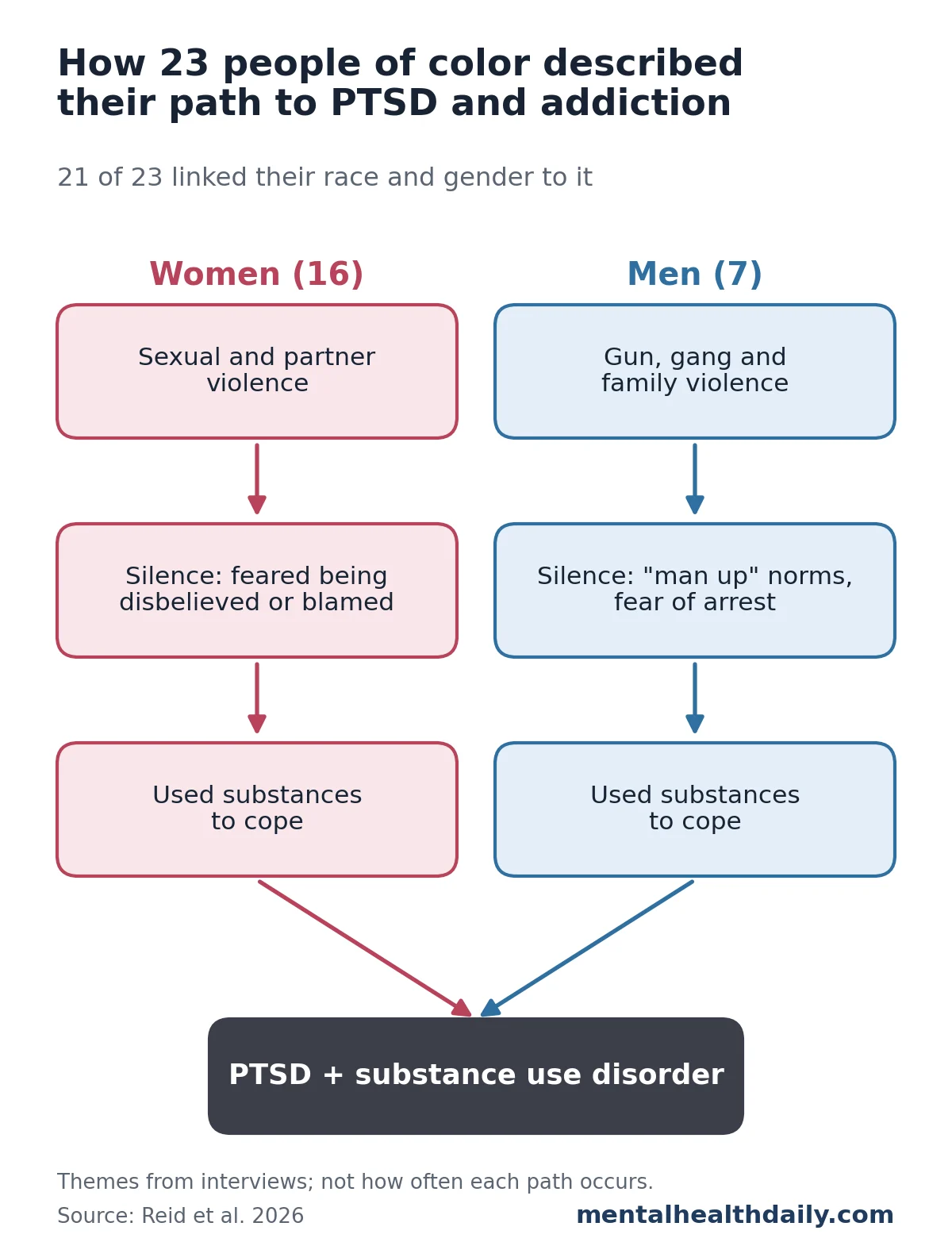
The study identified a consistent three-step progression across all participants: an initial experience of violence, followed by a period of silence surrounding that trauma, and ultimately, the use of substances as a coping mechanism. Crucially, the nature of the violence and the reasons for silence diverged significantly along gender lines, a phenomenon the researchers explained through the lens of "multiple jeopardy." This concept, rooted in Black feminist scholarship, posits that individuals with multiple marginalized identities—such as being a woman and a person of color—experience compounded and distinct forms of harm due to the synergistic effects of racism, sexism, and other forms of oppression.
For the 16 women who participated in the study, the path predominantly began with gender-based violence. This included sexual assault, intimate partner violence, and stalking, which they unequivocally identified as the precipitating events for their PTSD. Following these traumatic experiences, a pervasive silence descended. Women reported a profound reluctance to disclose their trauma, particularly to health professionals, driven by an ingrained fear of being disbelieved, dismissed, or outright blamed for the violence inflicted upon them. Several women explicitly articulated that their identity as a woman of color amplified these fears, recognizing that systemic biases often lead to testimonial injustice—where a person’s account is given less credibility due to their identity—and victim-blaming, where survivors are held responsible for the harm they endured. This expectation of skepticism and judgment created an insurmountable barrier to seeking help, forcing them into a solitary struggle.
In contrast, the 7 men in the study described a pathway rooted in interpersonal trauma often experienced within their communities and families. Their narratives frequently involved exposure to severe violence, such as witnessing friends being shot, direct involvement in gang violence, experiencing child abuse, or observing domestic violence against a parent. Martin, one of the participants (all names are pseudonyms), vividly connected the environmental context to race, describing a neighborhood devoid of adequate policing or recreational facilities, where young men were often left with stark choices: either succumb to the pervasive violence or remain isolated indoors. The subsequent silence among men stemmed from a combination of rigid masculinity norms, which stigmatize emotional expression and discourage seeking therapeutic help, and a palpable fear of legal repercussions. Admitting to trauma or substance use could, they feared, lead to police involvement, arrest, and further entanglement within a punitive justice system already disproportionately affecting men of color. This double bind—the perceived erosion of their masculinity alongside the threat of state surveillance—effectively deterred many from seeking professional assistance, even as their substance use escalated into addiction.
Systemic Barriers and the Burden of Silence
The shared outcome for both groups was a profound avoidance of formal treatment, driven by their distinct yet equally potent fears. Women anticipated being invalidated or blamed for their trauma, while men worried about the legal and social consequences of disclosure. While all 23 participants eventually accessed some form of treatment for PTSD, SUD, or both—which was the basis for their recruitment—their accounts powerfully illuminate the prolonged periods of silent suffering that preceded their entry into care.
The researchers argue compellingly that healthcare clinicians must cultivate a deep understanding of these specific, gendered fears to effectively reach and engage people of color struggling with PTSD and SUD. They highlighted a critical oversight in existing research on co-occurring conditions, noting its historical lack of attention to the nuances of race and racism. Furthermore, while gender-specific treatment approaches exist, they often focus predominantly on sexual violence, thereby failing to address the unique traumas and fears articulated by men of color.
Broader Context: Racism, Discrimination, and Mental Health Disparities
The findings of this qualitative study resonate with a growing body of quantitative research that links discrimination to mental health conditions, including PTSD and substance use, albeit often examining them in isolation. Studies have consistently shown that experiences of racial discrimination are significant predictors of psychological distress, anxiety, depression, and PTSD among minority populations. For instance, a 2015 meta-analysis published in the American Journal of Public Health found a robust association between racial discrimination and poorer mental health outcomes. Another study in JAMA Psychiatry in 2017 revealed that perceived discrimination contributed to higher rates of substance use and related disorders among African Americans. These larger observational studies, while demonstrating correlations rather than direct causation, provide a crucial statistical backdrop that reinforces the lived experiences detailed in Reid’s qualitative work. The interview study uniquely provides the ‘how’ and ‘why’ from the perspective of those affected, detailing the step-by-step psychological and social processes from violence to silence to substance use.
The historical context of mental health care in the United States further exacerbates these issues. People of color have historically faced systemic discrimination within healthcare systems, including misdiagnosis, undertreatment, and a lack of culturally competent providers. This legacy of mistrust, coupled with socio-economic disparities and the constant burden of navigating a racially charged society, contributes significantly to adverse mental health outcomes and reluctance to seek help. The 2001 U.S. Surgeon General’s report, "Mental Health: Culture, Race, and Ethnicity," starkly highlighted these disparities, noting that racial and ethnic minority groups often bear a disproportionately heavy burden of mental illness, yet are less likely to receive needed mental health services.
Implications for Clinical Practice, Policy, and Prevention
The Michigan State University study carries profound implications for the future of PTSD and addiction care. Firstly, it underscores the urgent need for trauma-informed and culturally competent care that explicitly acknowledges and addresses the unique impacts of racism and sexism. Clinicians must be trained to recognize how systemic oppression shapes individuals’ experiences of trauma, their coping mechanisms, and their willingness to engage in treatment. This includes fostering an environment of psychological safety where fears of blame, disbelief, or arrest can be openly discussed without judgment.
Secondly, the study advocates for integrated treatment models that simultaneously address PTSD and SUD, rather than treating them as separate entities. Such models must be tailored to specific gender and racial experiences. For women of color, this means creating safe spaces to process gender-based violence, validating their experiences, and challenging victim-blaming narratives. For men of color, it requires deconstructing harmful masculinity norms, addressing fears related to the justice system, and offering alternative, healthy coping strategies.
Thirdly, at a policy level, there is a clear call for interventions that go beyond individual therapy. This includes advocating for policies that address systemic racism and sexism, improve community safety, reduce police involvement in mental health crises, and expand access to affordable, culturally sensitive mental health services. Prevention efforts should also be re-evaluated to consider the role of discrimination and social determinants of health in the development of these disorders. Investing in community-based initiatives that build trust and provide early intervention, particularly in underserved neighborhoods, could be transformative.
Limitations and Future Directions
While the qualitative interviews provided invaluable depth and rich contextual understanding, it is crucial to acknowledge their inherent limitations. As the researchers themselves noted, qualitative studies excel at revealing how individuals interpret their experiences and at generating hypotheses for broader investigation. They are not designed to estimate the prevalence of specific pathways or to definitively prove causality between racism, sexism, and the development of PTSD or SUD. The relatively small sample size of 23 participants, while providing detailed insights, means that the findings cannot be generalized to the entire population of people of color with co-occurring disorders.
However, this study lays vital groundwork for future research. It strongly suggests the need for larger, quantitative studies that can test the prevalence of these gendered pathways across diverse racial and ethnic groups. Longitudinal studies could also track individuals over time to better understand the temporal relationships between experiences of discrimination, trauma, coping mechanisms, and the development of dual diagnoses. Further research is also needed to develop and evaluate culturally specific interventions that effectively address the unique challenges identified in this study.
In conclusion, the Michigan State University study offers a powerful, participant-driven narrative that compels a fundamental re-evaluation of how PTSD and SUD are understood and treated in communities of color. By foregrounding the insidious roles of racism and sexism, and highlighting the distinct gendered pathways to dual diagnoses, it provides a critical roadmap for developing more equitable, effective, and compassionate mental health care. For those grappling with the intertwined challenges of trauma and substance use, resources like the SAMHSA National Helpline (1-800-662-4357) offer free, confidential treatment referrals around the clock, representing a crucial first step towards healing in a journey often fraught with systemic obstacles.

