

On a chilling January morning in 2016, the University of Hyderabad was irrevocably marked by the tragic suicide of Rohith Vemula, a 26-year-old PhD scholar. His final words, etched in a poignant suicide note, transcended personal despair to become a searing indictment of a society that reduced individuals to mere statistics, devoid of their inherent intellectual and spiritual worth. Vemula, a Dalit student and a vocal activist with the Ambedkar Students’ Association (ASA), had been suspended from his academic pursuits, evicted from his dormitory, and effectively ostracized from institutional life. His plight, stemming directly from his caste identity and his activism, illuminated the pervasive and destructive reality of the caste system in modern India, a testament now echoed in countless discussions about caste-based discrimination.
Vemula’s untimely death did not extinguish the flame of his family’s resolve. Three months later, on April 14, 2016—the 125th birth anniversary of Dr. B. R. Ambedkar, the titan of Dalit rights and the principal architect of the Indian Constitution—Radhika, Rohith’s mother, and his brother, Raja, embarked on a pilgrimage of sorts. From their home in Hyderabad, they traveled to the Dr. Babasaheb Ambedkar Bhavan in Dadar, Mumbai. There, in the presence of Prakash Ambedkar, grandson of Dr. Ambedkar, thirty Buddhist monks officiated a profound ceremony: the Deeksha vows, marking their conversion to Buddhism. This significant act of religious and political transformation was also undertaken by Rohith’s childhood friend, Riyaz Shaikh, and fellow ASA activist, Charbad Raju. Their conversion was not merely a change of faith; it was a deliberate act of protest, a strategic maneuver for survival, and the most potent form of defiance available to them—a resolute refusal to remain within a religious framework that perpetuated their subjugation and humiliation.
This pattern of conversion as a response to caste-based violence is not an anomaly in India’s historical narrative. It is a recurring theme woven through seven decades of Ambedkarite history: caste perpetrates violence, the state falters in its duty to provide justice, and Dalits, rather than resorting to arms, turn to the Dhamma. Their conversion to Buddhism serves as a powerful statement of protest, a means of survival, and a radical declaration of their humanity by rejecting a religion that institutionalizes their indignity.
The World Ambedkar Inherited: A Theological Architecture of Purity and Pollution
To comprehend the significance of Dalits embracing Buddhism in the face of atrocities, one must first understand the oppressive system they are leaving behind. The caste system in India is far more than a mere social hierarchy; it is a deeply entrenched theological construct of purity and pollution, meticulously inscribed in religious scriptures and ruthlessly enforced through generations of violence. For those relegated to the status of "untouchables"—positioned entirely outside the four-tiered varna system—this meant systematic exclusion. Access to sacred temples, essential water sources, educational institutions, public transportation, employment opportunities, and even public roads was strictly forbidden. Their very existence was a burden on the caste Hindu populace, forcing them to announce their presence by striking two stones together to ensure others could move aside and avoid ritual contamination. Their prescribed occupations were the most menial and dehumanizing: sweeping streets, carrying human excrement, and skinning deceased cattle. These were not choices but hereditary burdens, dictated by birth, where even their shadow was deemed polluting.
Dr. B. R. Ambedkar was born into this deeply ingrained system of inequality on April 14, 1891. Despite his exceptional intellect, earning doctorates from prestigious institutions like Columbia University and the London School of Economics, he faced relentless discrimination. He was denied access to water from common school pots and repeatedly rejected by landlords and guesthouses throughout his distinguished career. Ambedkar recognized that no individual achievement, however monumental, could dismantle the caste system as long as Hinduism provided its theological justification. After years of extensive study, political activism, and earnest exploration of diverse religious traditions, his conclusion was unequivocal: Hinduism and caste were inextricably linked. He determined that reform from within was a futile endeavor; true liberation necessitated a complete exit.
The Dhamma Deeksha: Ambedkar’s Historic Mass Conversion
On October 14, 1956, in Nagpur, amidst the global commemoration of the 2,500th anniversary of the Buddha’s passage into parinirvana, Dr. Ambedkar led an unprecedented mass conversion. Approximately 500,000 followers embraced Buddhism in an event that came to be known as the Dhamma Deeksha. At 64 years old and in frail health, Ambedkar, knowing his time was limited, was driven by a profound mission to establish a new paradigm of engaged Buddhism, which he termed Navayana, or the "New Vehicle." He passed away peacefully six weeks later, just three days after completing his seminal work, The Buddha and His Dhamma, a text that would become the cornerstone of the Ambedkarite movement.
By undertaking the twenty-two vows prescribed by Ambedkar, the newly converted Buddhists simultaneously renounced Hindu deities, the authority of Brahmin priests, the legitimacy of the caste system, and the very identity of untouchability. This was not merely a religious affiliation; it was a declaration of their fundamental humanity. The vows articulated this profound shift: "I renounce Hinduism, which is harmful for humanity and impedes the advancement of human beings, and I embrace Buddhism as my religion," and "I believe that today I am taking new birth." The deliberate choice of the language of rebirth signified more than a spiritual rebirth; it offered a new identity, one where dignity was not contingent upon caste, spiritual worth was not dictated by birth, and liberation was attainable in this life through ethical conduct. Furthermore, by explicitly rejecting the worship of Hindu deities and refuting the notion of the Buddha as an avatar of Vishnu, these vows served as a powerful bulwark against Hindu nationalist attempts to subsume Buddhism, thereby undermining its capacity to challenge caste. Collectively, these twenty-two vows laid the foundation for Ambedkarite Buddhism, a movement characterized by its robust rejection of Hindu nationalism and caste politics, while simultaneously affirming the inherent dignity and equality of all beings.
Ambedkar envisioned the Navayana movement not as a path to worshipping a deity, but as a guide to understanding the Buddha as Margadata—one who illuminates the path. In The Buddha and His Dhamma, he emphasized the Dhamma’s role as a social blueprint: "The function of Dhamma is to reconstruct the world." He drew inspiration from the Pali canon’s democratic model of the Sangha for an egalitarian community, the Mahayana ideal of the Bodhisattva for social service, and his critical analysis of Indian society to redefine dukkha not as cosmic suffering but as the specific, structural suffering imposed by the caste system.
The timing of the Dhamma Deeksha was significant, coinciding with Emperor Ashoka’s conversion to Buddhism in the 3rd century BCE. However, while Ashoka’s conversion was an act of imperial patronage that spread the Dhamma through state support, Ambedkar’s revival originated "from the people"—specifically, from those occupying the lowest rungs of the social hierarchy. This grassroots origin profoundly shaped Ambedkarite Buddhism, imbuing it with a potent moral urgency. What Ambedkar initiated was not merely a new interpretation of Buddhism, but a potent form of resistance—a path that subsequent generations of Dalits would turn to whenever the violence of caste rendered their continued existence within Hinduism unbearable.
Ambedkar’s Legacy: A Pattern of Resistance and Resilience
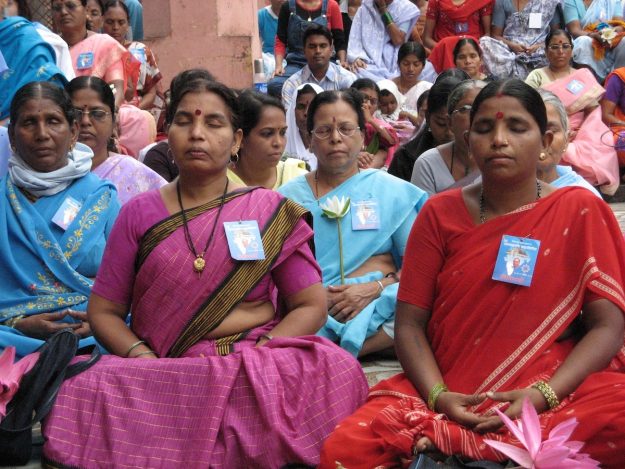
In the seventy years since that historic October day in Nagpur, the cycle of caste-based violence has continued with relentless regularity. Caste atrocities persist, and the state often fails to intervene effectively. In response, Dalits, following Ambedkar’s pioneering footsteps, continue to convert to Buddhism, not as an act of surrender, but as a powerful demonstration of defiance.
A stark illustration of this pattern occurred in July 2016 in Mota Samadhiyala village, Gujarat. Four young Dalit men were brutally stripped, bound to an SUV, and publicly flogged by cow vigilantes. Their supposed transgression was skinning a dead cow, a task historically assigned to their caste for generations. The assault was filmed and widely circulated, and the police response was notably slow, despite the video evidence. In protest, the victims and hundreds of their family members embraced Buddhism. Their message was clear: if Hinduism mandated their traditional labor and then subjected them to violence for performing it, they would abandon Hinduism. This conversion was a dual act: a rejection of the theological framework that assigned them degrading work and an assertion of their inherent dignity in the face of extreme violence and humiliation.
In 2019, a similar act of dehumanization took place in Gundlupet, where a Dalit youth was stripped, beaten, and paraded naked—a calculated act of humiliation intended to reassert his community’s subjugated status. In response, Dalit activists organized protest marches, culminating in the conversion of several individuals to Buddhism. This was a symbolic act of profound significance: in response to an act of forced stripping, these Dalits voluntarily embraced a tradition that symbolically strips away caste identity at the moment of conversion.
More recently, in 2022, two Dalit youths in Bhulon Village were assaulted by upper-caste men for participating in aarti (a devotional ritual) at a Hindu temple, a practice considered the exclusive right of caste Hindus. When the police refused to register cases against the perpetrators, over 200 Dalit families collectively converted to Buddhism. Buddhism offered them a sanctuary, a place of worship where they would not be denied entry by any upper-caste gatekeeper.
Beyond individual incidents, some conversions represent the culmination of protracted struggles. The Namantar Andolan, a sixteen-year movement to rename Marathwada University after Dr. Ambedkar, was marred by persistent upper-caste violence, including riots, murders, destruction of Dalit property, and arson. Dominant castes fiercely resisted the very idea of honoring Ambedkar with an institution bearing his name. Yet, this violence did not suppress the Dalit Buddhist movement. After nearly two decades of unwavering advocacy, the university was finally renamed in 1994. More enduringly, the struggle solidified a regional Buddhist identity intrinsically linked to political resistance.

Rohith Vemula: A Life Reduced to a Number, Reclaimed by the Dhamma
The case of Rohith Vemula tragically encapsulates the intersection of caste, institutional violence, and the transformative power of Buddhist conversion. As an activist with the Ambedkar Students’ Association at the University of Hyderabad, Vemula and four other Dalit student leaders faced severe repercussions following a political altercation with a right-wing student group. The university administration’s response was swift and punitive: suspension, eviction from their hostel, and a ban from communal spaces, forcing them to reside in a makeshift tent on campus. On January 17, 2016, Rohith Vemula took his own life.
His suicide note was far more than an expression of despair; it was a profound philosophical protest. A young man with aspirations reaching for the stars articulated the devastating impact of the caste system on the human psyche. The poignant phrase, "My birth is a fatal accident," was not a lament of personal misfortune but a stark commentary on a social system where one’s birth caste determined a life sentence. He concluded his note with the evocative words, "From shadows to the stars."
His family understood the deeper meaning of his sacrifice. Rohith’s body was cremated according to Buddhist rites. Three months later, on Ambedkar Jayanti, his mother and brother underwent the Deeksha vows in Mumbai, converting to Buddhism. Raja Vemula articulated their newfound liberation: "From today, my mother and I will be free from shame, free from the daily humiliation, free from the guilt of praying to the same god in whose name our people have been tortured for centuries. . . . We want azadi [freedom] from the caste system." Rohith had encouraged his family to embrace Buddhism during his lifetime. In death, he ultimately guided them to it.
A New Buddhism Born from Old Symbols: Reimagining the Dhamma for Modern India
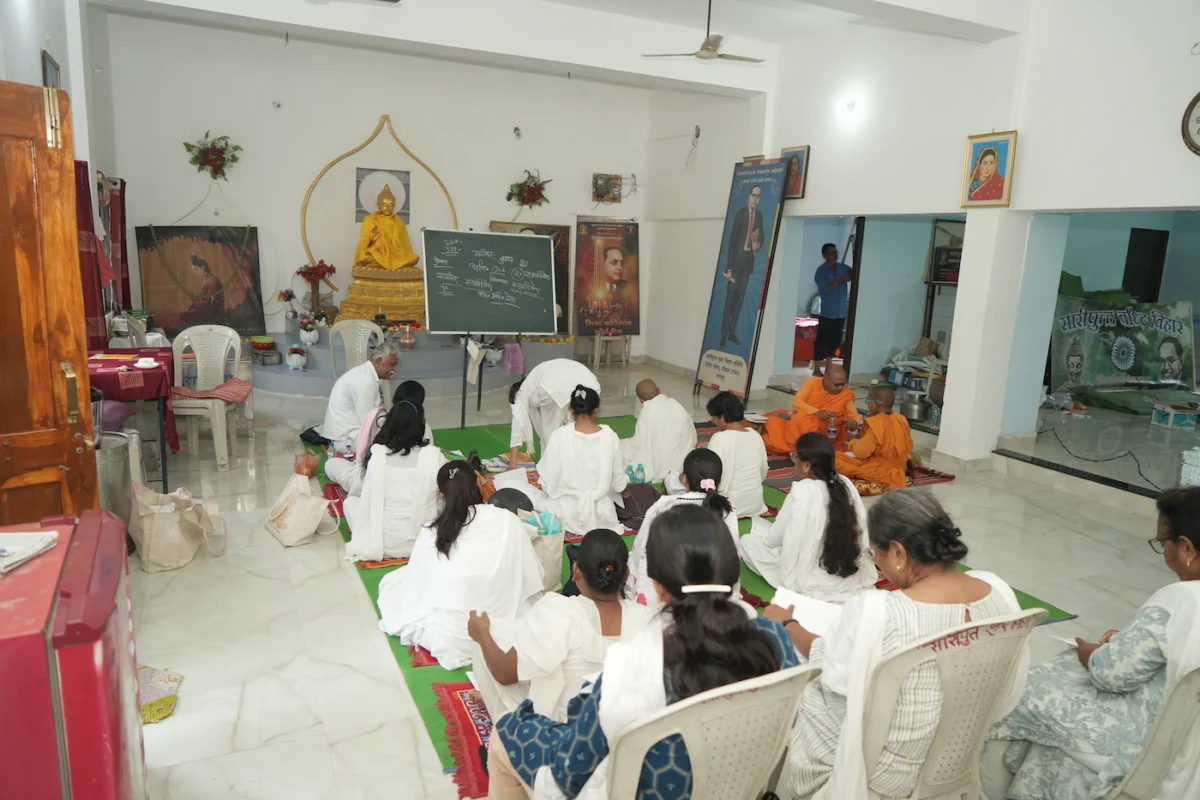
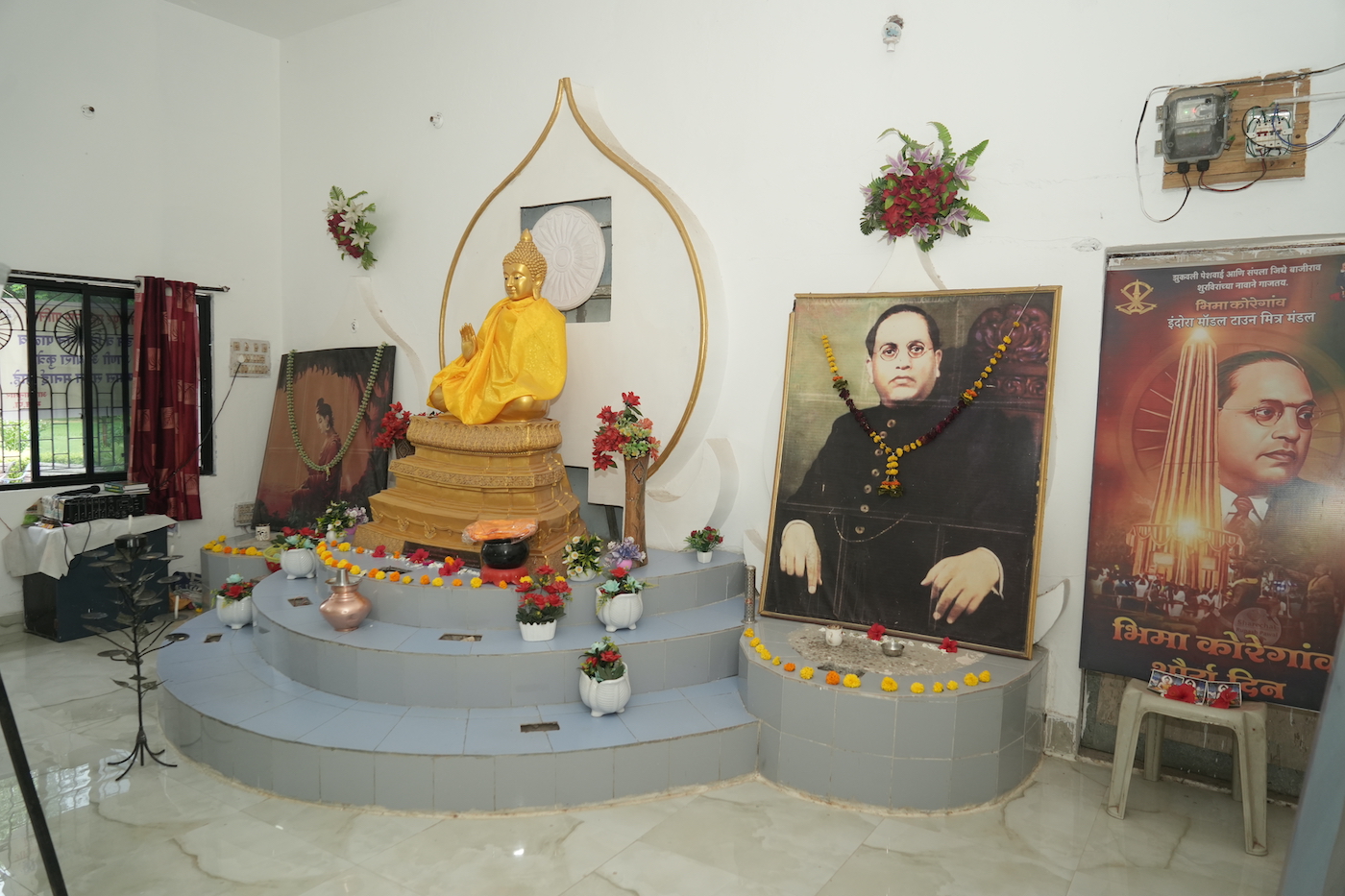
The conversions taking place are not merely a change in religious affiliation; they represent the emergence of a distinct Ambedkarite Buddhist culture, deeply rooted in the lived experience of caste oppression. In Buddhist viharas across Maharashtra, altars often feature dual images: the meditating Buddha and Dr. Ambedkar, depicted in his iconic blue suit, holding a pen and the Constitution he helped draft. This pairing is deliberate, symbolizing the Buddha as the guide to the path and Ambedkar as the one who charted its course in the modern era.
Ancient Buddhist symbols are being reinterpreted through an Ambedkarite lens. The dharmachakra appears on protest banners alongside images of atrocity victims. The distinctive blue of Ambedkar’s suit has become the color of Dalit assertion and pride. The Bodhi tree is reclaimed as a symbol of enlightenment accessible to all, not just the ritually pure. Conversion ceremonies are strategically held on Ambedkar Jayanti and Dhamma Chakra Pravartan Din, linking individual acts of liberation to the collective historical legacy of the 1956 conversion. At local viharas, monks and laypeople jointly administer the twenty-two vows, dismantling the traditional hierarchies that separate clergy from laity. In Rohith Vemula’s case, even his death became a Buddhist ritual act, his cremation serving as a powerful assertion that his mind—"a glorious thing made of star dust"—could never be reduced to his caste.
From Shadows to the Stars: The Enduring Journey of Liberation
When Rohith Vemula penned the phrase, "From shadows to the stars," he was inspired by Carl Sagan’s cosmic musings. However, this phrase has transcended its literary origins to become an emblematic Ambedkarite expression, signifying the journey from the pervasive shadows of caste to the luminous light of Buddhist liberation, from the imposed darkness of untouchability to the profound possibility of human dignity.
Ambedkar deeply understood this transformative journey. He wrote, "The greatest thing that the Buddha has done is to tell the world that the world cannot be reformed except by the reformation of the mind of the man and the mind of the world." Spiritual revolution, in his view, formed the bedrock of social transformation. Conversion embodies this principle: a reformation of the mind, a conscious refusal to internalize the shame imposed by the caste system. This is precisely what Raja Vemula described when he spoke of his family’s freedom from shame. Shame is an intrinsic component of the caste system, and in the Ambedkarite tradition, Buddhism serves as a powerful tool for its dismantling.
For the estimated 10 million Ambedkarite Buddhists, the Dhamma provides the moral and philosophical foundation upon which constitutional democracy can flourish. Ambedkar reinterpreted Buddhist principles for contemporary relevance: the Buddhist concept of maitri (loving-kindness) becomes the democratic principle of fraternity; anatta (not-self) offers a basis for constitutional equality by exposing caste hierarchies as illusory; and the Pali canon’s descriptions of the Sangha serve as a model for democratic governance and community building. Ultimately, the answer lies not only in doctrine but in the agency of the people themselves. As they march with Buddhist flags rather than weapons, demand justice with unwavering dignity, and forge communities of equality within a deeply hierarchical society, they collectively embody the vision of Ambedkar’s Constitution, breathing life into its ideals.
Seventy years after Ambedkar’s monumental conversion, his movement stands at a critical juncture, poised to shape not only its own future but potentially the trajectory of engaged Buddhism globally. The challenges it confronts offer a compelling template for how Buddhism can engage with the pressing social issues of the modern era, charting a path toward liberation not only for individuals seeking inner peace but for entire communities striving for justice. For the global Buddhist community, Ambedkarite Buddhism poses an uncomfortable yet essential question: Will we learn from Buddhists who are actively transforming society, or will we continue to overlook their profound contributions?
When we speak of engaged Buddhism, it is crucial to remember that millions are already living this reality, not as a theoretical concept, but as a lived experience. They carry within them the historical memory of every flogging, every temple door slammed shut, every act of institutional violence, and yet, they steadfastly choose the path of peace. The pertinent question is whether the rest of us are merely silent observers—or if we are ready to pay attention and join them in this vital endeavor.

