

In an era defined by demanding schedules and the perpetual quest for efficiency, the scientific consensus points towards a definitive strategy for optimizing physical fitness: compound exercises. This method, lauded by sports scientists and fitness professionals alike, offers a potent pathway to elevate fitness levels, build functional strength, and enhance metabolic health, often in significantly less time than traditional approaches. Far from being a niche concept, compound movements represent a foundational principle of effective training, enabling individuals to achieve comprehensive physical development with unparalleled efficiency.
Understanding Compound Versus Isolation Movements
At the core of strength training lies a fundamental distinction between two primary exercise modalities: compound and isolation. Isolation exercises, as their name suggests, target and engage a single muscle group across a single joint. Examples include bicep curls (targeting biceps), triceps extensions (targeting triceps), or leg extensions (targeting quadriceps). While these exercises can be valuable for specific muscle development, rehabilitation, or bodybuilding aesthetics, they typically demand a more segmented approach to training, requiring multiple exercises to address the body comprehensively.
In contrast, compound exercises are multi-joint movements that engage several muscle groups simultaneously. Think of a squat, which activates the quadriceps, hamstrings, glutes, and core, or a push-up, which works the chest, shoulders, triceps, and core stabilizers. This simultaneous activation is the bedrock of their superior efficiency and effectiveness. By mimicking natural human movements like lifting, pushing, pulling, and squatting, compound exercises train the body as an integrated unit, fostering coordination, balance, and real-world functional strength. This holistic engagement is what differentiates them as a powerful tool for those aiming to maximize their fitness journey.
The Scientific Edge: Why Compound Exercises Outperform
The assertion that compound exercises offer a significantly more efficient path to fitness — with some research suggesting up to 3.5 times greater effectiveness than isolated routines for certain outcomes — is rooted in several physiological advantages:
- Elevated Metabolic Demand and EPOC (Excess Post-exercise Oxygen Consumption): Engaging multiple large muscle groups concurrently requires a substantial energy expenditure. This leads to a higher calorie burn during the workout itself. More critically, compound exercises are potent stimulators of EPOC, commonly known as the "afterburn effect." After a strenuous compound workout, the body continues to consume oxygen at an elevated rate to restore physiological systems, repair muscle tissue, and replenish energy stores. This translates to increased calorie expenditure for hours, and even days, post-exercise, contributing significantly to fat loss and metabolic improvement.
- Enhanced Hormonal Response: Multi-joint, heavy lifting, characteristic of many compound movements, triggers a greater release of key anabolic hormones such as testosterone and growth hormone. These hormones are vital for muscle protein synthesis, tissue repair, and fat metabolism. A more robust hormonal response accelerates muscle growth, strength gains, and the body’s ability to burn fat, providing a systemic advantage over exercises that elicit a more localized, less intense physiological stress.
- Superior Functional Strength Development: Functional strength refers to the strength required for daily activities and sports performance. Compound exercises directly build this by training muscles to work synergistically, much like they do in everyday life. Lifting a grocery bag, climbing stairs, or throwing a ball all involve coordinated effort from multiple muscle groups. By training these complex movement patterns, compound exercises improve neuromuscular coordination, stability, and overall athletic prowess, reducing the risk of injury in both athletic and daily contexts.
- Improved Cardiovascular Health: When performed with intensity and minimal rest, compound exercises can elevate heart rate significantly, providing a powerful cardiovascular workout alongside strength training benefits. This dual advantage means individuals can improve both their muscular endurance and aerobic capacity within a single training session, making them incredibly time-efficient for overall health and fitness.
- Increased Bone Density: Many compound movements are weight-bearing, placing stress on bones. This stress stimulates osteoblasts, the cells responsible for bone formation, leading to increased bone mineral density. This is particularly crucial for preventing osteoporosis and maintaining skeletal health as one ages.
The combined effect of these physiological responses underscores why compound exercises are not just a trend but a scientifically validated cornerstone of effective fitness programming.
A Brief History of Fitness Philosophy and the Rise of Functional Training
For decades, the fitness landscape was heavily influenced by bodybuilding culture, which often emphasized isolation exercises to sculpt individual muscle groups for aesthetic purposes. Routines frequently involved "body part splits," dedicating entire sessions to specific muscles like chest, back, or arms, often with numerous isolation movements.
However, a shift began to emerge in the late 20th and early 21st centuries. With a growing understanding of biomechanics, sports science, and the increasing demand for practical, real-world strength, the focus began to pivot towards "functional fitness." This movement advocated for training the body to perform tasks efficiently, mirroring movements encountered in daily life and sports. This paradigm shift brought compound exercises to the forefront, as they inherently align with the principles of functional movement, whole-body integration, and optimal physiological response. The emphasis moved from merely looking strong to actually being strong and capable across a wider range of physical demands.
Integrating Compound Movements: Essential Exercises for a Full-Body Workout
One of the most appealing aspects of compound exercises is their versatility. Many can be performed effectively with minimal or no equipment, making them accessible to a broad audience, from gym-goers to those training at home. The following five exercises form a robust foundation for a full-body compound workout, often proving more efficient than traditional gym routines, particularly for those with limited time.
-
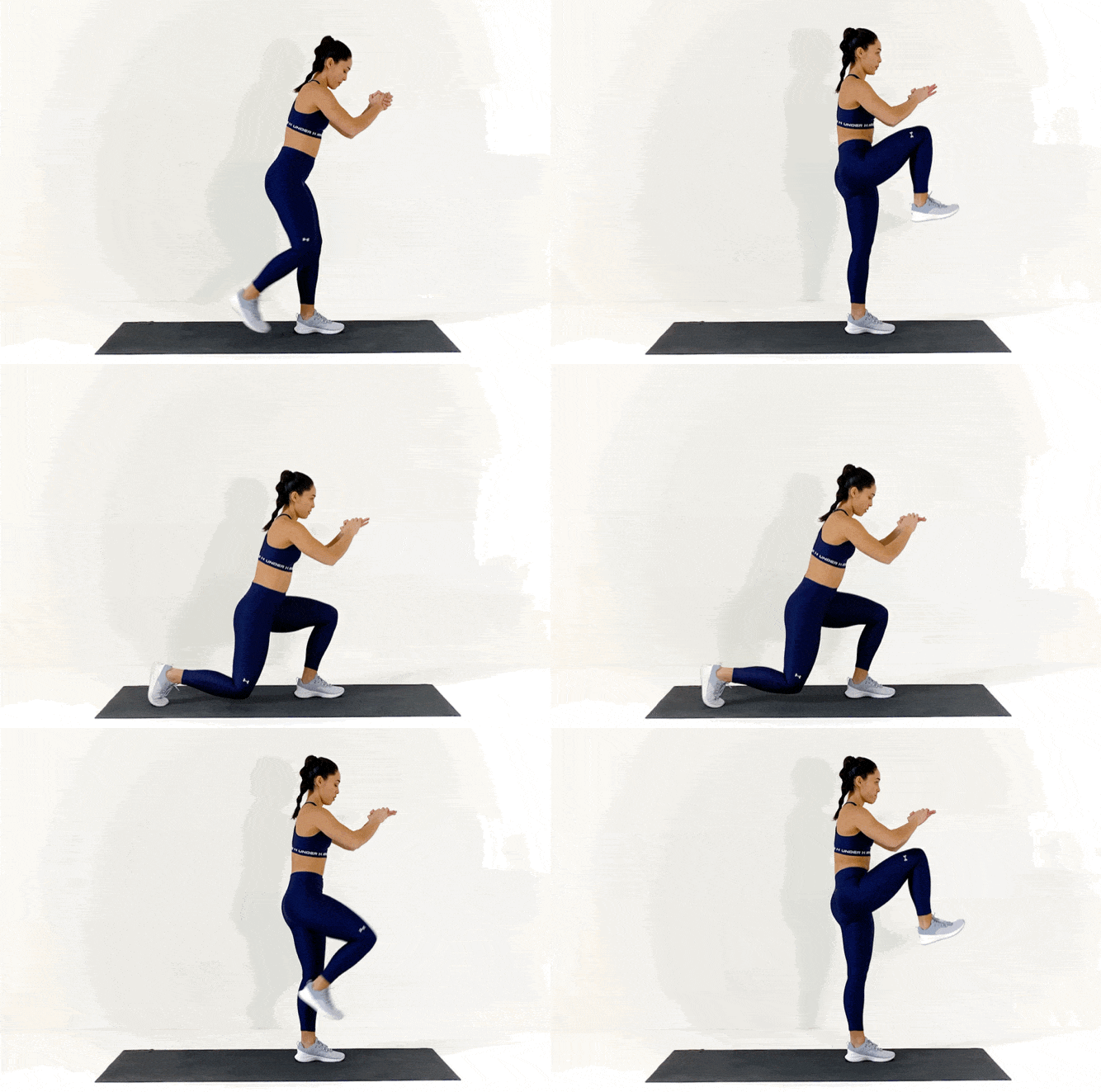
Reverse Lunge with a Knee Drive:
- Muscles Worked: Quadriceps, hamstrings, glutes, hip flexors, core.
- Execution:
- Stand tall with feet hip-width apart.
- Step backward with one leg, lowering your hips until both knees are bent at approximately a 90-degree angle. Ensure your front knee is directly above your ankle and your back knee hovers just above the ground.
- Push off the back foot, driving the knee forward and upward towards your chest, balancing on your standing leg.
- Control the movement as you return the raised foot to the starting position or directly back into another reverse lunge.
- Pro Tip: For added intensity, hold dumbbells in each hand. This enhances the challenge and further engages the stabilizing muscles. This movement also significantly improves balance and coordination.
-
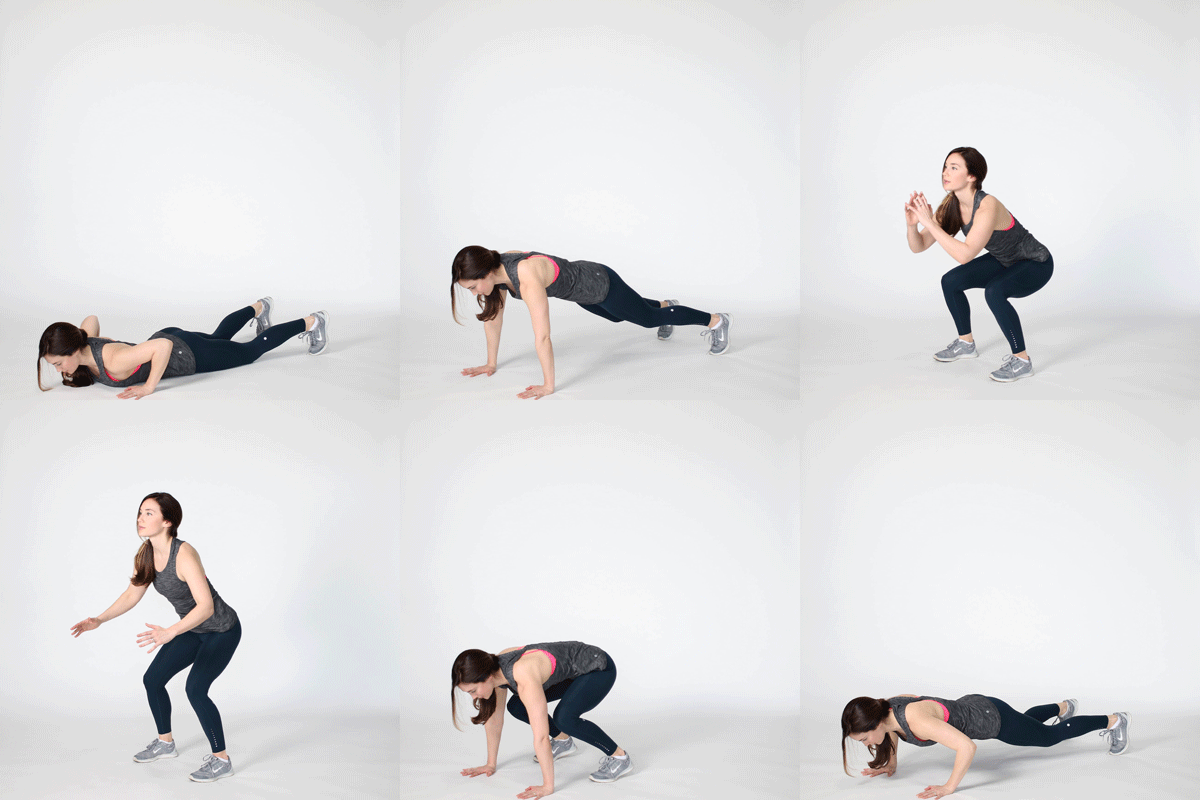
Burpees:
- Muscles Worked: Full body – chest, shoulders, triceps, quadriceps, hamstrings, glutes, core, and cardiovascular system.
- Execution:
- Start in a standing position, feet shoulder-width apart.
- Drop into a squat position with your hands on the floor in front of you.
- Kick your feet back, landing in a plank position.
- Perform a push-up (chest to the floor, or modified on knees).
- Immediately reverse the push-up, then jump your feet forward towards your hands.
- Explosively jump up into the air, reaching your arms overhead.
- Pro Tip: Keep your core engaged throughout the entire movement to protect your spine and maximize abdominal activation. For beginners, remove the push-up or the jump, or step feet back one at a time instead of jumping.
-
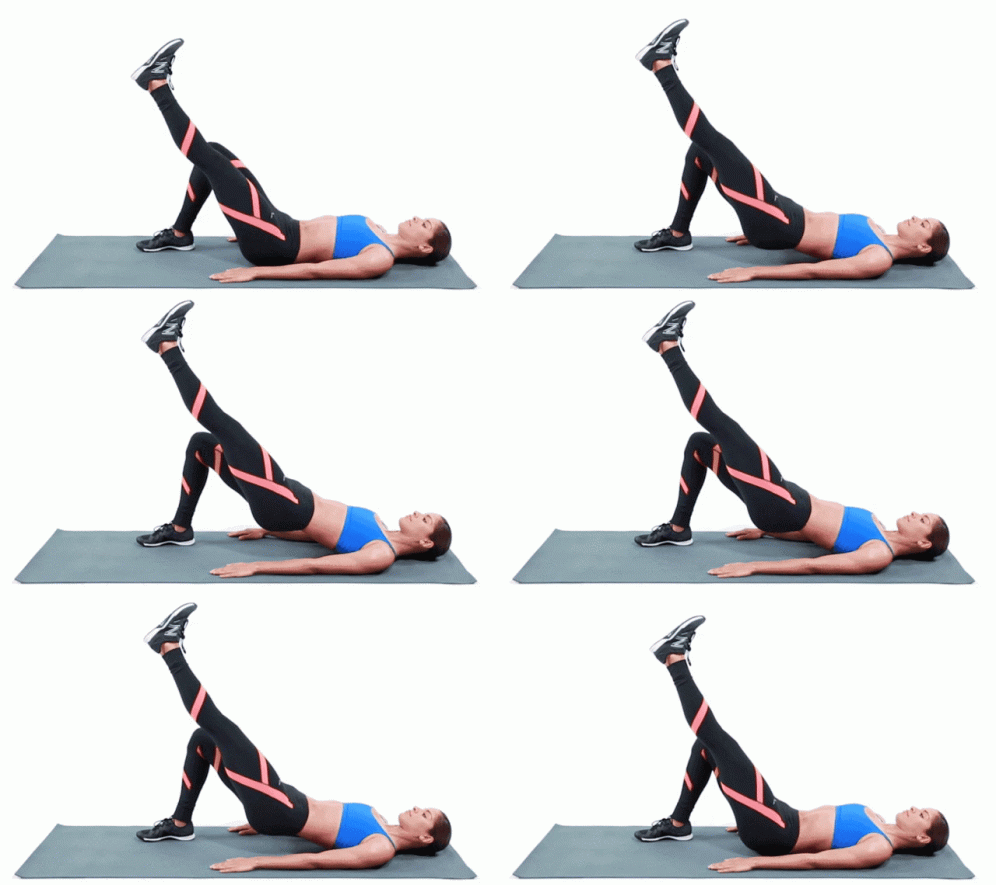
Single-Leg Bridge:
- Muscles Worked: Glutes, hamstrings, lower back, core.
- Execution:
- Lie on your back with knees bent, feet flat on the floor, hip-width apart, and arms at your sides.
- Extend one leg straight towards the ceiling.
- Engage your core and glutes, then lift your hips off the floor until your body forms a straight line from your shoulders to the knee of your bent leg.
- Hold for a second at the top, squeezing your glutes.
- Slowly lower your hips back down to the starting position.
- Repetition: Aim for 10-12 repetitions on each side to effectively target the posterior chain and improve unilateral strength.
-
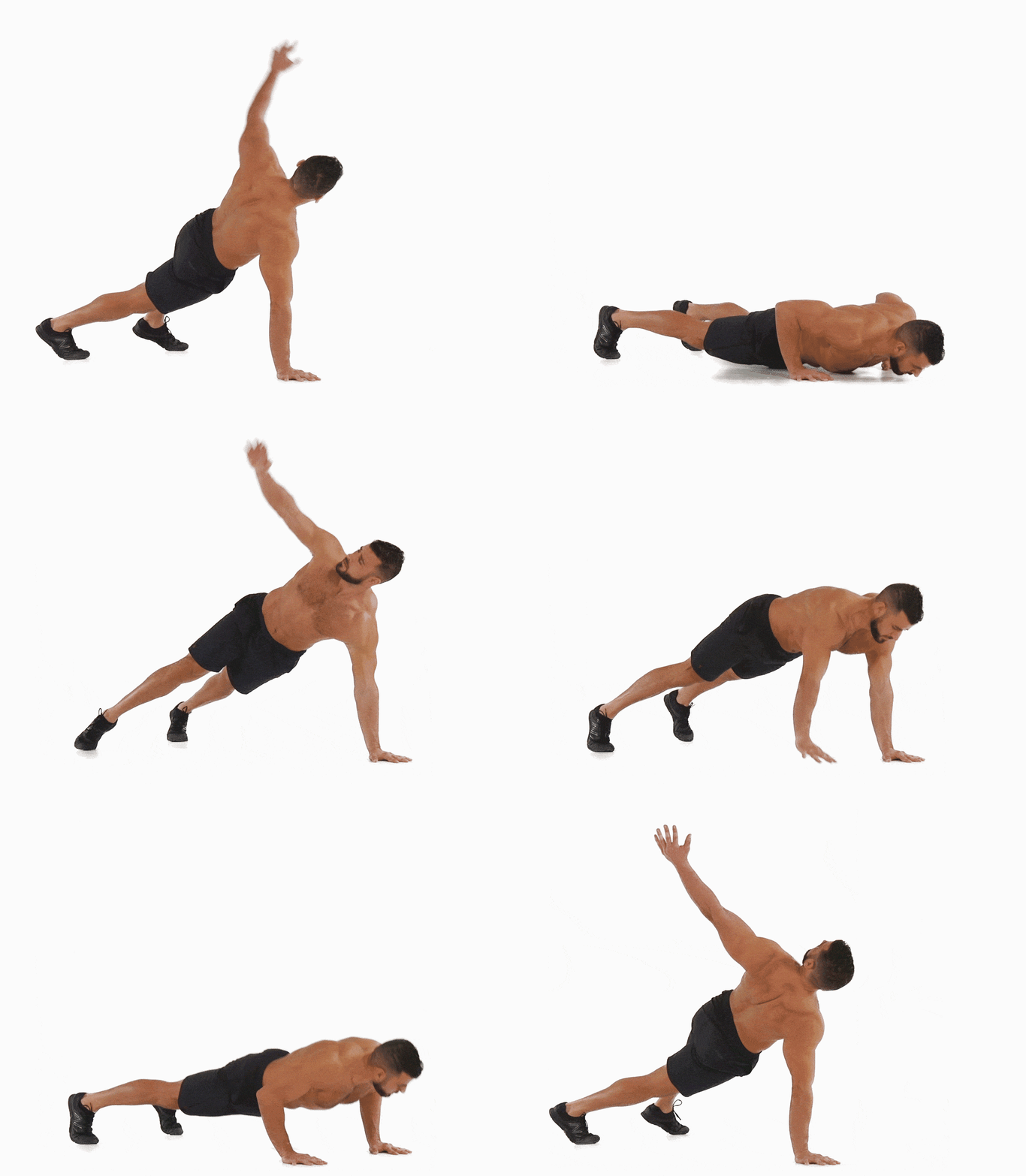
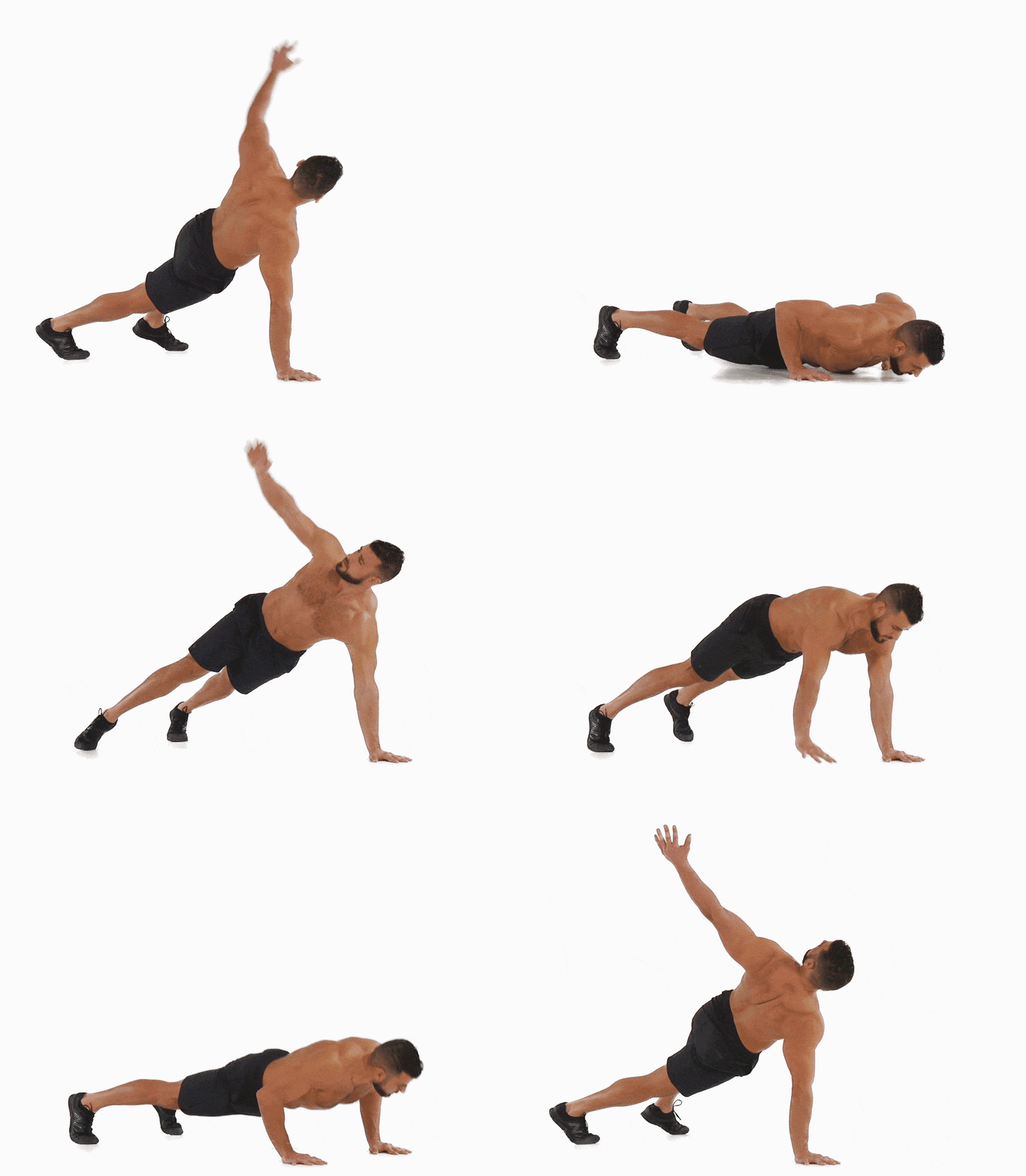
Push-Up and Rotate (T-Push-Up):
- Muscles Worked: Chest, shoulders, triceps, obliques, core stabilizers.
- Execution:
- Start in a standard push-up position, hands slightly wider than shoulder-width apart, body in a straight line from head to heels.
- Perform a push-up, lowering your chest towards the floor.
- As you push back up, shift your weight onto one hand and rotate your body, extending the other arm straight up towards the ceiling, forming a "T" shape with your body. Your gaze should follow your raised hand.
- Return to the push-up position and repeat on the other side.
- Emphasis: Remember to keep your core engaged throughout the entire movement to maintain stability and effectively work your abdominal muscles, especially the obliques.
-
Air Squat:
- Muscles Worked: Quadriceps, hamstrings, glutes, lower back, core.
- Execution:
- Stand with feet shoulder-width apart, toes pointing slightly outward.
- Keep your chest up, shoulders back, and core engaged.
- Initiate the movement by pushing your hips back as if sitting in a chair, bending your knees.
- Lower yourself until your thighs are at least parallel to the ground, or deeper if your mobility allows, ensuring your heels remain on the floor.
- Push through your heels to return to the starting position, squeezing your glutes at the top.
- Challenge: For an added challenge, try to squat all the way down into a deep squat, maintaining good form. This improves mobility and engages more muscle fibers.
To bring these exercises to life, numerous online resources, including guided workout videos, provide structured routines that can maximize the benefits of compound movements in as little as 15 minutes. These guided sessions often incorporate dynamic warm-ups and cool-downs, crucial components for injury prevention and muscle recovery.
Safety First: Mitigating Risks and Optimizing Form
While immensely beneficial, compound exercises, due to their multi-joint nature and potential for higher loads (even bodyweight can be a significant load), demand strict attention to form to prevent injury.
- Mastering Technique: The single most critical safety measure is to learn and practice correct technique. Many compound movements are complex and require precise execution. It is advisable to begin with bodyweight variations to master the movement pattern before adding external resistance.
- Professional Guidance: Working with a certified and experienced personal trainer is invaluable, especially for beginners or those returning to exercise. A trainer can observe your form, provide real-time feedback, correct improper movements, and introduce new techniques safely. They can also help tailor a program to your specific fitness level, goals, and any pre-existing conditions.
- Progressive Overload (and Deloading): Start with a manageable number of repetitions (e.g., 10-15 per exercise) and sets, focusing solely on perfect form. Gradually increase the intensity by adding more repetitions, sets, or external resistance (dumbbells, resistance bands) only when form is consistently maintained. Equally important is understanding when to deload or take rest days to allow for recovery and prevent overtraining.
- Listen to Your Body: Differentiate between muscle fatigue and pain. While muscle soreness (DOMS – Delayed Onset Muscle Soreness) is common after a good workout, sharp or persistent pain is a warning sign and should not be ignored. Modify the exercise, reduce intensity, or consult a healthcare professional if pain persists.
- Warm-up and Cool-down: Always begin a workout with a dynamic warm-up (e.g., light cardio, dynamic stretches) to prepare muscles and joints for activity. Conclude with a static cool-down (holding stretches) to improve flexibility and aid recovery.
Broader Impact and Implications
The emphasis on compound exercises carries significant implications across various facets of health and fitness:
- Public Health: Promoting compound movements as efficient and effective could be a powerful tool in combating sedentary lifestyles and rising rates of obesity and related chronic diseases. Their accessibility (many require no equipment) makes them a viable option for a wider population.
- Athletic Performance: For athletes, compound exercises are foundational. They build sport-specific strength, power, and endurance, directly translating to improved performance in almost any athletic endeavor, from sprinting to grappling.
- Aging Population: For older adults, maintaining functional strength is paramount for preserving independence and quality of life. Compound movements help sustain muscle mass, bone density, balance, and coordination, reducing the risk of falls and supporting everyday activities.
- Time-Efficient Training: In a world where time is a precious commodity, compound exercises offer a compelling solution for individuals seeking maximal fitness benefits in minimal time. This efficiency makes adherence to a regular exercise routine more sustainable.
Frequently Asked Questions (Expanded)
What Are The Best Compound Exercises For Weight Loss?
For weight loss, the goal is to maximize calorie expenditure and boost metabolism. Compound exercises excel here due to their high metabolic demand and ability to build muscle mass. The exercises in the workout video provided (Reverse Lunge with Knee Drive, Burpees, Single-Leg Bridge, Push-Up and Rotate, Air Squat) are all excellent choices. Additionally, incorporating bodyweight deadlifts (focusing on hip hinge movement) and various plank variations can further engage large muscle groups and core, amplifying the caloric burn. The muscle built from these exercises also elevates your basal metabolic rate, meaning you burn more calories at rest, which is crucial for long-term weight management.
What Are The Best Compound Exercises For The Legs?
Legs are home to some of the body’s largest muscle groups, making them ideal for compound training.
- Squats (Air Squat, Jump Squat, Goblet Squat with a light object): These are king, working quadriceps, hamstrings, glutes, and core. Varying the depth and tempo can further challenge these muscles.
- Lunges (Forward, Reverse, Lateral): Engage similar muscle groups to squats but add a unilateral (single-leg) challenge, improving balance and addressing muscular imbalances. The Reverse Lunge with Knee Drive is a fantastic example.
- Deadlifts (Bodyweight or with light resistance): Focus on the hip hinge pattern, powerfully engaging the hamstrings, glutes, and lower back. Even without heavy weights, the movement pattern is highly beneficial.
- Step-Ups: Using a sturdy box or bench, this exercise targets glutes and quads, also improving balance and functional strength.
What Are The Best Compound Exercises For Back Pain?
For individuals experiencing back pain, strengthening the core and posterior chain (muscles on the back of your body) is crucial. However, it is imperative to consult a healthcare professional or physical therapist before starting any new exercise regimen, especially with existing pain.
- Bodyweight Deadlifts (Romanian Deadlift style): Focus on a pristine hip hinge movement without heavy weights. This strengthens the glutes and hamstrings, which are vital for supporting the lower back.
- Squats (Air Squats): Performed with proper form, squats strengthen the lower back, glutes, and core, improving overall posture and stability.
- Bird-Dog: This core stabilization exercise strengthens the lower back and core without putting excessive load on the spine.
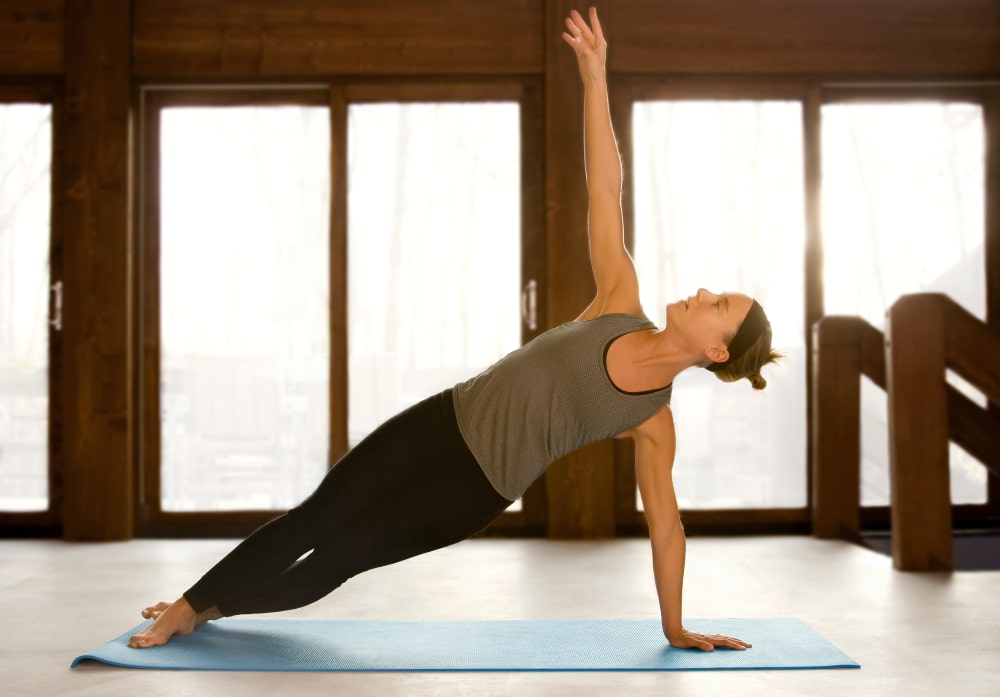
- Planks and Side Planks: Excellent for building core strength and endurance, which directly supports the spine.
- Inverted Rows (Bodyweight): Performed under a sturdy table or using a low bar, these strengthen the upper back muscles, improving posture and counteracting slouching.
For individuals with chronic or acute back pain, progression should be extremely gradual, and professional supervision is highly recommended to ensure exercises are therapeutic, not detrimental.
In conclusion, the scientific backing for compound exercises as a cornerstone of effective and efficient fitness is robust. By embracing these multi-joint movements, individuals can unlock a multitude of benefits, from enhanced functional strength and accelerated fat loss to improved cardiovascular health and bone density, all within a time-conscious framework. This approach is not merely a shortcut but a strategically superior method for achieving holistic and sustainable fitness results.
Sources:
Andrews E. (2015). 5 Compound Exercises You Should Add to Your Workout. ACE Fitness.
Garber CE, et al. (2011). Quantity and Quality of Exercise for Developing and Maintaining Cardiorespiratory, Musculoskeletal, and Neuromotor Fitness in Apparently Healthy Adults: Guidance for Prescribing Exercise. Medicine & Science in Sports & Exercise, 43(7), 1334-1359.
Hwang-Bo Kak, et al. (2013). Comparison of Muscle Activity of the Rectus Abdominis and External Oblique Muscles during Six Kinds of Core Stability Exercises. Journal of Physical Therapy Science, 25(6), 721-724.
