

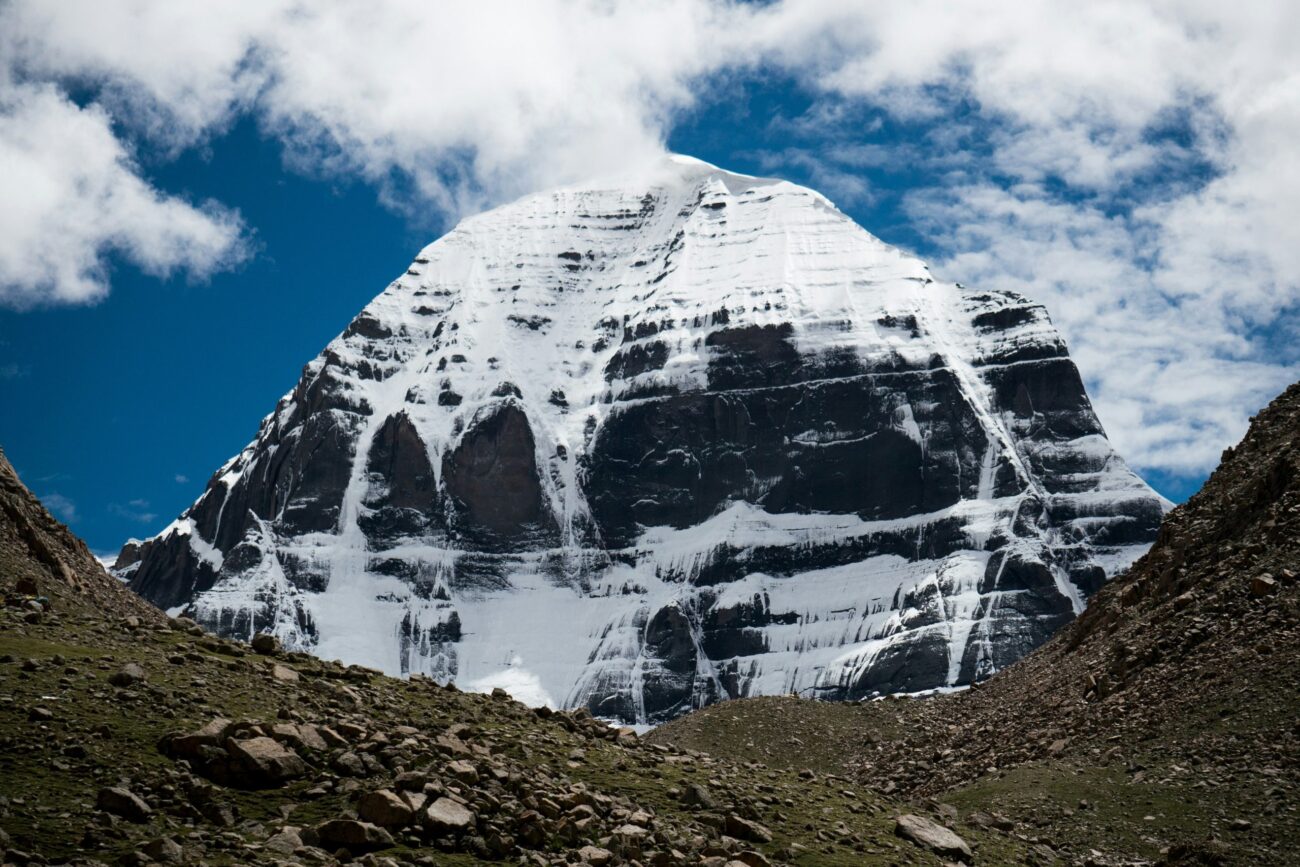
Mountains have long been revered in Tibet, their towering peaks seen not merely as geological formations but as sacred abodes of deities and ancestral protectors. Sacred mountains such as Kailash, Gyangme, Tsari, Lapchi, Jomolhari, and Amnye Machin hold profound spiritual significance, their mystique further amplified by the legacy of Buddhist masters who sought enlightenment through years of solitary meditation in remote mountain caves. This deep-seated connection between the Tibetan landscape and ascetic practice forms the foundational context for two recent scholarly works that offer readers an immersive exploration of Tibetan Buddhist traditions surrounding sacred geography and contemplative withdrawal.
Scholarly Exploration of Tibetan Sacred Geography and Contemplative Practice
Catherine Hartmann’s Making the Invisible Real: Practices of Seeing in Tibetan Pilgrimage and David M. DiValerio’s Mountain Dharma: Meditative Retreat and the Tibetan Ascetic Self independently yet complementarily illuminate the distinct, yet intrinsically linked, traditions of Buddhist pilgrimage and solitary ascetic retreat that have flourished within the unique topography of Tibet. Hartmann, an assistant professor at the University of Wyoming, and DiValerio, an associate professor at the University of Wisconsin–Milwaukee, both draw upon a rich tapestry of Tibetan Buddhist history, integrating rigorous textual analysis and translation with insights gleaned from their extensive fieldwork among Tibetan diaspora communities.
While both scholars delve into major facets of Tibetan Buddhism, their approaches diverge. Hartmann centers her research on the visual practices engaged in during pilgrimage, emphasizing the cultivation of perception as a core element of the journey. Conversely, DiValerio focuses on the prescriptive guidelines and methodologies for undertaking solitary retreat, rather than the internal meditative experiences themselves. His work also traces the historical evolution of retreat practices, whereas Hartmann refrains from making broad historical claims about the development of pilgrimage traditions. Nevertheless, the inherent interconnectedness of pilgrimage and retreat sites within Tibet renders these two volumes remarkably synergistic.
Making the Invisible Real: Cultivating Perception on Tibetan Pilgrimage Routes
Hartmann’s Making the Invisible Real commences with a broad overview of Buddhist pilgrimage before narrowing its focus to the specific manifestations within Tibetan Buddhism. The book acknowledges the diversity of opinions regarding the value of pilgrimage among Tibetans, even noting historical debates surrounding the spiritual preeminence of Mount Kailash. While these differing perspectives are addressed, the core of Hartmann’s contribution lies in her detailed examination of the pervasive visual disciplines employed by pilgrims. Her research, drawing from a wide array of sources including 16th-century polemical writings, 17th-century pilgrimage guidebooks, and the personal diary of Khatag Zamyak (1896–1961), a 20th-century pilgrim, convincingly argues that Tibetan pilgrimage is as much an exercise in cultivating refined perception as it is a physical journey to sacred destinations.
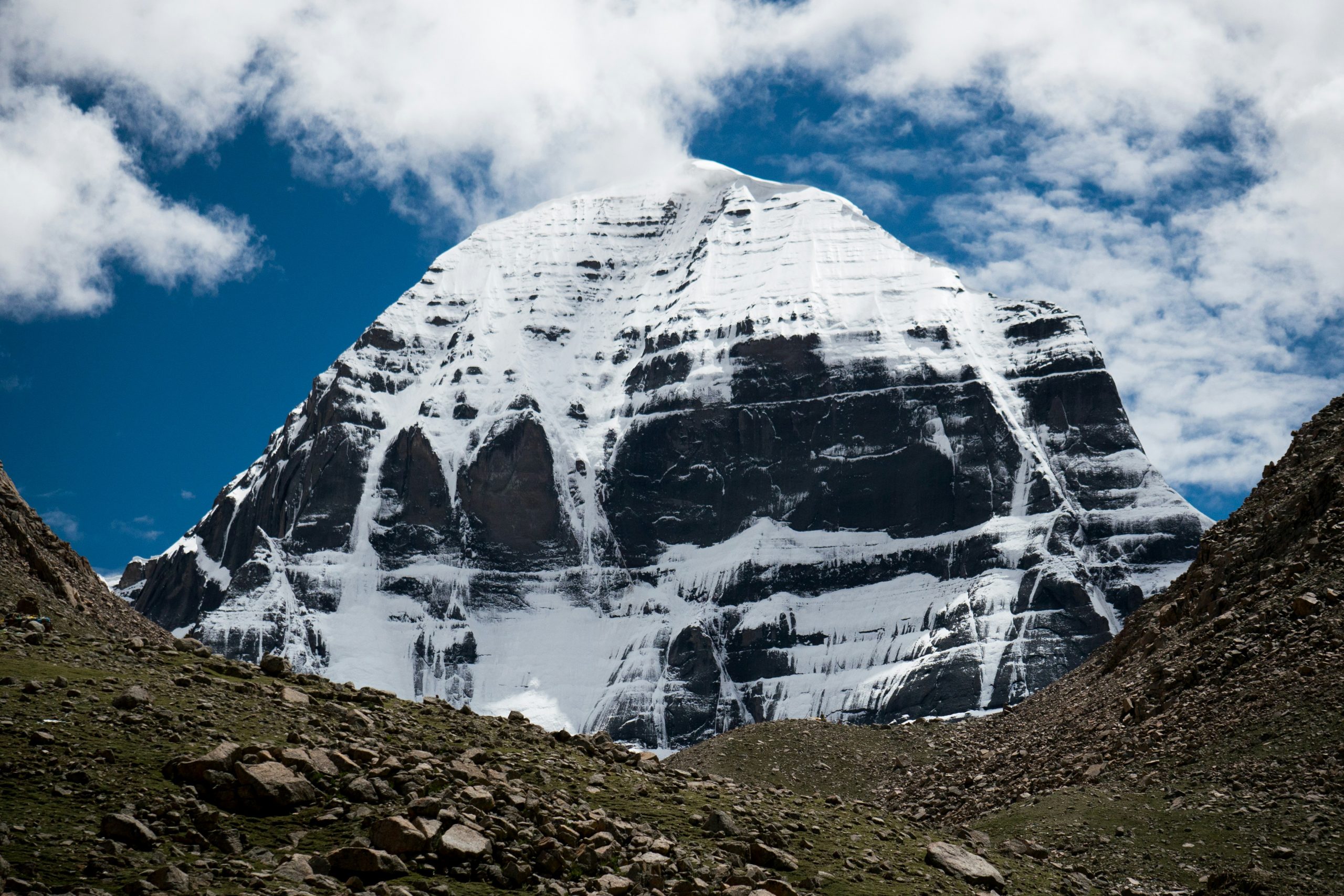
Tibetan traditions often describe pilgrimage sites on multiple conceptual levels, frequently beginning with origin narratives that attribute their discovery to Buddhist masters who first recognized their divine essence. Hartmann cites the example of Rigdzin Chokyi Drakpa (1595–1659), who perceived Mount Gyangme as the mandala of the deity Chakrasamvara. By conceptualizing the mountain as the dwelling place of a tantric deity, Chokyi Drakpa is understood to have spiritually "opened" the site, thereby enabling subsequent pilgrims to align their own practices with his visionary experience. Even if later pilgrims do not experience such direct visionary insight, a variety of visual practices are employed to help them recall and engage with the extraordinary qualities inherent to these sacred locales.
Hartmann introduces two pivotal concepts, "practices of seeing" and "co-seeing," to articulate the nuanced ways pilgrims engage with sacred sites. "Practices of seeing" encompass "reading the landscape for signs, practices of reading and writing, and an imaginative juxtaposition of physical and idealized landscapes." "Co-seeing" refers to a method of utilizing auspicious natural features and the material remnants left by past masters to evoke the unseen dimensions of a site. Pilgrimage guidebooks often instruct practitioners to simultaneously hold both ordinary and extraordinary perceptions in mind. Hartmann’s lucid explication of these interwoven practices represents a significant advancement in the academic study of Tibetan Buddhist pilgrimage.
Mountain Dharma: The Ascetic Self in Solitary Retreat
In contrast to the focus on visual disciplines that bridge ordinary and imaginative perception in Making the Invisible Real, DiValerio’s Mountain Dharma shifts attention to the solitary ascetic retreatant—an individual who withdraws into the mountains in isolation. DiValerio’s extensive research, drawing from Tibetan Buddhist handbooks and manuals offering guidance for extended meditation retreats, charts the persistent concerns addressed by writers from the 12th to the early 20th centuries. These concerns typically include the selection of an appropriate practice location, strategies for maintaining isolation, methods for avoiding potential dangers, the cultivation of specific attitudes, and the anticipated benefits of such endeavors. DiValerio interprets these concerns as deliberate methods for shaping the self, demonstrating how retreat was conceptualized as a profound vehicle for personal transformation, sustained through a deep connection to tradition.
While many aspects of retreat have remained remarkably consistent throughout history, DiValerio also identifies significant shifts in emphasis. Early Tibetan writings predominantly focused on geomancy—the practice of selecting sites with auspicious natural features. As traditions evolved, the association of a site with earlier meditation masters gained paramount importance. DiValerio observes that "potential meditation sites" became "regarded less as sites whose details are to be mapped and more as vessels conveying imprints that were created in the past." In this evolving perspective, the act of retreat itself increasingly came to signify a form of participation in the spiritual accomplishments of past masters.
DiValerio coins the term "lived deferential reverence" to describe this evolving orientation toward the past. This sensibility acknowledges present limitations while simultaneously affirming the value of continued engagement with the retreat tradition. This attitude has also served to legitimize adaptations in ascetic practice, allowing it to evolve in response to changing circumstances. More broadly, it reflects a heightened historical consciousness, acting as "a continual reminder of the distances in time and ability that separate the past masters from the meditator in the present." Over time, this deferential orientation became increasingly ingrained in Tibetan Buddhist literature on retreat.
Bridging Past and Present: The Interplay of Pilgrimage and Retreat
The concept of "lived deferential reverence" finds a compelling parallel in the "practices of seeing" discussed by Hartmann. Both pilgrimage and retreat traditions underscore the imaginative bridging of past and present, whether through the perception of sacred landscapes or the emulation of the lives of earlier ascetics. In both contexts, the recognition of the achievements of past masters provides the bedrock for both revering the tradition and actively participating within it.
The historical development of Tsadra Monastery vividly illustrates the profound intersections between pilgrimage and retreat. Jamgon Kongtrul (1813–1899) credited his contemporary, the visionary Chokgyur Lingpa (1829–1870), with designating Tsadra as a pilgrimage site. DiValerio notes that Kongtrul subsequently bolstered the significance of pilgrimage to Tsadra by drawing parallels with Tsari, a prominent mountain in southeastern Tibet renowned for its pilgrimage route. Hartmann observes that such comparative assessments serve to enhance the spiritual charisma of newer sites. Kongtrul further underscored Tsadra’s suitability by highlighting its auspicious geomantic characteristics and its history of visitation by earlier masters—common strategies for validating sites for both pilgrimage and retreat. DiValerio concludes his analysis by examining Kongtrul’s groundbreaking model of communal retreat at Tsadra, a practice that has since become a defining characteristic of global Tibetan Buddhism.
Strengths, Limitations, and Future Directions
Hartmann’s work is distinguished by its clarity and its sustained focus on the "practices of seeing" that define Tibetan pilgrimage. DiValerio, in turn, breathes life into the often-academic genre of the retreat manual, revealing unexpected insights into the historical trajectory of Tibetan asceticism. However, despite their considerable breadth, both studies exhibit a notable silence regarding the experiences of women in pilgrimage and retreat. DiValerio acknowledges the existence of a few texts intended for female ascetics but notes an inability to identify specific retreat instructions. Hartmann briefly touches upon gendered dimensions of pilgrimage, though not in extensive detail. Both authors candidly acknowledge the androcentric bias inherent in their source materials, a limitation that might have been partially mitigated by incorporating biographies of female masters or engaging with contemporary female practitioners.
The mountains of Tibet are more than mere geographical locations; they are landscapes imbued with meaning through centuries of pilgrimage and retreat traditions. Echoing the sentiments of younger Tibetans in the diaspora, many of whom have never personally visited Tibet, Hartmann concludes that these lands "contain memories, hopes, and ancestral ties." However, the accessibility of many peaks, hermitages, and hidden valleys remains restricted due to political realities, presenting significant challenges even for those residing within Tibet. The pilgrimage circuit around Mount Tsari, for instance, has experienced closures at various times due to border disputes. These ongoing circumstances raise critical questions about the future sustainability and potential reimagining of pilgrimage and retreat traditions, both within Tibet and in exile communities.
By meticulously tracing the contours of pilgrimage and retreat—and the multifaceted ways Tibetans have envisioned and inhabited these sacred spaces across time—Hartmann and DiValerio illuminate a tradition characterized by its capacity for continual renewal. Tibetan Buddhism has inspired the establishment of pilgrimage and retreat sites globally, from the Himalayan foothills to valleys in North America, where sacred geography is being remapped for new generations. While the mountains themselves remain steadfast, the practices that animate them continue to evolve and adapt, demonstrating the enduring vitality of this rich spiritual heritage.
