

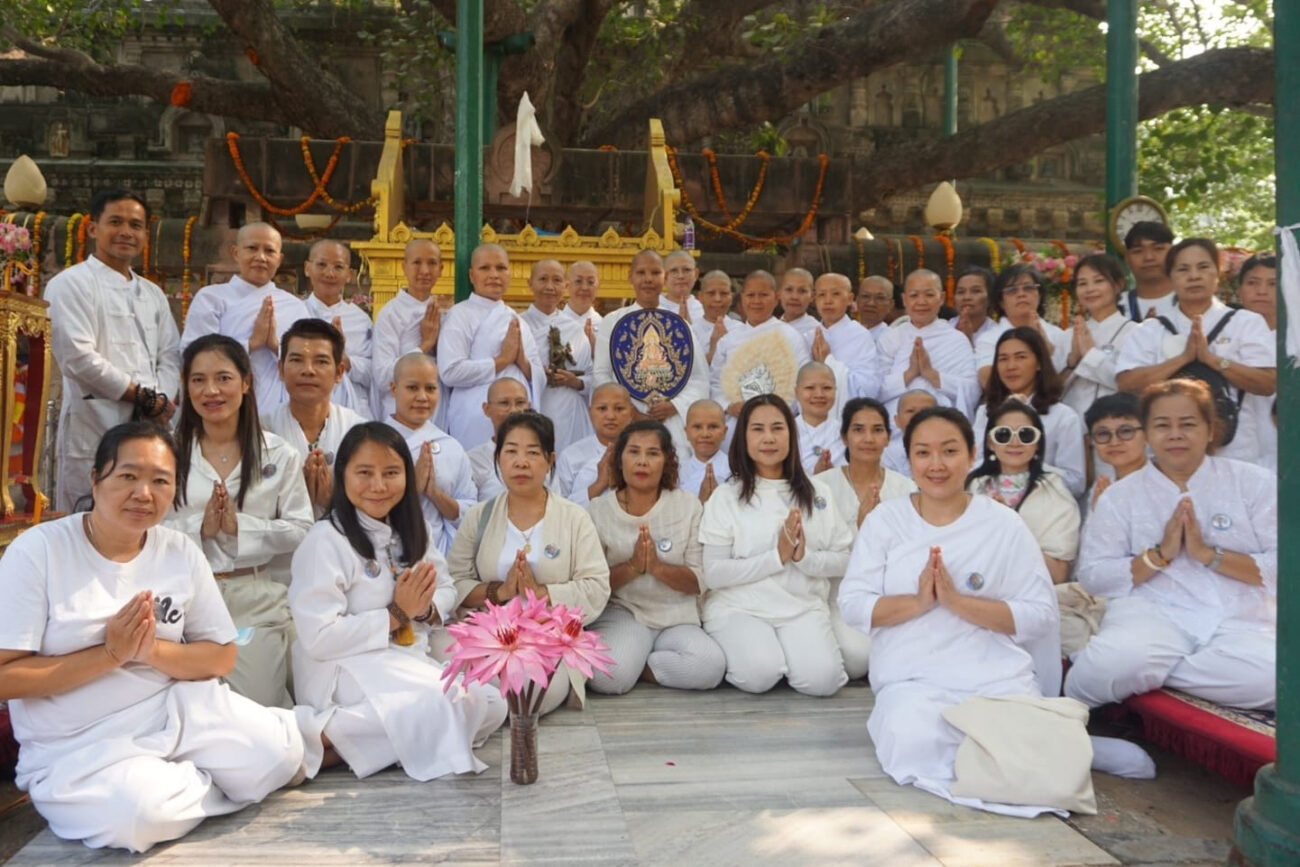
Tritrinn, a transgender renunciant within the Theravada Buddhist tradition of Thailand, embodies a profound spiritual journey that navigates the complex intersection of gender identity and monastic life. Known by the honorific titles Taan Ajarn Tritrinn ("Venerable Teacher"), Taan Mae Tritrinn ("Venerable Mother"), or Maechi Tritrinn, her spiritual path is characterized by its unconventional nature, arising from a system that currently lacks formal recognition for individuals of the "third gender" seeking a renunciant existence. This situation compels transgender women to forge their own spiritual pathways, developing innovative modes of Dhamma practice, seeking alternative lineages, and carving out emergent religious spaces that embrace their identities.
The Ambiguity of Renunciant Categories
The core of Tritrinn’s unique position lies in the inherent limitations of existing renunciant categories within Thai Theravada Buddhism. Traditionally, renunciants are categorized as either bhikkhu (fully ordained monks) or bhikkhuni (fully ordained nuns), with maechi representing white-robed female nuns who observe eight or ten precepts. Tritrinn, having transitioned from male to female, finds herself outside these established frameworks. She cannot attain full bhikkhu ordination due to her transgender identity. Simultaneously, while she identifies with feminine aspects of her spiritual practice, her biological sex at birth precludes her from the traditional bhikkhuni or maechi roles, which are historically and institutionally defined by biological sex. This institutional ambiguity means that transgender women who aspire to a renunciant life must actively create their own spiritual homes and practices.
Establishing Sanctuaries of Spiritual Refuge
Despite these systemic challenges, Tritrinn has emerged as a significant figure, establishing and leading two prominent Dhamma centers: Dantham Mahamonkol Paiboonpoonsuk in northern Thailand and Dusitta Dhammasathan in central Thailand. These centers are conceived not merely as places of spiritual practice, but as sanctuaries – "homes" – for her disciples, particularly for marginalized individuals within the spectrum of gender identity, including women, transgender individuals, and third-gender persons seeking spiritual solace and community. Many have ordained and taken up residence within these spaces.
The teachings at these centers are rooted in foundational Theravada Buddhist principles, emphasizing vipassana meditation, mantra recitation, and a distinctive form of devotional prostration known as kraab satipatthana. This practice involves a mindful, three-time bowing ritual before Buddha images or meditation teachers, with practitioners maintaining continuous awareness of their bodily movements and sensations. While kraab satipatthana is a recognized form of homage in Thai Theravada Buddhism, its significance is amplified within Tritrinn’s community, representing a refined and contemplative mode of paying respect that aligns with the emergent nature of the Sangha she is cultivating.
A Life’s Journey: From Childhood Identity to Renunciant Path
Tritrinn’s journey to renunciation is a deeply personal one, shaped by a lifelong awareness of her transgender identity. Born male, she was raised from an early age as a "daughter," a recognition that allowed her family to approach her upbringing with a different understanding. While her childhood was relatively supportive, navigating the world as a transgender person presented ongoing challenges. As an adult, she underwent gender-affirmation surgery, solidifying her external female presentation. She later lived in Europe for nearly a decade, operating a business and occasionally organizing meditation retreats, experiences that broadened her perspective and deepened her spiritual inclinations.
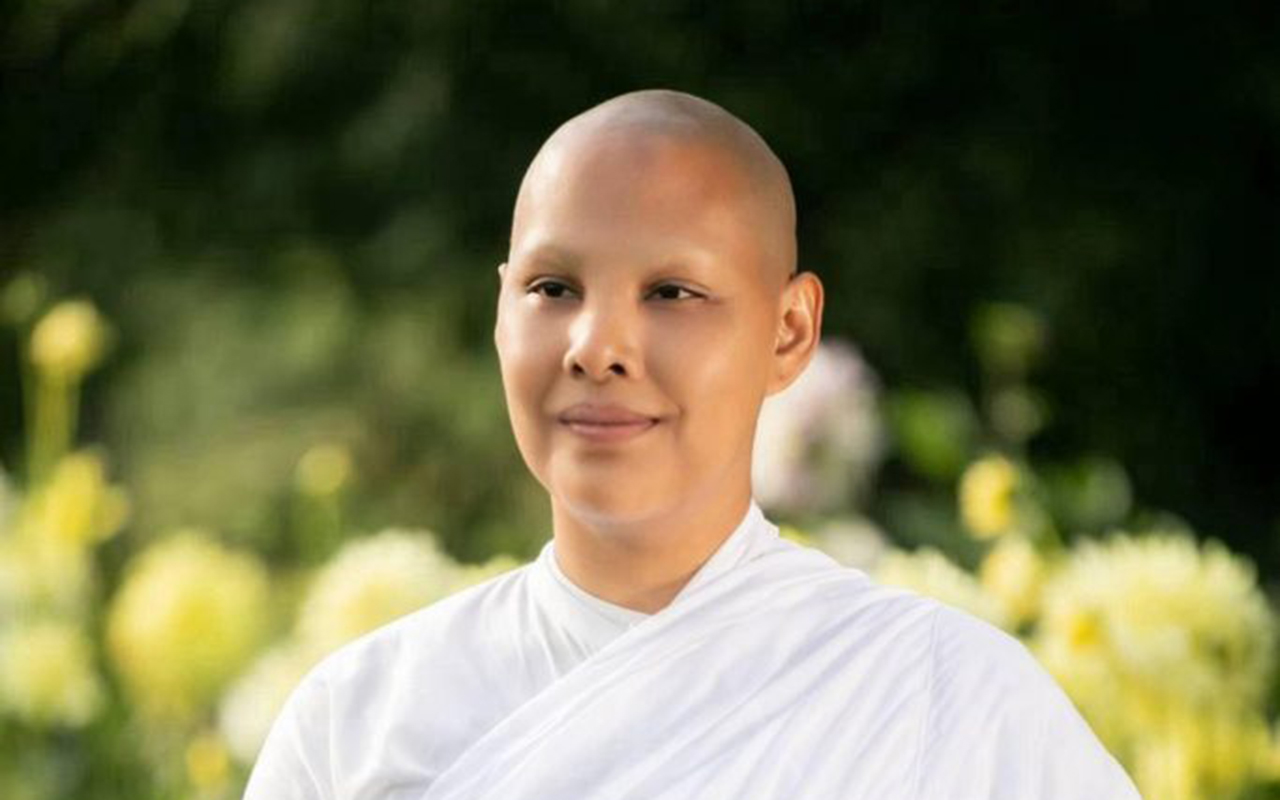
Her transition to renunciant life was catalyzed by personal suffering, a trajectory common among many Thai women who become maechi. The collapse of a significant romantic relationship served as the catalyst. "My relationship failed. The person I loved betrayed me. I had no shelter for my soul in such a faraway land," she recalls. This profound sense of spiritual homelessness prompted her to divest herself of worldly possessions, returning to Thailand to donate her wealth and embark on a renunciant path. The impermanence of worldly attachments and the pursuit of spiritual freedom from suffering became her driving force. With limited institutional avenues available to her as a transgender spiritual seeker, she embraced an eight-precept renunciant discipline, shaved her head and eyebrows, adopted monochrome robes, and began her residency in a monastery.
Navigating Diverse Lineages and the Yearning for Autonomy
Tritrinn’s initial renunciant training was a period of exploration, spanning various influential monasteries and lineages. She drew wisdom from the forest tradition of Luang Pu Mun (1870–1949), known for its emphasis on meditative practice and asceticism, and the Manomayiddhi ("power of mind") lineage of Luang Phor Ruesi Lingdam (1917–1992), which explores the development of mental faculties. She also engaged with the magical-monastic tradition of Luang Por Kuay (1905–1979), which integrates esoteric practices. Beyond these formal lineages, she learned from numerous monks and nuns encountered during her training, integrating their teachings into her evolving practice. While this period marked significant spiritual progress, it also solidified a yearning for a dedicated renunciant space where her gender identity would not be a point of contention or perceived incompatibility with monastic life.
Redefining Identity: Sao Phra Phet Song and the Spiritual Upasaka
In her early public Dhamma talks, Tritrinn articulated her identity as sao phra phet song, a Thai term often translated as a "second-type woman" or "third-gender woman." This self-identification directly highlighted the ambiguity she faced in formal ordination contexts. As previously noted, she could not truthfully declare herself a man with male genitalia for bhikkhu ordination, nor did she fit the biological definition for bhikkhuni or maechi. In public talks, including those from 2024, she has candidly addressed the constraints of her situation: "When I had no Dhamma, I took it for granted that femininity is my true gender identity. Then I realized that in fact I am not a woman but a man [who underwent sex reassignment]… I cannot change [my gender identity] now, [I can] only accept what I have done."
Coming to terms with these limitations, Tritrinn chose to identify in a spiritual context as an upasaka, a male lay practitioner. This designation, while seemingly at odds with her outward gender expression, allows her to engage with the monastic framework from a recognized lay position. However, it is crucial to note that despite this formal spiritual identification, Tritrinn continues to embody and express her gender as a trans woman in her personal life, a testament to the multifaceted nature of identity. This pragmatic approach reflects the broader reality for transgender women seeking renunciant lives: the necessity of forging new paths and creating spaces that accommodate their authentic selves.
The Genesis of Dantham Mahamonkol Paiboonpoonsuk: Challenges and Resilience
The establishment of her first hermitage, Dantham Mahamonkol Phaiboonpoonsuk, was initiated by a meditative vision instructing her to create a spiritual sanctuary. Between 2017 and 2018, she founded this center in Chiang Dao, Chiang Mai province. Her explicit mission was to provide a refuge for those lacking religious space, with a particular focus on LGBTQIA+ individuals and women. Nestled amidst the tranquility of an evergreen forest and the silence of the mountains, the hermitage was intended to be a contemplative haven.
However, the journey was fraught with challenges. Establishing a renunciant community in a remote area where her identity was met with suspicion from local residents proved to be a significant hurdle. The construction of the hermitage was particularly arduous, as the remote location necessitated the manual hauling of building materials along steep and uneven terrain. Tritrinn and her disciples undertook this physically demanding work without external assistance. A disciple recounted the early days: "When Tan Mae first came here, she had no shelter, and the villagers offered none. She spent a cold night with the dogs, passing the day and night with patience and understanding."
Confronting Hostility and Reclaiming Dignity
The challenges extended beyond logistical difficulties to outright hostility. During their alms rounds, Tritrinn and her disciples faced rejection and aggression from some villagers. Few would offer food, and at times, they were verbally abused, chased away, or even had stones thrown at them. The hermitage’s sole access route traversed areas frequented by tourists and residents, making these encounters difficult to avoid. The villagers’ reluctance stemmed from a desire to maintain the perceived worldly atmosphere of their leisure spaces, viewing the presence of renunciants as a disruption.
Even the attire of the renunciants became a point of contention. Initially adopting the white robes of eight- or ten-precept lay practitioners, they later transitioned to the dark ochre robes associated with the Thai forest tradition. However, Thai monastic authorities intervened, instructing them to change their robes, asserting that they had no right to wear attire resembling that of fully ordained male monks. This directive led them to revert to white robes, which they continue to wear.

The ambiguity surrounding Tritrinn’s gender status also impacted forms of address. Thai linguistic conventions require gendered honorifics, leading to confusion and whispers among locals: "Is she… a ladyboy?" While many eventually referred to her as maechi, this designation remained inaccurate. Tritrinn herself navigated this struggle, initially preferring the title Taan Mae (Venerable Mother) to emphasize her nurturing role, before later adopting Taan Ajarn (Venerable Teacher) to highlight her pedagogical authority. Throughout these shifts, she has consistently maintained that gender is maya (illusion), relevant only to the mundane world, and that Dhamma transcends such distinctions.
The Transformative Power of Solitary Retreat and Community Engagement
Tritrinn’s unwavering perseverance in building her hermitage and her efforts to foster relationships with the surrounding community gradually began to shift local attitudes. As the hermitage’s infrastructure improved, it became capable of hosting meditation retreats, drawing more visitors and positive attention to the area. Shortly after the center was established and operational, Tritrinn embarked on a profound three-year, three-month, and three-day solitary retreat, inspired by the reclusive practices of the renowned monk Kruba Boonchum. During this period, she observed strict silence, subsisted on forest roots and leaves, and lived in isolation.
The onset of the COVID-19 pandemic during her retreat presented an unexpected challenge. Locals, facing hardship, sought assistance from the hermitage. Breaking her vow of silence, Tritrinn coordinated the donation of money and goods through written communication, maintaining her solitude otherwise. Her ability to balance intense retreat practice with vital community support during this crisis garnered deep respect from the villagers. They spoke admiringly of her resilience and spiritual transformation. Pong, a villager who later became Tritrinn’s disciple, remarked, "When she came out from the retreat, her skin was bright and vibrant. We were spellbound by her aura." This period marked a turning point, leading to consistent support and warmer interactions with the community, particularly during alms rounds.
Navigating Legal Battles and Embracing Impermanence
In 2024, during northern Thailand’s annual smoke season, Tritrinn was invited by her disciples to relocate temporarily to Suphanburi. What was intended as a short stay evolved into the initiation of highly popular meditation retreats that attracted hundreds of participants. A dispute arose when initial donors pledged land and facilities for a retreat center but later rescinded their offer, attempting to rent or sell the property at an inflated price. The situation became legally complex as Tritrinn had already commenced construction of shelters on the land. The case proceeded to court, where Tritrinn ultimately prevailed. In a testament to her spiritual principles, she chose to forgive the donors and forgo further legal action.
"I was surrounded by wealthy disciples who had much to offer, but donations come with expectations," Tritrinn stated. "They expect me and the Dhamma center to be what they want. I must step back, cut off those expectations, and focus on my mission. I am here to free myself from all bondages and help others attain Dhamma—not to please people." The new center, now named Dusitta Dhammasathan, was relocated to a deserted former pig farm. The land, donated by new supporters, is undergoing construction and reforestation, with plans to resume retreats this year.
A Digital Presence and the Path of the Solitary Buddha
Tritrinn has cultivated a significant following through various social media platforms, including Facebook, TikTok, YouTube, and Instagram, with her Facebook page alone boasting over 440,000 followers. Despite this widespread visibility, she maintains that her ultimate aim is not popularity or financial gain, but spiritual liberation and the guidance of others on the path. She has made a strong determination (adhitthana) to pursue the path of a solitary Buddha (paccekabuddha), specifically naming her aspiration after Narata (Pali: Narada), "the one who is liberated on her own."
Conclusion: A Lifelong Journey of Progress
For nearly a decade, Tritrinn has dedicated herself to the Dhamma path, a journey marked by significant personal and institutional challenges as a transgender practitioner in a tradition that has historically lacked defined spaces for her identity. Acknowledging her own imperfections and the ongoing struggles inherent in renunciation, Tritrinn openly admits that she is not a perfect renunciant, nor has she fully extinguished all desire or declared herself liberated. For her, renunciation is not a final achievement but a continuous journey, a lifelong training of the mind. She embodies the understanding that progress is measured not by the absence of stumbles, but by the resilience to rise after falling. "When we fall down and still manage to stand up and take a step—even the smallest step—it means we are progressing in our Dhamma," she eloquently states, encapsulating the essence of her unfolding spiritual path.
