

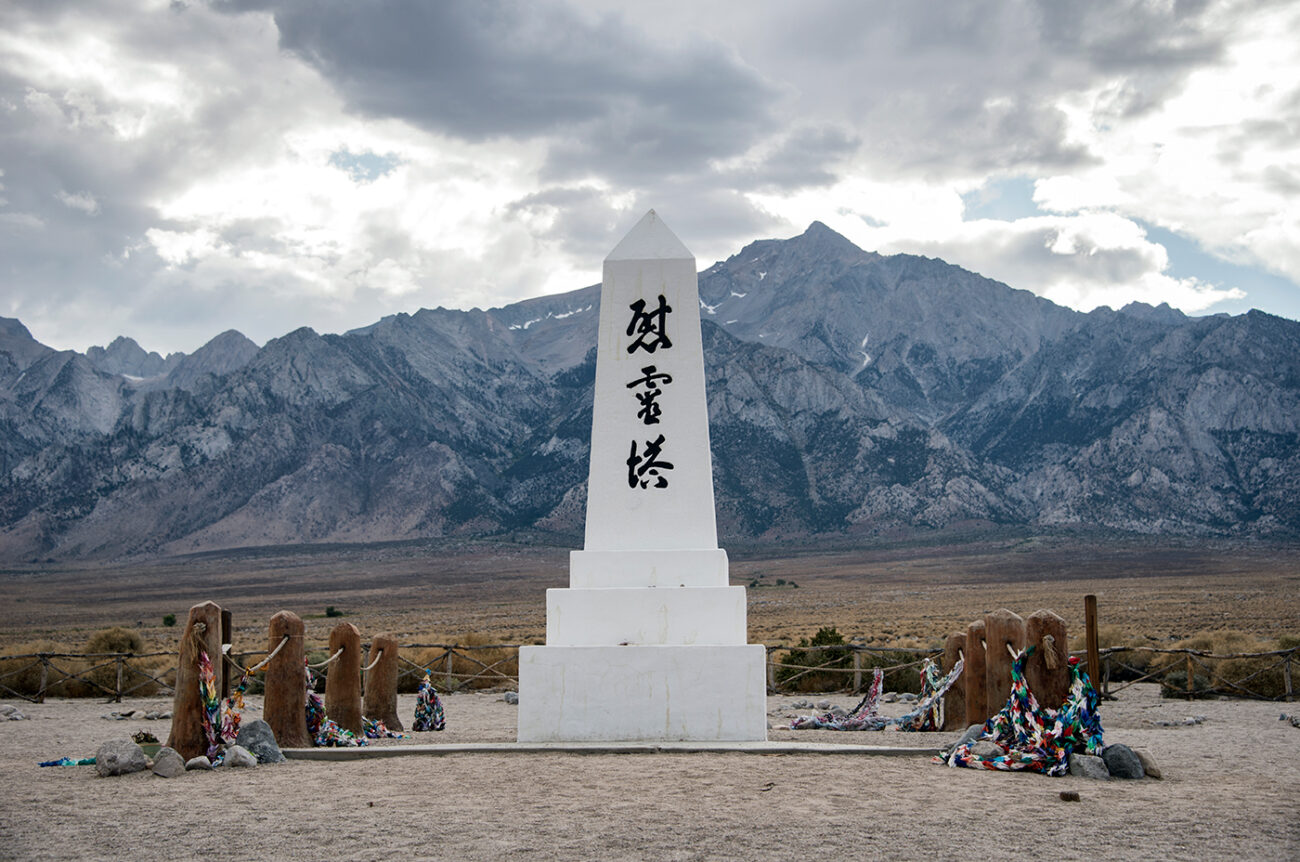
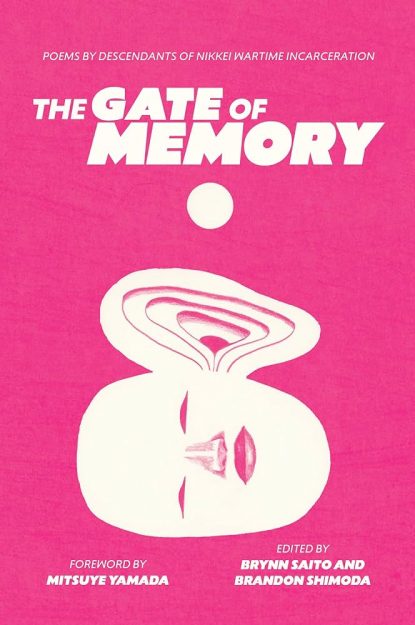
The United States government’s forced removal and incarceration of over 110,000 people of Japanese ancestry during World War II, a dark chapter initiated by Executive Order No. 9066, continues to cast a long shadow across generations. This historical trauma is being brought to the forefront with the publication of The Gate of Memory: Poems by Descendants of Nikkei Wartime Incarceration. This groundbreaking anthology features the voices of those whose families endured the indignity and suffering of being confined to ten relocation centers, including the infamous Manzanar Internment Relocation Center, depicted in the accompanying photograph. The collection serves as a powerful testament to the enduring impact of this injustice, exploring themes of intergenerational trauma, the resilience of the human spirit, and the vital role of artistic expression in healing and remembrance.
A Legacy of Injustice and Artistic Reclamation
The Gate of Memory, edited by Brynn Saito and Brandon Shimoda, represents the first comprehensive poetry anthology specifically dedicated to the experiences of descendants of Nikkei (Japanese immigrants and their American-born children) who were incarcerated. The anthology is a profound tribute to the estimated 150,000 individuals of Japanese descent who were forcibly removed from their homes and confined in camps across the United States and Canada during World War II. The poems within its pages navigate the complex landscape of inherited pain, the quiet strength found in resistance, and the profound need for remembrance. They highlight how poetry, as a medium, can bridge generational divides, fostering solidarity and initiating the crucial process of healing.
The poems, including "Wind structures, 1–5" by Amanda Mei Kim, delve into the nuanced ways in which the wartime incarceration continues to resonate. Kim’s work, in particular, illustrates the fragmented nature of memory, the attempts to articulate experiences that were often suppressed or unspoken, and the search for connection with ancestors who bore the brunt of this historical injustice. The anthology’s publication underscores a growing national and international effort to confront and understand the legacy of the internment, moving beyond historical accounts to explore the emotional and psychological reverberations.
The Historical Context: Executive Order 9066 and Its Aftermath

The incarceration of Japanese Americans was a direct consequence of Executive Order No. 9066, signed by President Franklin D. Roosevelt on February 19, 1942. This executive order authorized the Secretary of War to prescribe military areas and, by implication, to exclude any or all persons from such areas. Fueled by widespread fear, racism, and the aftermath of the attack on Pearl Harbor, the U.S. government targeted its citizens and legal residents of Japanese descent, regardless of their loyalty or citizenship status.
The process of forced removal began shortly after the issuance of the order. Japanese Americans, many of whom had lived in the United States for decades and were American citizens, were given minimal notice to abandon their homes, businesses, and possessions. They were often transported to temporary holding facilities before being moved to the larger, more permanent internment camps, such as Manzanar in California, Topaz in Utah, and Poston in Arizona. These camps, characterized by stark conditions, barbed wire fences, and constant surveillance, were designed to isolate and control the incarcerated population.
A Chronology of Incarceration and its Lingering Impact
- February 19, 1942: President Franklin D. Roosevelt signs Executive Order No. 9066, initiating the forced removal of Japanese Americans from the West Coast.
- March 1942: The War Relocation Authority (WRA) is established to oversee the internment camps.
- Spring 1942: The mass evacuation and relocation of approximately 110,000 Japanese Americans to ten internment camps begin.
- 1942-1946: Japanese Americans are held in these camps under severe conditions, facing loss of property, civil liberties, and psychological distress.
- December 1944: The Supreme Court upholds the constitutionality of the exclusion orders in Korematsu v. United States, a decision that would later be widely condemned.
- January 1945: The exclusion orders are revoked, allowing Japanese Americans to return to their homes, often to find their property lost or destroyed, and facing continued prejudice.
- 1980s: A movement for redress and reparations gains momentum, leading to Congressional hearings and the Civil Liberties Act of 1988, which formally apologized for the internment and provided reparations to survivors.
The impact of this forced displacement extended far beyond the physical confines of the camps. Intergenerational trauma, marked by silences, unspoken pain, and the struggle to reconcile with a history of profound injustice, has been a recurring theme for subsequent generations. The Gate of Memory serves as a crucial platform for descendants to articulate these inherited burdens and to begin the process of communal healing and understanding.
Data and Demographics: The Scope of the Injustice
The scale of the internment was immense, impacting a significant portion of the Japanese American population. Out of an estimated total of 127,000 people of Japanese descent living in the contiguous United States in 1940, approximately 112,000 were forcibly removed and incarcerated. Of this number, about two-thirds were U.S. citizens. Canada also interned over 22,000 people of Japanese ancestry during the war. The economic impact was devastating, with estimates of the property losses incurred by Japanese Americans ranging from $400 million to $500 million in 1940 dollars, a sum equivalent to billions today. Beyond financial losses, the psychological toll was immeasurable, affecting individuals’ sense of belonging, trust, and identity for decades.

Poetic Voices: Navigating Memory and Trauma
Amanda Mei Kim’s poem "Wind structures, 1–5" exemplifies the anthology’s thematic depth. The poem subtly probes the discrepancies between lived experience and remembered fragments, particularly in its opening sections. The anecdote about pushing carrots and peas around on plates to appear fuller highlights the attempts to create a semblance of normalcy within the confines of the camp, even when essential provisions were scarce. The dialogue, "—Is this what camp was like? —We don’t know. We don’t remember that," underscores the children’s inability to fully grasp or recall the trauma their parents endured, a common feature of intergenerational trauma where direct memories are suppressed or inaccessible.
The poem also touches upon the power of stoic resilience, as seen in the description of "Their square jaws set into small smiles." This quiet dignity, however, is juxtaposed with the profound difficulty of articulating the experience: "I could have kept my mouth shut." The recurring memory of sandstorms and fathers protecting their children ("my father pulled a jacket over my head and carried me to the next building") becomes a powerful, shared narrative, a psychic talisman, as the poem states, that offered a sense of protection against an overwhelming external force.
Section three of Kim’s poem offers a searing critique of the euphemistic language employed by the government to mask the reality of incarceration. Phrases like "temporary holding facilities," "indefinite leave," and "war relocation as a service" are exposed as "jangly word-knives" that attempt to sanitize a brutal reality. The poem acknowledges the potent silence that followed, a silence filled with "innumerable projects of immeasurable complexity or drenched the earth with rage." This silence, the poem suggests, is met by the descendants, who "meet them in their infinite refusal" to let the past be forgotten.
Section four, set in the Mojave Desert, connects the personal history of incarceration with the broader environmental and historical context of the region, including indigenous land rights and the impact of strip mining. The act of placing "million-year-old pebble[s]" on the base of the Ireito (a memorial for the dead) becomes a ritual of remembrance and connection to ancestral suffering, particularly for the aunt who lost a sibling and a child. The image of "skies swirl[ing] with lakebed dust and particles uplifted from a landscape of strip mines, blast sites, open pits" powerfully symbolizes the enduring presence of environmental degradation and the persistent effects of exploitation.
Broader Implications and the Path Forward
The Gate of Memory arrives at a critical juncture in national discourse. As discussions around civil liberties, racial justice, and historical accountability continue, the anthology provides a vital lens through which to examine the enduring consequences of government overreach and systemic prejudice. The publication serves as a reminder that the lessons of the Japanese American internment remain acutely relevant, offering profound insights into the dangers of fear-mongering, the erosion of democratic principles under duress, and the long, arduous process of healing and reconciliation.
The anthology’s emphasis on poetry as a vehicle for understanding and connection is particularly significant. In its exploration of intergenerational trauma, the collection demonstrates how artistic expression can provide a safe space for confronting painful histories, fostering empathy, and building bridges between those who lived through the trauma and those who inherit its echoes. The act of creating and sharing these poems is, in itself, an act of resistance against erasure and a powerful affirmation of resilience.
The voices within The Gate of Memory are not merely recounting historical events; they are actively engaged in the vital work of remembrance, ensuring that the experiences of those incarcerated are not relegated to the footnotes of history. By bringing these deeply personal and collective narratives to light, the anthology contributes to a more complete and nuanced understanding of American history and the ongoing quest for justice and healing. The publication is a testament to the enduring power of art to illuminate the past, inform the present, and shape a more compassionate future.
