

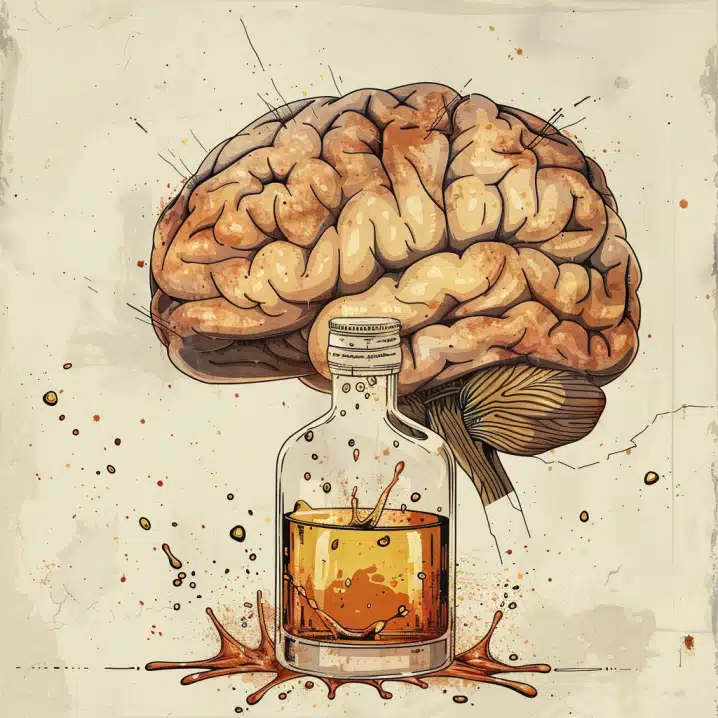
Alcohol’s pervasive effects on the human brain, particularly among the elderly, have long constituted a critical area of scientific inquiry. A recent landmark study emanating from Gothenburg, Sweden, has cast new light on this complex relationship, providing nuanced insights into how varying levels of alcohol intake impact the brain’s delicate structure in individuals aged 70 and over. This comprehensive research, published in the European Archives of Psychiatry & Clinical Neuroscience in 2023, identifies a distinct threshold for alcohol consumption associated with measurable neurological alterations, offering vital intelligence for both healthcare practitioners and the broader public navigating healthy aging.
Contextualizing the Aging Brain and Alcohol Use
The global population is aging at an unprecedented rate, a demographic shift that brings with it a heightened focus on maintaining cognitive health and overall well-being in later life. As individuals advance in years, their brains undergo natural changes, including a reduction in volume, thinning of the cerebral cortex, and alterations in white matter integrity. These age-related processes can render the elderly brain more susceptible to external stressors, including the cumulative effects of alcohol. Epidemiological data indicates a concerning trend of increasing alcohol consumption among older adults, often driven by factors such as social isolation, chronic pain, or a lack of awareness regarding age-specific risks. Understanding how alcohol interacts with the already vulnerable aging brain is therefore paramount for public health and preventative medicine. Previous studies have consistently linked heavy, chronic alcohol use to accelerated brain atrophy and increased risk of dementia, but the precise thresholds and specific structural impacts of moderate to high consumption in the elderly have remained an area requiring more granular investigation.
The Gothenburg H70 Birth Cohort Study: A Deep Dive
The Gothenburg H70 Birth Cohort Study, from which these findings emerge, represents a robust, population-based endeavor designed to explore the health and living conditions of 70-year-olds in Gothenburg, Sweden. Its primary objective, for this specific analysis led by Olof Lindberg et al., was to meticulously investigate the association between current alcohol consumption patterns and brain structure. Researchers aimed to discern how different weekly alcohol intake amounts might influence cortical thickness (the outer layer of the brain responsible for higher cognitive functions), subcortical volumes (deeper brain structures involved in emotion, memory, and motor control), and the integrity of white matter (the brain’s crucial communication pathways).
The study utilized advanced neuroimaging techniques, specifically Magnetic Resonance Imaging (MRI), to assess brain structure in a large sample of participants. Alcohol consumption data was gathered through detailed self-reports, a common method in epidemiological studies, providing a snapshot of typical weekly intake. By correlating these self-reported figures with objective MRI measurements, the researchers sought to establish concrete links between drinking habits and neurological health indicators.
Key Findings: A Threshold for Structural Change
The analysis yielded several significant findings, painting a clearer picture of alcohol’s impact on the aging brain:
-
The 250-Gram Weekly Threshold: The most striking revelation was the identification of a non-linear relationship between alcohol consumption and structural brain changes. The study found that self-reported alcohol consumption above 250 grams per week was significantly associated with detectable alterations in brain structure. Below this threshold, the observed changes were less pronounced or statistically insignificant. This 250-gram mark serves as a critical benchmark for risk assessment. To contextualize this amount, a standard drink in many countries contains approximately 10-14 grams of pure alcohol. Therefore, 250 grams per week translates to roughly 18-25 standard drinks. This level of consumption often exceeds recommended guidelines for older adults, which typically advise lower limits than for younger populations due to decreased alcohol metabolism and increased brain sensitivity.
-
Significant Cortical Thinning: For individuals consuming more than 250 grams of alcohol weekly, the study observed significant cortical thinning in several critical brain regions. Specifically, thinning was noted in the bilateral superior frontal gyrus, the right precentral gyrus, and the right lateral occipital cortex.

- The superior frontal gyrus plays a pivotal role in higher cognitive functions, including decision-making, working memory, planning, and social behavior. Thinning in this region suggests potential compromises in executive functions, which are crucial for independent living in older age.
- The precentral gyrus is primarily involved in motor control. Damage here could lead to subtle or more pronounced motor deficits, impacting balance and coordination.
- The lateral occipital cortex is integral to visual processing. Alterations could affect visual perception and spatial awareness.
These findings align with existing research on alcohol-related neurodegeneration, indicating that these areas are particularly vulnerable to alcohol’s toxic effects.
-
Support for the "Right Hemisphere Hypothesis": An intriguing aspect of the cortical thinning findings was a observed predilection for the right hemisphere of the brain. This observation lends support to the long-standing "right hemisphere hypothesis," which postulates that the right side of the brain may be more susceptible to alcohol-induced damage than the left. This hypothesis is rooted in clinical observations of specific cognitive deficits often seen in individuals with alcohol use disorders, such as impairments in spatial reasoning, emotional processing, non-verbal communication, and insight – functions predominantly associated with the right hemisphere. While the exact biological mechanisms behind this lateralized vulnerability are still under investigation, factors such as differential metabolic rates or regional blood flow could play a role.
-
Degradation of White Matter Integrity: Participants whose consumption exceeded the 250-gram threshold also exhibited widespread changes in white matter integrity. These changes were quantified by reduced Fractional Anisotropy (FA) and increased Mean Diffusivity (MD) across numerous white matter tracts throughout the brain.
- Fractional Anisotropy (FA) is a measure derived from Diffusion Tensor Imaging (DTI) that reflects the directionality and integrity of white matter fibers. Lower FA values typically indicate disorganized or damaged white matter.
- Mean Diffusivity (MD) measures the average magnitude of water diffusion within tissues. Increased MD often signifies a loss of structural integrity, such as demyelination or axonal damage.
Collectively, reduced FA and increased MD point to a degradation of the brain’s vital communication pathways. Although the study did not directly measure cognitive outcomes, compromised white matter integrity is strongly linked to slower processing speed, reduced cognitive flexibility, and overall declines in cognitive and functional capabilities, given its essential role in facilitating efficient brain communication.
-
No Significant Impact on Subcortical Structures: Interestingly, the study found no significant changes in subcortical gray matter structures across the different levels of alcohol consumption examined. This suggests that, at the consumption levels observed in this cohort, alcohol’s primary impact predominantly affects cortical thickness and white matter integrity, rather than causing volumetric changes in deeper subcortical regions like the thalamus, hippocampus, or basal ganglia. This specificity helps to refine our understanding of where alcohol-induced damage is most likely to manifest in the aging brain.
Mechanisms of Alcohol’s Short-Term and Long-Term Effects
While the Gothenburg study focused on structural changes, understanding the underlying mechanisms of alcohol’s action provides crucial context. In the short term, alcohol acts as a central nervous system depressant. It enhances the effects of GABA (gamma-aminobutyric acid), an inhibitory neurotransmitter, leading to sedation, reduced anxiety, and impaired motor coordination. Simultaneously, it inhibits the activity of glutamate, an excitatory neurotransmitter, which contributes to memory blackouts and cognitive impairment.
Over the long term, chronic alcohol exposure leads to neurotoxicity through various pathways. It can induce oxidative stress, generating harmful free radicals that damage brain cells. Alcohol can also disrupt neurotransmitter systems, alter gene expression, and lead to neuroinflammation. Furthermore, it can interfere with nutrient absorption, particularly B vitamins like thiamine, leading to conditions such as Wernicke-Korsakoff syndrome, which causes severe memory problems and confusion. The structural changes observed in the Gothenburg study – cortical thinning and white matter degradation – are the cumulative result of these chronic neurotoxic effects.
Individual Variability and the Non-Linear Relationship
It is critical to underscore that the 250-gram threshold, while significant, represents an average derived from a population study. Individual responses to alcohol can vary widely due to a multitude of factors:
- Genetics: Genetic predispositions can influence how individuals metabolize alcohol, their brain’s sensitivity to its effects, and their risk for alcohol use disorders.
- Body Size and Composition: Smaller individuals or those with less body water tend to have higher blood alcohol concentrations from the same amount of alcohol.
- Sex: Women generally have lower levels of alcohol dehydrogenase (an enzyme that metabolizes alcohol) and a higher proportion of body fat to water, leading to higher blood alcohol levels and potentially greater vulnerability to alcohol’s effects.
- Age: As people age, their liver function may decline, and brain sensitivity to alcohol increases.
- Overall Health and Co-morbidities: Pre-existing health conditions, medication use, and nutritional status can all modify alcohol’s impact.
The "non-linear relationship" observed means that the brain’s response to alcohol is not simply a direct, proportional increase in damage with increased consumption. There appears to be a point (the 250g threshold in this study) beyond which the brain’s capacity to compensate or resist damage is overwhelmed, leading to an accelerated decline in structural integrity. This suggests that even seemingly modest increases in consumption beyond a certain point can have disproportionately larger negative effects.
Applications and Implications of the Findings
The Gothenburg study’s findings carry profound implications for various stakeholders:

For Individuals:
- Informed Decision-Making: Older adults can use this research to make more informed decisions about their alcohol consumption. The 250-gram weekly threshold provides a concrete, data-driven benchmark to consider.
- Personalized Risk Assessment: Individuals should discuss their drinking habits with healthcare providers, especially if they are approaching or exceeding this threshold.
- Prioritizing Brain Health: The study reinforces the importance of moderation, especially in later life, as a critical component of maintaining cognitive vitality and preventing age-related neurological decline.
For Healthcare Professionals:
- Enhanced Screening and Counseling: Physicians and other healthcare providers should be equipped with this data to screen elderly patients more effectively for alcohol use and provide evidence-based counseling.
- Updated Guidelines: The findings may prompt a re-evaluation or strengthening of national and international guidelines for alcohol consumption in older adults.
- Early Intervention: Identifying patients at risk based on their alcohol intake could facilitate earlier interventions aimed at reducing consumption and potentially mitigating brain damage.
- Diagnostic Context: Understanding the specific brain regions affected can aid in interpreting neuroimaging results and considering alcohol’s role in cognitive symptoms.
For Policymakers and Public Health Initiatives:
- Targeted Public Awareness Campaigns: The research provides compelling evidence for public health campaigns aimed at older adults, highlighting the specific risks of exceeding certain alcohol consumption levels.
- Resource Allocation: These findings can inform resource allocation for prevention programs and support services for older adults struggling with alcohol use.
- Further Research: The study underscores the need for more longitudinal research to track brain changes over time and investigate the reversibility of these effects.
Potential for Reversibility of Effects Through Decreased Alcohol Intake?
A crucial question arising from these findings is whether the observed structural changes are reversible if an individual reduces or ceases alcohol intake. While the Gothenburg study, being cross-sectional, cannot directly answer this, the broader scientific literature offers some encouraging insights.
The human brain possesses remarkable plasticity, even in older age. This capacity for adaptation and reorganization suggests that some degree of recovery might be possible. Studies in populations with alcohol use disorders have shown that abstinence can lead to partial recovery of brain volume, improved white matter integrity, and enhanced cognitive functions. For instance, some research indicates that cortical thickness can increase, and white matter tracts can show signs of repair (e.g., increased FA) after periods of sobriety.
Potential areas for recovery include:
- Neurogenesis: The formation of new neurons, particularly in areas like the hippocampus (involved in memory), may be stimulated.
- Synaptic Plasticity: Existing neural connections can strengthen or reorganize, improving communication efficiency.
- White Matter Repair: Reduced inflammation, improved myelin sheath integrity, and better axonal health could lead to restoration of white matter function.
- Improved Neurotransmitter Balance: Abstinence allows neurotransmitter systems to rebalance, potentially improving mood and cognitive function.
However, the extent of reversibility likely depends on several factors, including the duration and severity of alcohol exposure, the individual’s age, overall health, and genetic factors. For the elderly, who already face age-related brain changes, the capacity for full recovery might be more limited than in younger individuals. Nevertheless, the potential for even partial recovery or, at the very least, halting further damage, provides a strong rationale for advocating reduced alcohol consumption among older adults, especially those exceeding the 250-gram weekly threshold. This area warrants significant future longitudinal research, including intervention studies, to precisely quantify the extent of potential recovery.
Conclusion: A Call for Caution and Awareness
The Gothenburg H70 Birth Cohort Study delivers a critical message regarding alcohol intake and brain structure in elderly adults. By identifying a clear threshold of 250 grams of alcohol per week as a point beyond which significant cortical thinning and white matter degradation become evident, the research provides tangible, actionable information. The specific vulnerability of the frontal and occipital cortices, along with the corroboration of the "right hemisphere hypothesis," enriches our understanding of alcohol’s targeted impact on higher cognitive functions and communication pathways in the aging brain.
This study underscores the imperative for older adults, their families, and healthcare providers to approach alcohol consumption with increased caution and awareness. While the question of complete reversibility remains an active area of investigation, the potential to mitigate further brain damage and preserve cognitive function by reducing intake below this identified threshold offers a compelling public health imperative. As societies grapple with the challenges and opportunities presented by an aging global population, understanding and addressing modifiable risk factors like alcohol consumption will be paramount in fostering healthier, more cognitively robust later years. The findings from Gothenburg serve as a potent reminder that moderation in all things, especially alcohol, is a cornerstone of lifelong brain health.
