

The early months of 2016 saw a confluence of significant media moments that amplified the urgency and optimism surrounding the global challenge of climate change. Two prominent communications, one from the esteemed Academy Awards stage and another from a globally recognized TED Talk, captured widespread attention and sparked renewed dialogue about environmental action and indigenous rights. Leonardo DiCaprio’s historic Best Actor Oscar acceptance speech for his role in "The Revenant" and Al Gore’s insightful TED Talk, "The Case for Optimism on Climate Change," emerged as powerful catalysts, resonating with audiences and offering distinct yet complementary perspectives on the critical environmental issues of our time.
DiCaprio’s Powerful Call to Action on the Global Stage
The 88th Academy Awards ceremony, held on February 28, 2016, provided an unprecedented platform for a deeply personal and politically charged message from Leonardo DiCaprio. After years of acclaimed performances and numerous nominations, DiCaprio finally received the coveted Best Actor Oscar for his harrowing portrayal of frontiersman Hugh Glass in Alejandro G. Iñárritu’s "The Revenant." While the award itself was a moment of personal triumph, DiCaprio seized the opportunity to deliver a speech that transcended personal accolades and directly addressed the existential threat of climate change.
DiCaprio’s address was notable for its directness and specificity. He articulated a clear understanding of the scientific consensus on climate change, referencing the overwhelming evidence of its impact. His statement, "Climate change is real, it’s happening right now. It’s the most urgent threat facing our entire species," echoed the sentiment of numerous scientific bodies, including the Intergovernmental Panel on Climate Change (IPCC), which has consistently reported on the accelerating pace of global warming and its devastating consequences.
The actor did not merely express concern; he called for concrete, collective action. He emphasized the need for a global response, underscoring that this is a problem requiring the unified efforts of nations and individuals alike. This aligns with the principles of international climate agreements, such as the one being negotiated at the time and later adopted as the Paris Agreement in December 2015, which aimed to limit global warming to well below 2 degrees Celsius, preferably to 1.5 degrees Celsius, compared to pre-industrial levels.
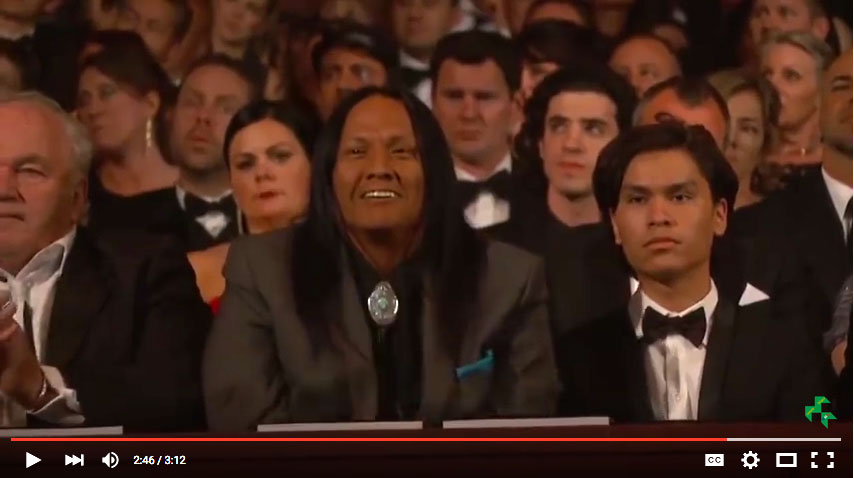
A particularly poignant and significant element of DiCaprio’s speech was his dedicated acknowledgment of Indigenous peoples. He stated, "And I want to thank you all tonight for this incredible honor. Let’s not take this planet for granted. I do not take tonight for granted." He then added a powerful plea for the recognition and empowerment of First Nations communities, stating, "Our production needed to move to the furthest southern tip of this planet just to find snow. We are currently not traveling to an ice-dependent planet. The debate about climate change is no longer a debate about data. It’s a matter of survival." He continued, "Climate change is real. It’s happening right now. It’s the most urgent threat facing our entire species, and we need to work together collectively, and stop procrastinating." He then specifically called out the need to support those whose voices have been marginalized. "It is time for the people of the world to demand that major corporations all over the world take responsibility for their carbon footprint. For the indigenous peoples of the Americas, the ancient traditions of the land are the greatest tools we have to solve this crisis. Their voices have been drowned out by the politics of greed."
This inclusion of indigenous perspectives was not merely symbolic. Indigenous communities worldwide are often on the front lines of climate change impacts, experiencing the most severe consequences due to their close relationship with the land and their reliance on natural resources. Furthermore, indigenous peoples possess invaluable traditional ecological knowledge, developed over millennia, which offers crucial insights into sustainable land management, biodiversity conservation, and climate adaptation strategies. DiCaprio’s endorsement highlighted the critical role these communities can and should play in global climate solutions, a sentiment that resonated deeply with environmental justice advocates.
Al Gore’s Vision of Optimism and Progress
Just weeks prior to DiCaprio’s Oscar moment, on February 16, 2016, Al Gore, the former U.S. Vice President and Nobel Peace Prize laureate, delivered a compelling TED Talk titled "The Case for Optimism on Climate Change." This address offered a different yet equally vital perspective, focusing on the tangible progress being made and the growing potential for a sustainable future.
Gore, who has been a leading voice on climate change for decades, beginning with his 1992 book "Earth in the Balance" and his 2006 documentary "An Inconvenient Truth," acknowledged the persistent and severe nature of the climate crisis. He did not shy away from the gravity of the situation, likely referencing ongoing impacts such as rising sea levels, extreme weather events, and the degradation of ecosystems. The World Meteorological Organization (WMO) had reported in early 2016 that 2015 was the hottest year on record, continuing a trend of escalating global temperatures.
However, Gore’s central thesis was one of hope, grounded in observable trends and technological advancements. He meticulously detailed the significant shifts occurring in the global energy landscape, emphasizing the rapid growth of renewable energy sources. He likely pointed to the declining costs and increasing efficiency of solar and wind power, making them increasingly competitive with, and in many cases cheaper than, fossil fuels. Data from the International Renewable Energy Agency (IRENA) consistently showed a dramatic increase in renewable energy capacity and investment throughout the early 2010s. For instance, global renewable energy capacity grew significantly year on year, with solar PV and wind power leading the expansion.
Gore also highlighted policy changes and corporate commitments that were beginning to signal a global pivot towards sustainability. He might have referenced the growing number of countries setting ambitious renewable energy targets, the divestment movement from fossil fuel industries, and the increasing number of businesses embracing corporate social responsibility and investing in green technologies.
The former Vice President’s message was that while the challenges are immense, humanity possesses the ingenuity and the tools to address them. His "case for optimism" was not a call for complacency but rather a strategic encouragement, aiming to galvanize further action by demonstrating that progress is achievable and that a sustainable future is within reach. This approach sought to counter the pervasive climate anxiety that often leads to paralysis, instead fostering a sense of agency and empowerment.
The Synergy of Two Powerful Messages
The timing and content of these two communications created a powerful synergy, amplifying each other’s impact. DiCaprio’s raw, urgent plea from the pinnacle of Hollywood fame resonated with a broad, mainstream audience, bringing the reality of climate change and the importance of indigenous rights to the forefront of popular consciousness. His speech served as a wake-up call, leveraging his immense influence to draw attention to the issue.
Gore’s TED Talk, on the other hand, provided a more detailed, data-driven, and forward-looking perspective. It offered a roadmap of progress and a reasoned argument for why optimism is not only justified but necessary for continued engagement. His talk provided the intellectual and factual underpinnings for the emotional urgency conveyed by DiCaprio.
Together, these messages addressed different facets of the climate crisis: the immediate threat and the moral imperative (DiCaprio), and the practical solutions and achievable pathways to a sustainable future (Gore). This multifaceted approach catered to a wider range of audience engagement, appealing to both those motivated by immediate crisis and those seeking evidence of progress and hope.
Broader Impact and Implications
The combined impact of DiCaprio’s speech and Gore’s TED Talk extended beyond mere public discourse. These moments contributed to a significant shift in how climate change was perceived and discussed in early 2016.
Increased Public Awareness and Engagement: Both events reached millions globally, raising the profile of climate change as a critical issue requiring immediate attention. This surge in public awareness likely translated into increased engagement with environmental organizations, greater demand for sustainable products, and a more informed electorate.
Amplification of Indigenous Voices: DiCaprio’s explicit mention of First Nations peoples brought a crucial, often overlooked, perspective into mainstream climate discussions. This highlighted the need for inclusive climate solutions that respect and incorporate indigenous knowledge and rights, a theme that gained increasing traction in subsequent years. This also underscored the principle of environmental justice, where the disproportionate impacts of environmental degradation on marginalized communities are acknowledged and addressed.
Momentum for Climate Policy: The heightened public and media attention surrounding climate change, partly fueled by these high-profile communications, undoubtedly contributed to the political momentum for ambitious climate action. The Paris Agreement, adopted in December 2015, was still in its early stages of ratification and implementation, and events like these helped solidify the global consensus and commitment to its goals. The speech served as a powerful endorsement of the need for international cooperation, echoing the spirit of the Paris Accord.
Shift Towards Optimism in Climate Discourse: Al Gore’s emphasis on optimism provided a counter-narrative to the often-overwhelmingly negative discourse surrounding climate change. By showcasing progress and potential, he encouraged a more proactive and solution-oriented approach, demonstrating that tackling climate change could lead to innovation, economic opportunities, and a better future. This approach aimed to combat climate fatigue and inspire sustained action.
Influence on Hollywood and Media: DiCaprio’s willingness to use his platform for advocacy set a precedent for other public figures and celebrities, encouraging them to speak out on important social and environmental issues. The media’s extensive coverage of both events further cemented climate change as a legitimate and pressing news topic.
In conclusion, the powerful messages delivered by Leonardo DiCaprio and Al Gore in early 2016 marked a significant inflection point in the public discourse on climate change. DiCaprio’s impassioned plea from the Oscar stage, coupled with Gore’s reasoned case for optimism, provided a dual-pronged approach that heightened awareness, championed indigenous rights, and fostered a renewed sense of urgency and hope. These communications, underpinned by scientific consensus and observable progress, played a crucial role in shaping the ongoing global effort to address the climate crisis and build a more sustainable future for all. The echoes of their words continued to resonate, influencing policy, inspiring action, and reminding the world of the interconnectedness of humanity and the planet.
