

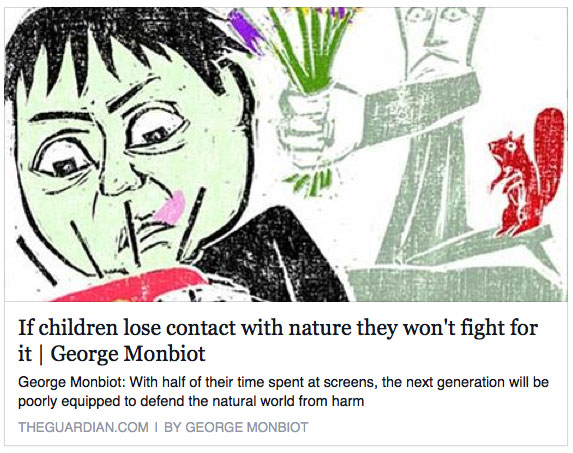
The assertion that children are losing their connection to the natural world, and consequently their motivation to protect it, has sparked significant debate. While the sentiment resonates with many concerned about environmental stewardship, a critical examination of the underlying arguments and potential solutions reveals a more nuanced reality. This analysis delves into the genesis of this concern, explores the complex interplay of factors influencing children’s engagement with nature, and considers the evolving role of technology in fostering or hindering this vital relationship.
The discourse surrounding children’s diminished contact with nature gained prominent attention with George Monbiot’s article, "If Children Lose Contact With Nature They Won’t Fight For It," published in The Guardian in November 2012. Monbiot articulated a widely held concern: as children spend more time indoors, particularly engaged with digital devices, their opportunities for direct, immersive experiences in the natural world dwindle. This, he argued, would inevitably lead to a generation less equipped to understand, appreciate, and ultimately defend the environment. The article tapped into a collective anxiety about the perceived disconnect between modern childhood and the natural world, a sentiment amplified by increasing urbanization, safety concerns that restrict outdoor play, and the pervasive influence of screens.
The Shifting Landscape of Childhood and Nature Engagement
Historically, children’s lives were intrinsically linked to the outdoors. Agricultural societies, even in urban fringes, provided ample opportunities for unstructured play and exploration in natural settings. The mid-20th century saw a gradual shift, with increasing suburbanization and the rise of organized leisure activities. However, the late 20th and early 21st centuries have witnessed a more profound transformation, largely attributed to the digital revolution.
Data from various studies underscores this trend. For instance, research from the National Trust in the UK has consistently highlighted a decline in children’s outdoor playtime over recent decades. A 2017 report indicated that children were spending, on average, half the time outdoors compared to their parents at the same age. Similar trends have been observed globally. The proliferation of smartphones, tablets, and video games has provided an ever-expanding array of indoor entertainment options, often proving more immediately captivating than the often unpredictable and less overtly stimulating environment of nature.
This shift is not merely about the quantity of time spent outdoors but also the quality of interaction. Whereas previous generations might have spent hours exploring woods, building dens, or observing wildlife, contemporary childhood often involves more structured, supervised, and sometimes less adventurous outdoor activities. This can limit the development of a deep, personal, and intuitive understanding of ecological processes.
Monbiot’s Argument: A Cause for Concern, But an Incomplete Diagnosis?
Monbiot’s central thesis—that a lack of familiarity with nature breeds apathy towards its preservation—is compelling. The psychological principle of "biophilia," the innate human tendency to connect with nature, suggests that such connections are fundamental to our well-being and our sense of responsibility. When this connection is severed, the motivation to protect what is unknown or unvalued is likely to diminish. This aligns with conservation psychology principles, which emphasize the importance of positive emotional experiences and personal relevance in fostering pro-environmental attitudes and behaviors.
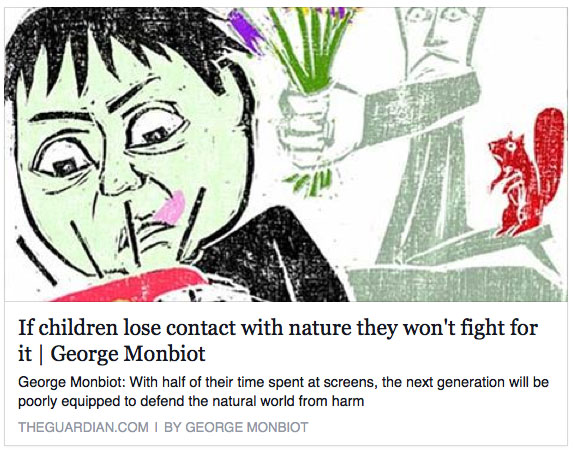
However, Monbiot’s emphasis on blaming "on-screen engagement" as the primary culprit has been met with critique. Critics argue that this perspective risks oversimplifying a complex socio-environmental issue. While screen time undoubtedly competes for children’s attention, it is not the sole determinant of their disconnection from nature. A multitude of factors contribute to this trend, including:
- Urbanization and Loss of Green Spaces: As populations concentrate in cities, access to natural environments becomes increasingly limited. The fragmentation of habitats and the reduction of accessible wild spaces directly restrict opportunities for children to engage with nature.
- Parental and Societal Attitudes: Concerns about safety, liability, and the perceived risks associated with outdoor play can lead parents to be more cautious, thereby limiting children’s unsupervised exploration. A cultural shift that prioritizes structured, indoor activities over free-range outdoor play also plays a role.
- Educational Systems: Curricula that are increasingly focused on standardized testing and core academic subjects may relegate nature-based learning and outdoor education to secondary importance.
- Economic Factors: For some families, limited resources can restrict access to nature, whether through travel to more remote areas or participation in nature-based programs.
Amy Lenzo, writing from the perspective of ecopsychology, argues that while Monbiot’s core concern is valid, his diagnosis is "lazy and inaccurate." Lenzo posits that technology, often cast as the antagonist, can also serve as a powerful tool for re-establishing and deepening nature connections, particularly for introverted individuals who may find initial engagement more accessible through mediated experiences.
The Paradox of Technology: Barrier or Bridge to Nature?
The argument that digital screens are solely detrimental to nature connection overlooks the potential for technology to act as a bridge. Lenzo’s perspective highlights how "today’s ‘books’ have multi-media to draw children in to the mystery and magic of the natural world, and are even more effective." This points to the evolving landscape of digital content.
- Educational Apps and Games: A growing number of applications and online platforms are designed to educate children about flora, fauna, ecosystems, and environmental issues in engaging and interactive ways. These can spark curiosity and provide foundational knowledge that encourages further exploration in the real world.
- Documentaries and Online Resources: High-quality nature documentaries, virtual reality experiences, and online encyclopedias offer immersive glimpses into diverse ecosystems and wildlife, fostering awe and wonder. For individuals who may have limited access to certain environments due to geographical or physical limitations, these digital windows can be invaluable.
- Citizen Science and Online Communities: Platforms that facilitate citizen science projects allow children and adults alike to contribute to scientific research by collecting data on local wildlife or environmental conditions. Online forums and social media groups dedicated to nature photography, birdwatching, or gardening can connect individuals with shared interests, fostering a sense of community and shared purpose in nature appreciation.
- Augmented Reality (AR): Emerging AR technologies can overlay digital information onto the real world, allowing children to identify plants, learn about animal tracks, or even visualize extinct creatures in their immediate surroundings. This can transform a mundane walk into an interactive learning adventure.
Lenzo emphasizes the importance of "imbue[ing] our own online engagement with nature-connection." This means using technology mindfully, ensuring it complements rather than replaces direct experience, and fostering an awareness of our embodied presence and connection to the human and natural world even when online. This involves using sense-based language and imagery to maintain a connection to the physical environment, and remembering that online interactions are with real people in real places.
Fostering a Deeper Connection: A Multifaceted Approach
The challenge of reconnecting children with nature requires a comprehensive strategy that acknowledges both the threats and the opportunities presented by our contemporary world. Simply lamenting the rise of screens is insufficient; instead, efforts should focus on creating environments and experiences that nurture a love for the natural world.
Strategies for Enhanced Nature Engagement:
- Prioritizing Outdoor Education: Educational institutions should integrate more hands-on, experiential learning in natural settings. This can include forest schools, nature-based curricula, and regular field trips. Research consistently shows that such programs improve academic performance, social-emotional development, and environmental literacy.
- Promoting Unstructured Play: Encouraging children to engage in free, unstructured play outdoors is crucial. This allows for exploration, risk-taking, and the development of independence and creativity. Communities can support this by creating safe and accessible natural play spaces.
- Leveraging Technology Strategically: Instead of viewing technology as an enemy, educators and parents can harness its power to supplement and inspire nature exploration. This could involve using apps to identify plants, watching nature documentaries to learn about ecosystems, or engaging in online citizen science projects.
- Community-Based Initiatives: Local parks, nature centers, and environmental organizations can play a vital role in offering programs, workshops, and events that connect families with nature. These initiatives can provide guided experiences and create opportunities for shared learning.
- Parental and Guardian Involvement: Educating parents and guardians about the benefits of nature connection for child development and encouraging their active participation in outdoor activities is paramount. Simple actions, like family walks, gardening, or exploring local parks, can have a significant impact.
- Policy and Urban Planning: Urban planners and policymakers have a responsibility to ensure that cities incorporate and protect green spaces, creating environments where children and families can easily access nature. This includes developing green corridors, urban forests, and accessible parks.
Broader Implications for Environmental Stewardship
The long-term implications of a generation that feels disconnected from nature are profound. Environmental challenges such as climate change, biodiversity loss, and pollution require a populace that understands, values, and is motivated to protect the natural world. If children do not develop a deep appreciation for nature from an early age, the collective will to address these critical issues may falter.
The "we are all of the land, and belong to it" sentiment, as articulated by Lenzo, underscores a fundamental truth: human well-being is inextricably linked to ecological health. Fostering this understanding from childhood is not just an educational imperative but a societal necessity. The debate sparked by Monbiot’s article, while perhaps overly focused on a single cause, has served a valuable purpose by highlighting the urgency of this issue. The path forward lies in a balanced approach that recognizes the complexities of modern life, embraces the potential of technology as a tool for connection, and prioritizes creating direct, meaningful, and lasting relationships between children and the natural world. This is not merely about ensuring future environmental activists; it is about cultivating individuals who understand their place within the larger web of life, leading to a more harmonious and sustainable future for all.
